Structural Distortion
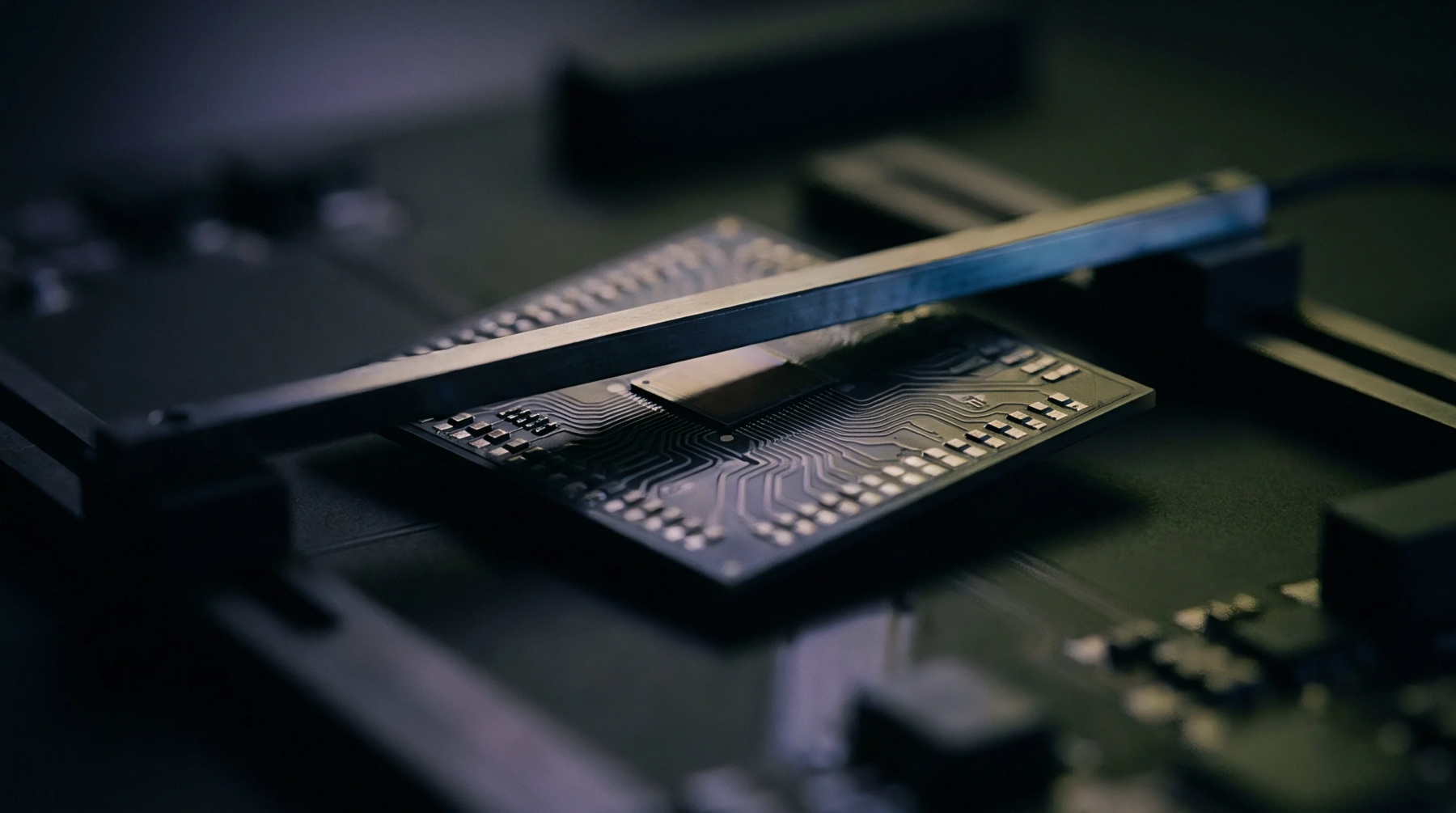
Mechanical deviation occurs when a printed circuit assembly deviates from a perfectly flat plane due to internal stress or external thermal loads. Board substrate bow describes the spherical curvature of the laminate base material across the diagonal axis of a panel. This condition originates from mismatched thermal expansion coefficients between the copper foil and the resin reinforced glass cloth layers.
High levels of deformation prevent reliable surface mount processing by inducing intermittent contact between component leads and the solder paste deposits.
Manufacturing Constraint
Fabrication facilities monitor the degree of displacement during the cooling phase of the lamination cycle. Engineers calculate the vertical offset by resting the finished part on a granite surface plate and measuring the highest corner with a dial indicator. Acceptance relies on a maximum allowable percentage of the total length of the diagonal, typically expressed as a ratio to verify panel flatness for automated assembly equipment.
Excessive variation forces the usage of stiffening features or modified reflow profiles to stabilize the geometry. A warped panel undergoes thermal reconditioning to restore its initial state before entering the final stage of component attachment.
Operational Consequence
Precision remains the primary requirement for high density interconnects because extreme curvature disrupts the focal point of automated optical inspection systems. Systems that struggle with vertical topography report false negatives or fail to recognize valid solder joints. Component placement machines also risk breakage if the nozzles attempt to force contact with a surface that resides outside the programmed Z axis tolerance.
Consistent substrate stability ensures the integrity of the electrical connections throughout the lifespan of the printed circuit assembly.