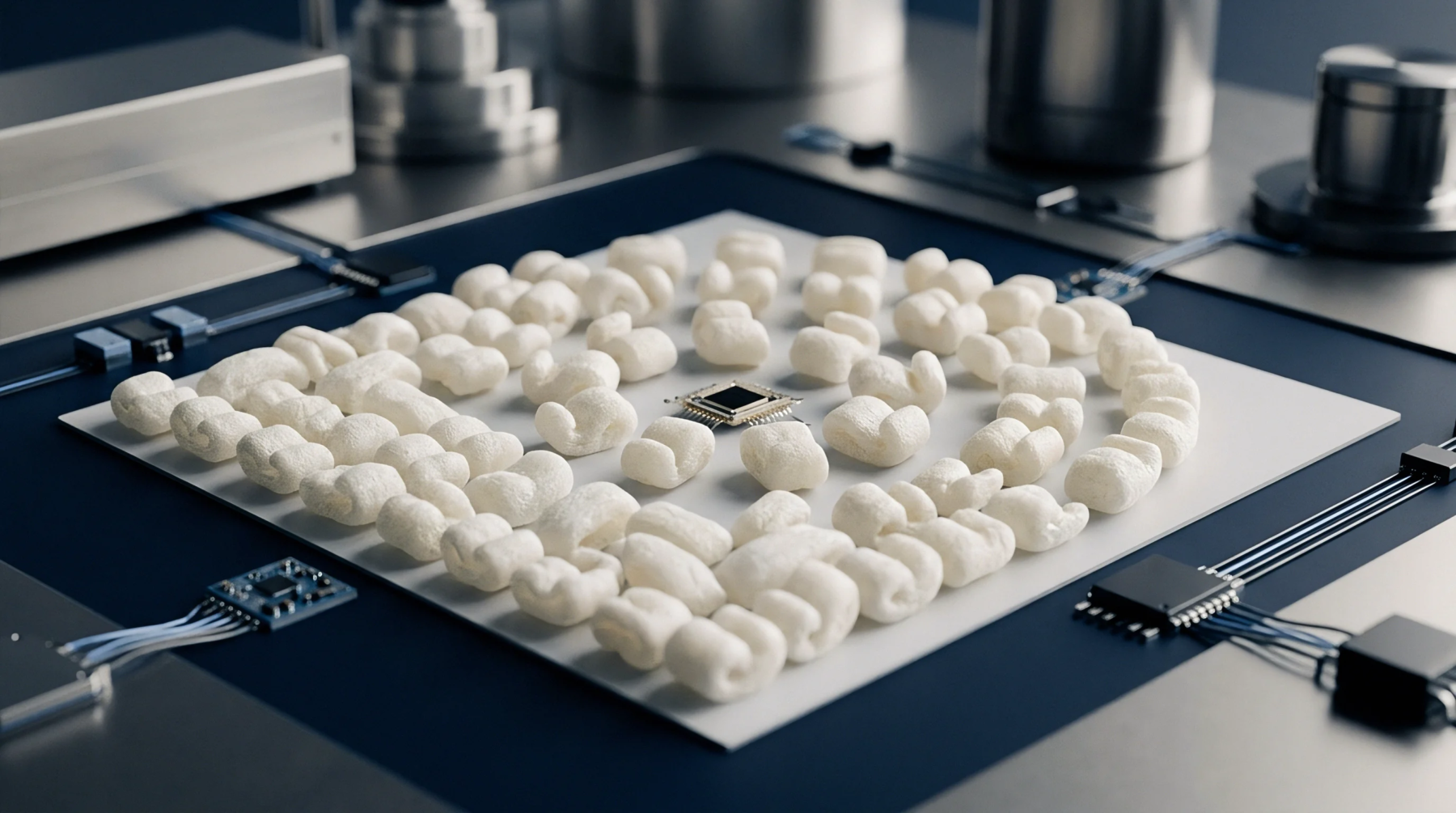
Polymeric Solidification
Irreversible chemical bonding represents the final phase of thermosetting resin curing where molecular chains form a rigid three-dimensional network. During fabrication, c-stage crosslinking occurs when the B-stage prepreg is subjected to heat and pressure in a lamination press. The resin transitions from a meltable solid to an infusible state.
This process concludes the chemical reactivity of the epoxy system.
Structural Stability
Mechanical integrity depends on the density of the bonds formed during the press cycle. A high degree of c-stage crosslinking ensures the finished board maintains dimensional accuracy under thermal stress while resisting chemical ingress from etching or plating baths. When the network reaches full density, the physical properties of the dielectric become fixed and the material no longer exhibits thermoplastic behavior.
Insufficient cure leads to delamination or glass transition temperature depression during subsequent soldering. Proper dwell time at peak temperature facilitates maximum conversion across the entire panel surface.
Acceptance Metric
Thermal analysis techniques verify the completion of the reaction by measuring residual exotherms. If a secondary scan shows additional heat release, the c-stage crosslinking was incomplete during the primary cycle. Quality control standards require a cure percentage high enough to prevent board warping during lead-free reflow.
Successful lamination yields a substrate that no longer softens or flows.