Magnetic Filling
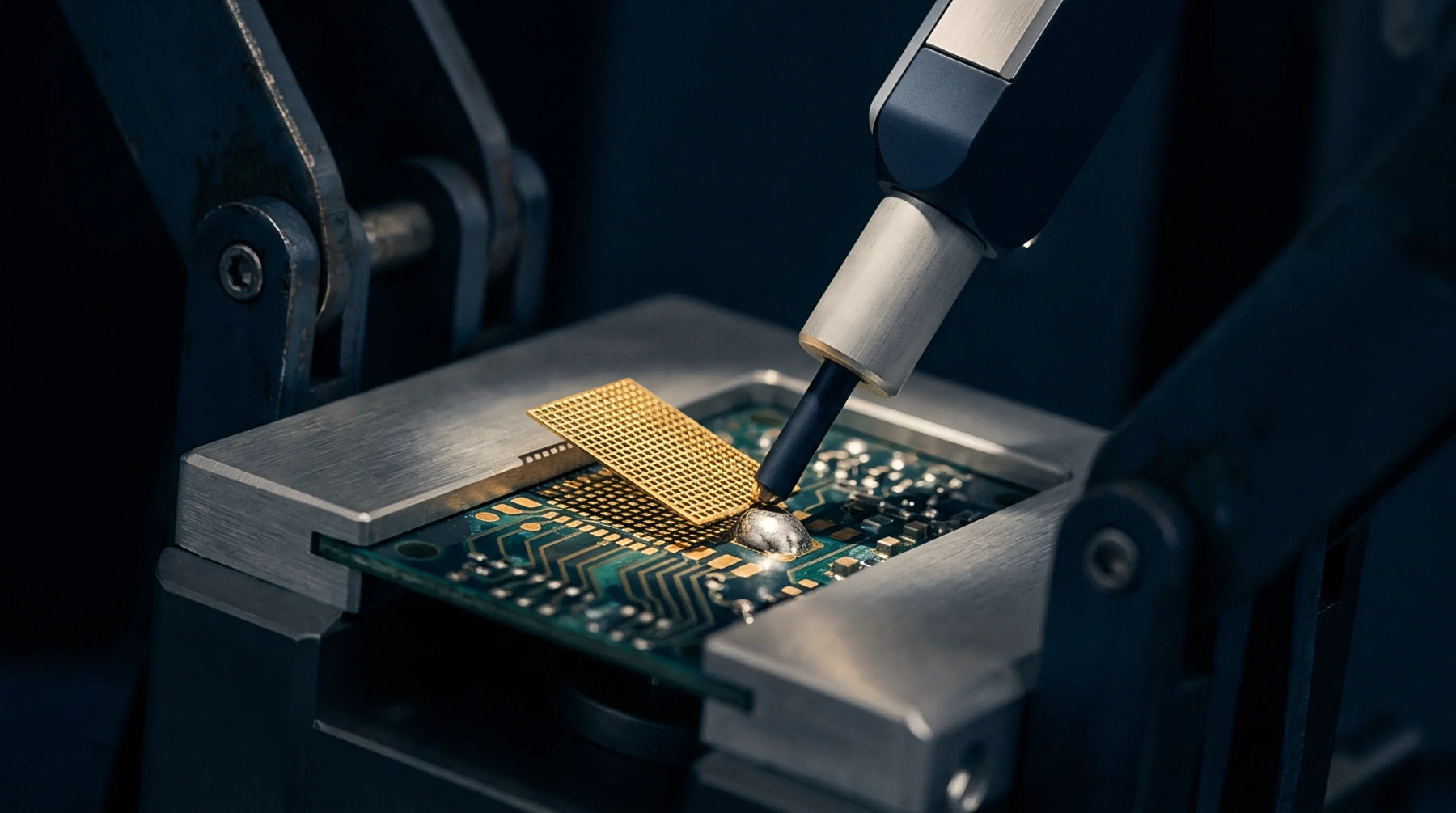
Electromagnetic suppression materials rely on suspended spherical metal particles to convert high-frequency radiation into thermal energy. A carbonyl iron absorber consists of highly pure, micron-sized iron spheres distributed uniformly within an elastomeric or polymeric binder. This structural layout provides magnetic loading that targets electromagnetic interference without establishing conductive pathways.
Permeability Profile
High-frequency absorption depends on the complex magnetic permeability of the metal particles. In a carbonyl iron absorber, the magnetic losses are prominent in the range of one to fifteen gigahertz. Because of the spherical shape of the particles, the demagnetization factor is isotropic, which yields predictable performance regardless of field orientation.
This is measured by coaxial airline instruments.
Thermal Dissipation
Mechanical reliability of the composite depends on how well it transfers heat generated by high-frequency absorption. The carbonyl iron absorber has a thermal conductivity that prevents heat build-up under high RF power loads. If the temperature exceeds the curing limit of the polymer matrix, degradation occurs.
Thus, the material remains suitable for shielding within metal enclosures where convection is limited. When the absorber operates close to high-power components, the thermal energy is transferred to the outer metal casing of the board assembly, maintaining the temperature below eighty degrees Celsius. This prevents physical deformation.