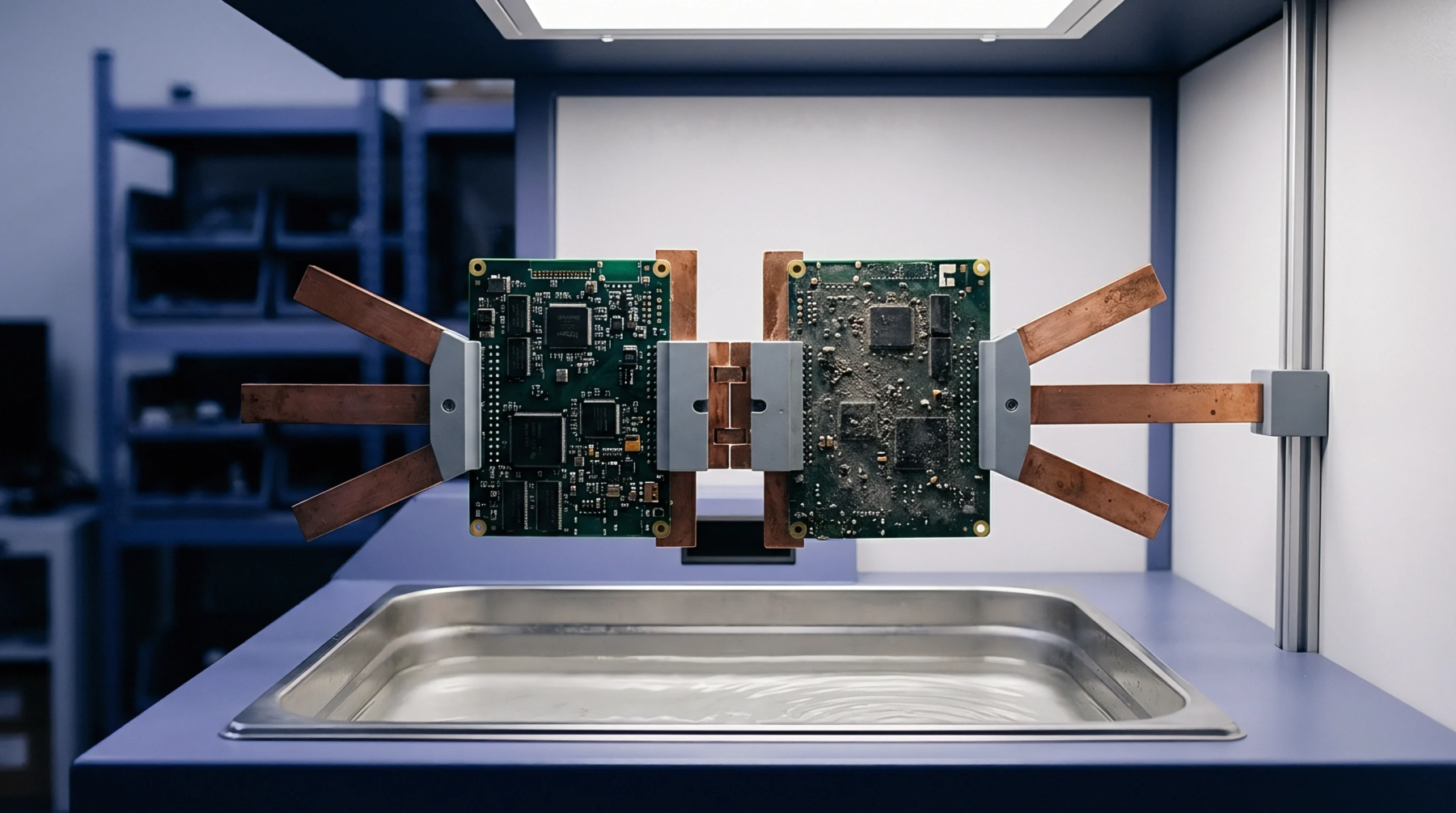
Thermal Fracture
Mechanical failure in a solder interconnection arises when insufficient heat transfer during reflow leaves grain boundaries unbonded across the alloy volume. A cold joint emerges during printed circuit board assembly when temperature profiles fail to reach the liquidus point of the specific solder paste applied. Incomplete metallurgical reaction prevents the formation of proper intermetallic layers between component leads and copper pads.
Microscopic inspection under optical magnification reveals a dull, powdery surface texture rather than the bright, reflective finish characteristic of properly wetted metal. This defective connection lacks structural integrity and electrical reliability, threatening total circuit failure under thermal cycling or vibration stress.
Electrical Resistance
Excessive voltage drop across a deficient termination stems directly from reduced contact area and microvoiding within the crystalline structure. Such faulty interconnections introduce unwanted impedance into sensitive signal paths, generating localized heat during high-current operation. Automated optical inspection equipment detects surface irregularities, while subsequent X-ray imaging exposes internal voids that traditional cameras miss.
Resistance testing via four-wire Kelvin probes isolates these resistive anomalies on assembled printed circuit boards before functional verification begins. Unmitigated interface degradation accelerates oxidation over time, permanently severing continuity within the electronic assembly.
Process Qualification
Manufacturing engineers prevent defective interconnections by profiling reflow ovens with thermocouple attachments to verify exact thermal inputs across every board zone. Pre-production screening of solder pastes ensures viscosity and flux chemistry match the operational parameters of the convection equipment. Equipment maintenance schedules dictate regular calibration of heating elements to eliminate temperature drift during high-volume production runs.
Quality control protocols mandate destructive cross-sectioning audits on sample coupons to measure intermetallic compound thickness and grain structure morphology. Rigorous profile optimization transforms variable assembly outcomes into repeatable metallurgical bonds across commercial electronics manufacturing lines.