Base Material
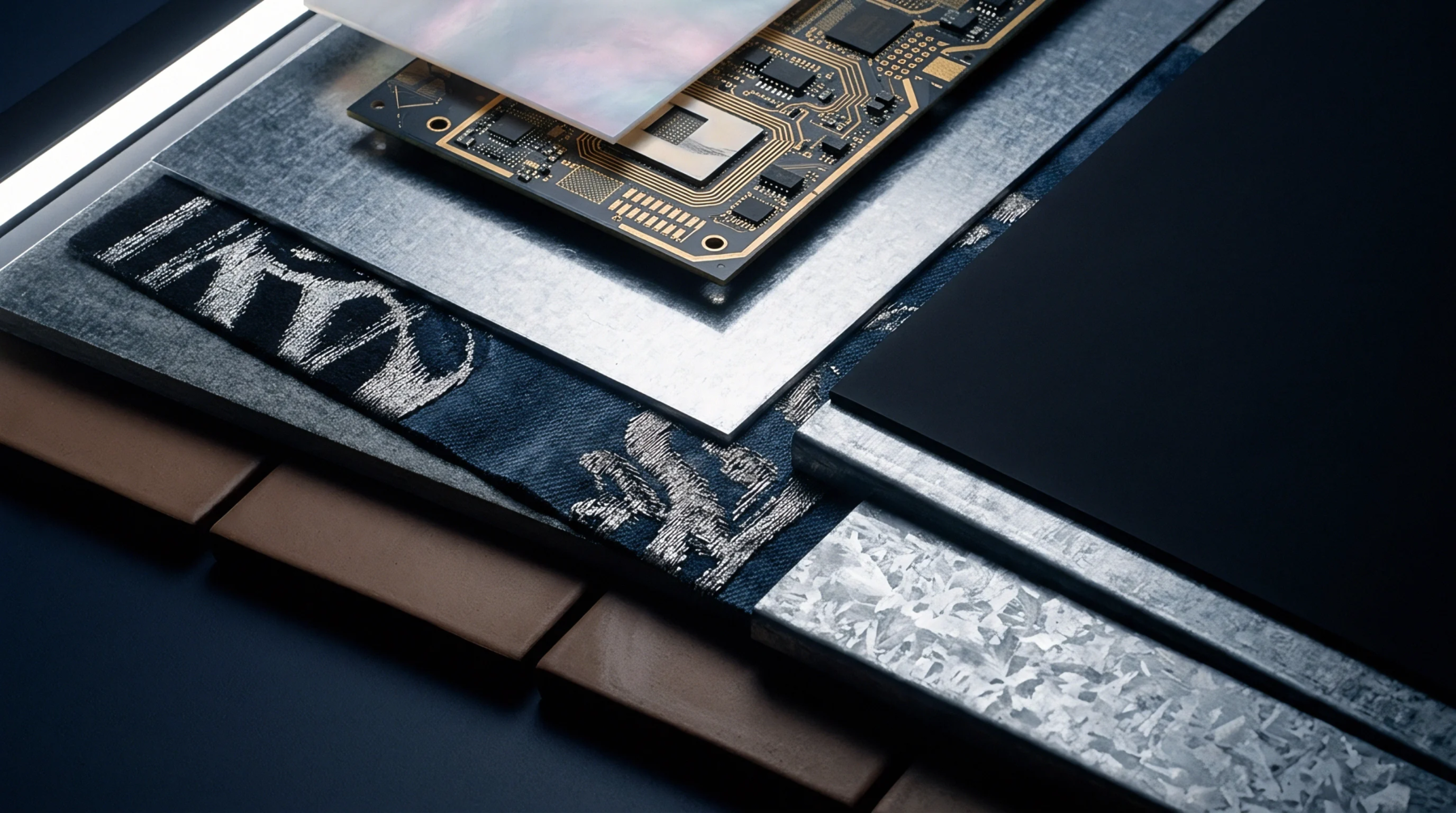
A dielectric core reinforced with fiberglass and coated with electrolytic copper foil functions as the foundation for printed circuit board construction. This copper clad laminate defines the electrical and mechanical limits of a device through its dielectric constant and thermal coefficient of expansion. Resin systems such as epoxy or polyimide dictate the flame retardance and glass transition temperature of the board.
Fabrication houses etch these surfaces to define signal paths, while the bond strength between the foil and the resin prevents delamination during subsequent assembly cycles.
Fabrication Metric
Manufacturers select substrate thicknesses based on impedance requirements and total board count for multilayer stackups. The copper clad laminate undergoes drilling and plating processes where registration accuracy remains sensitive to the inherent expansion properties of the base material. Excessive heat during soldering induces mechanical stress at the interface between the metal and the dielectric, potentially resulting in barrel cracking or pad lifting.
Inspection protocols focus on the thickness of the dielectric and the roughness of the copper surface to ensure signal integrity and proper adhesion after chemical treatment.
Assembly Requirement
Reliability standards govern the moisture absorption and chemical resistance of the finished panel during reflow or wave soldering. Exposure to extreme temperatures causes the copper clad laminate to expand at a different rate than the metallic components or the mounted hardware, which creates shear force on internal vias. Rigorous testing validates that the material sustains electrical conductivity across multiple thermal shocks without warping or surface degradation.
Consistent performance under these conditions dictates the longevity of the final product.