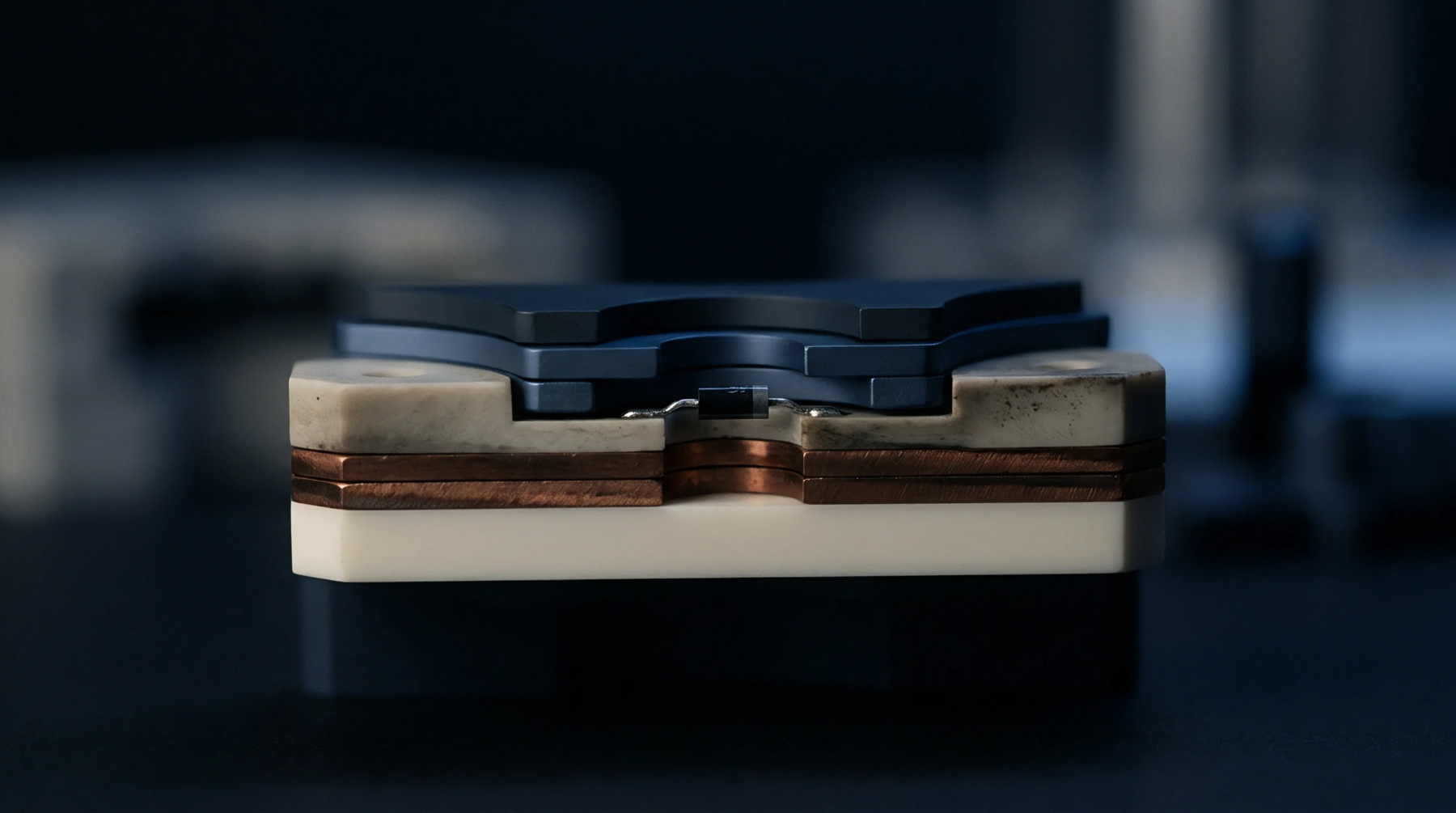
Insulation Failure
Destructive electrical conduction through a solid insulating medium destroys the dielectric barrier between adjacent conductor layers under extreme voltage stress. Occurrence of dielectric rupture transforms an insulating laminate into a conductive path through irreversible material degradation. The breakdown event marks the absolute operating boundary for high voltage circuit board substrates.
Plasma Channel
Intense electric fields accelerate free electrons within the resin matrix, initiating impact ionization that forms localized conductive filament channels. Localized heating during breakdown vaporizes epoxy resin, leaving carbonized tracks across substrate layers. Carbon deposits lower the resistance across the fault zone to near zero ohms, preventing voltage recovery after the stress passes.
Moisture absorption accelerates breakdown by creating high permittivity pathways along glass fibers within FR4 laminates. Laminate voiding acts as a primary field concentrator, causing early failure at voltages below theoretical material ratings. Multilayer board designs require adequate dielectric thickness to withstand transient overvoltages without dielectric puncture.
Voltage Threshold
Standardized hi-pot testing applies ramped direct current voltages between isolated circuit nets to measure breakdown limits. Dielectric withstand strength decreases as ambient temperature elevates polymer chain mobility inside epoxy systems. Thickness tolerances on core laminates dictate the safety margin against electrical arc propagation.
Microscopic pinholes in solder mask coatings reduce creepage paths across surface traces exposed to atmospheric contamination.