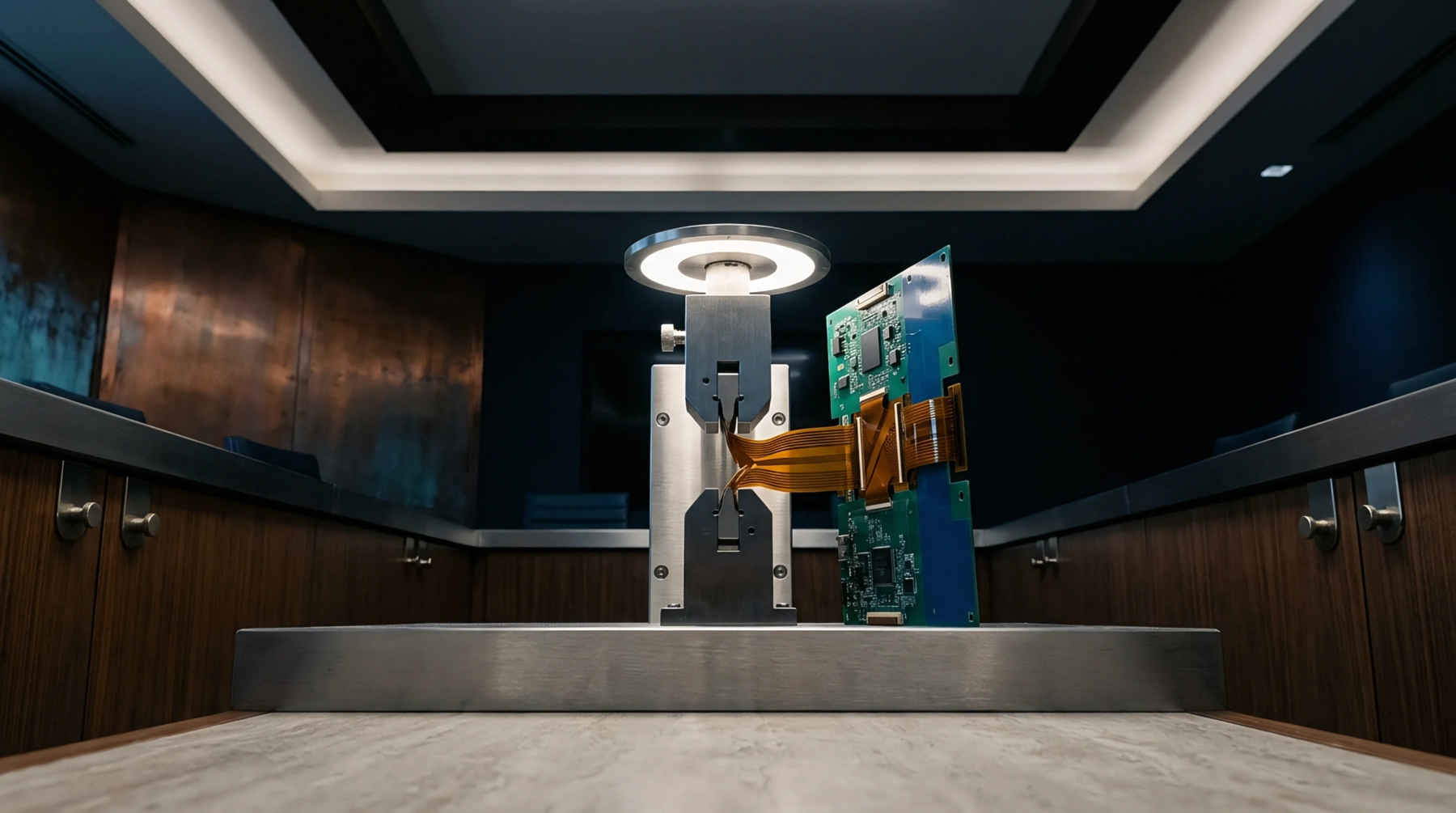
Desiccant Enclosure
Active environmental control hardware maintains low relative humidity environments to protect moisture-sensitive electronic components from atmospheric rehydration. An automated dry storage cabinet utilizes desiccant baking systems or ultra-dry nitrogen purge cycles to hold interior relative humidity below five percent. This controlled atmosphere arrests the absorption of ambient water vapor into plastic surface-mount device packages without requiring elevated thermal baking.
By maintaining a desiccated volume, the equipment preserves the remaining floor life of open moisture barrier bags between assembly steps.
Moisture Recovery
Door openings in factory environments admit ambient air, introducing water vapor that must be rapidly extracted to maintain protective low-humidity conditions. Inside a dry storage cabinet, regenerative desiccant rotors or quick-acting nitrogen flush valves automatically trigger when internal sensor thresholds are breached. Recovery times to sub-five percent relative humidity vary based on door open duration and ambient air moisture content, with industrial units achieving stabilization within three to fifteen minutes.
Rapid recovery prevents surface condensation on cold packages and stops moisture diffusion into hygroscopic molding compounds. Controlled internal airflow distributes dry air evenly across component reels, trays, and cut tapes stored inside shelf compartments.
Desorption Standard
Storage within ultra-low humidity enclosures provides passive moisture removal over extended dwell periods. When components reside inside a dry storage cabinet at relative humidity under five percent for a duration five times the previous exposure window, floor life clocks reset according to IPC guidelines. This ambient desorption process avoids thermal stress associated with traditional high-temperature oven baking.