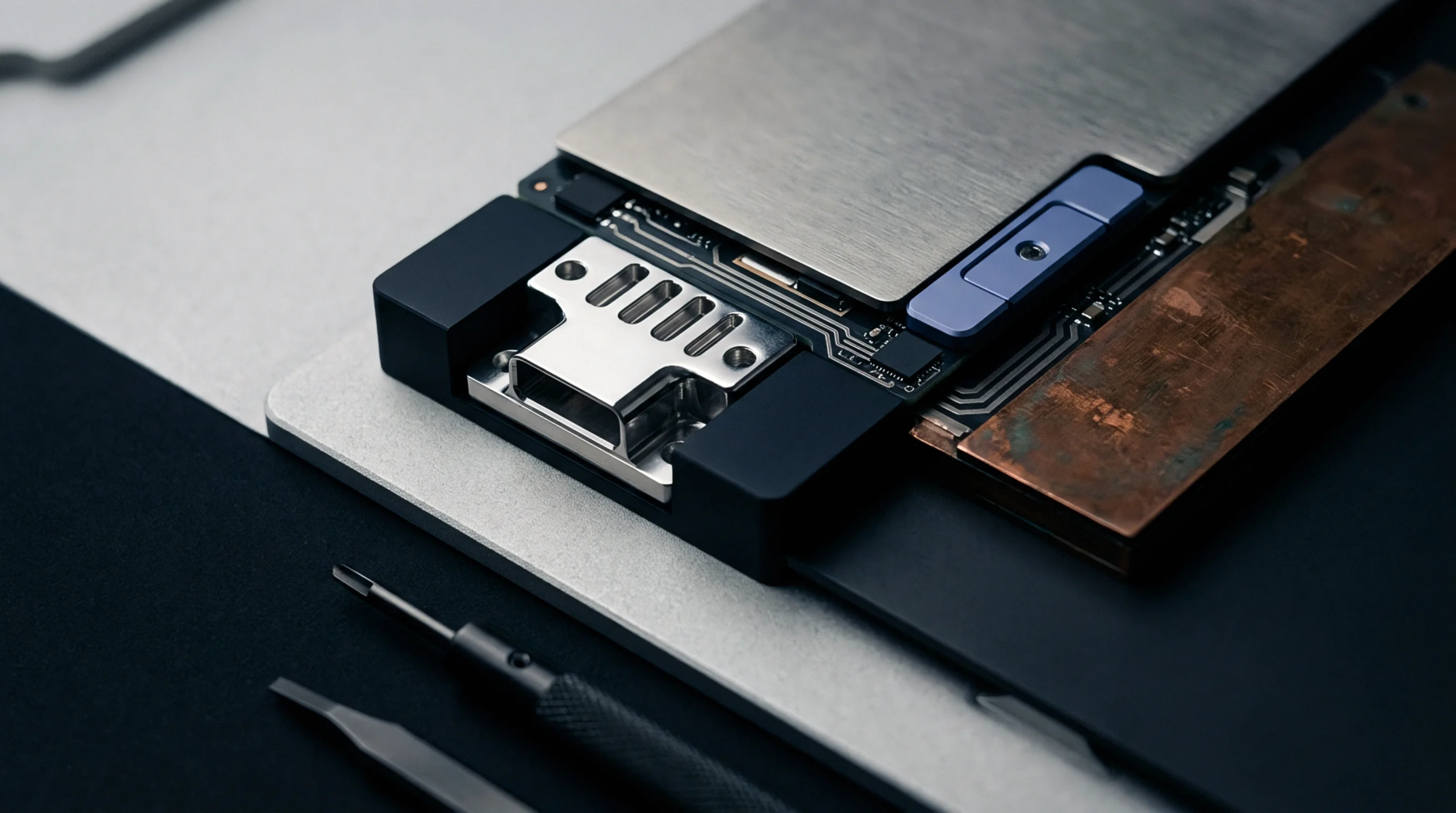
Thermal Sink
Electronic parts characterized by high physical volume and weight require more thermal energy to reach soldering temperatures than the surrounding circuit board and passive devices. A high mass component such as a large power inductor, a shielded connector, a heavy relay, or a metal housed transformer acts as a local heat sink during the reflow process. This part often dictates the requirements of the thermal profile because it is the slowest to reach the liquidus state.
Heating Lag
The large internal volume of the part prevents the rapid absorption of heat from the oven atmosphere. While a small resistor might reach the liquidus temperature in seconds, a high mass component may remain well below the melting point of the solder paste for a duration of the reflow cycle. This creates a temperature differential across the assembly that can lead to cold solder joints if the soak time is insufficient.
The thermal inertia of such a part also means it continues to transfer heat into the board after the assembly has moved into the cooling zone.
Reflow Adjustment
Process engineers must extend the soak time or increase the peak temperature of the oven to ensure that the interface between the part lead and the pad reaches the necessary temperature. This must be done carefully to avoid overstressing smaller, more heat sensitive components on the same board. In some cases, localized heating through robotic soldering or selective soldering is used to address a high mass component without subjecting the entire assembly to extreme temperatures.
If the temperature is not correctly managed, the resulting joint may have poor intermetallic formation and low mechanical strength.