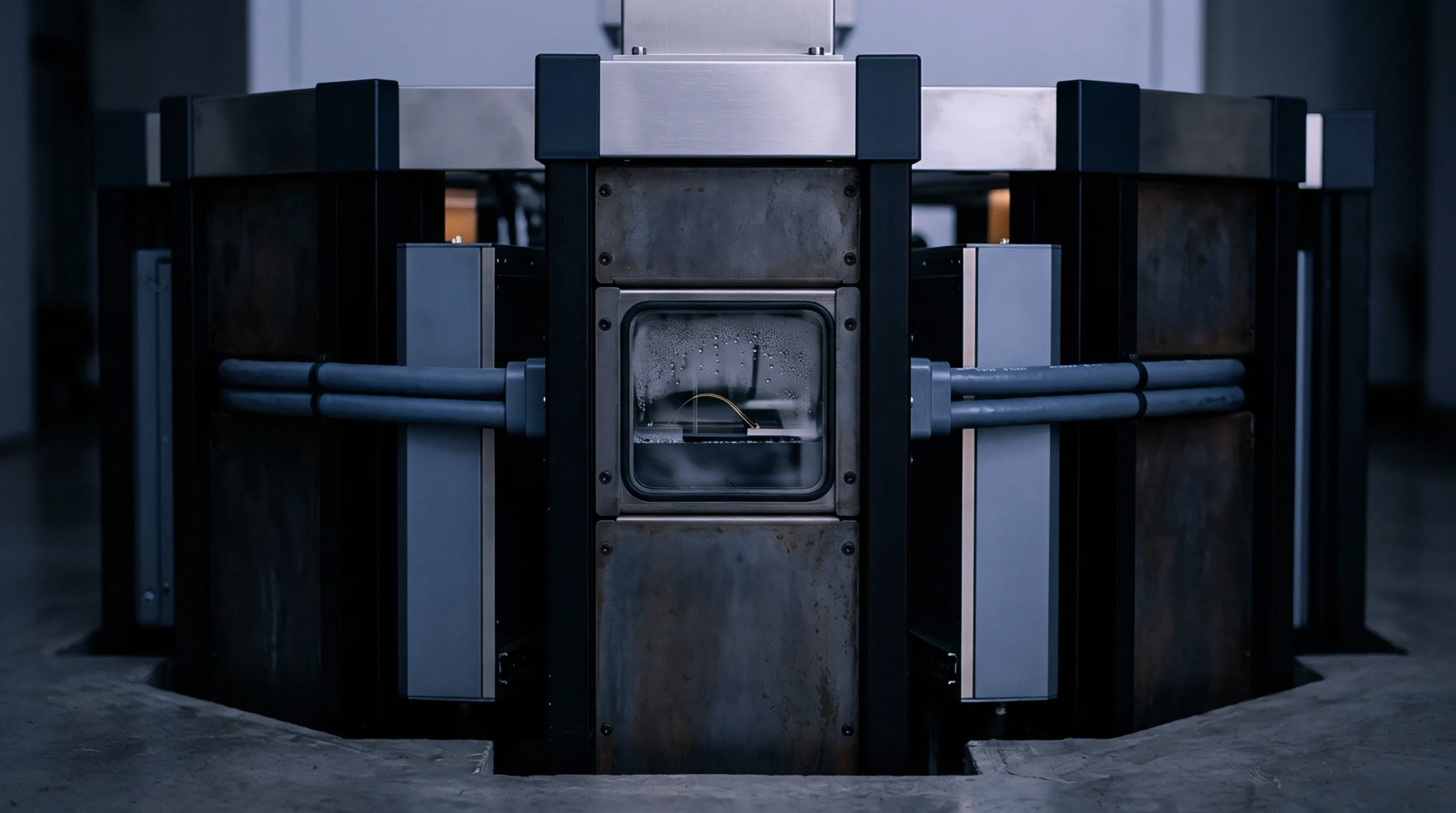
Kinematic Boundary
Mechanical motion boundaries governing the first time derivative of acceleration define the smooth profile limits of pick-and-place positioning axes. Motion controllers enforce jerk limits to constrain high-frequency chassis vibration during rapid gantry translation across a panel envelope. Without these constraints, instantaneous step changes in acceleration generate mechanical resonance that degrades spatial positioning accuracy.
Machine vision alignment algorithms require stabilized components prior to board contact, and sudden lateral impulses can dislodge miniature passives held on vacuum nozzles.
Dynamic Stabilization
Gantry motion profiles transition from trapezoidal velocity paths to S-curve trajectories when jerk limits govern drive stages. Rotary motors and linear encoders coordinate X, Y, and Z axes through smooth polynomial spline profiles. The suppression of resonance cuts settling time, allowing placement spindles to approach target coordinates without physical overshoot.
High-speed turret heads carrying fragile micro-devices like 01005 passives or bare silicon dies depend on steady gantry travel to prevent inertia from overcoming nozzle tip suction. Lowering jerk limits preserves mechanical drive components, reducing ball screw wear and linear guide rail degradation. The trade-off appears directly in gross placement velocity.
Overly conservative jerk restrictions lengthen motion ramps, stretching individual component cycle times. Production engineers tune jerk parameters to balance machine cycle rates against nozzle retention force and post-move settling tolerances.
Resonance Envelope
Mechanical chassis resonance sets the upper boundary for jerk parameter configuration. When acceleration derivatives excite structural frequencies of the frame, placement heads deposit components outside pad boundaries, yielding non-conforming solder alignments under IPC-A-610 criteria.