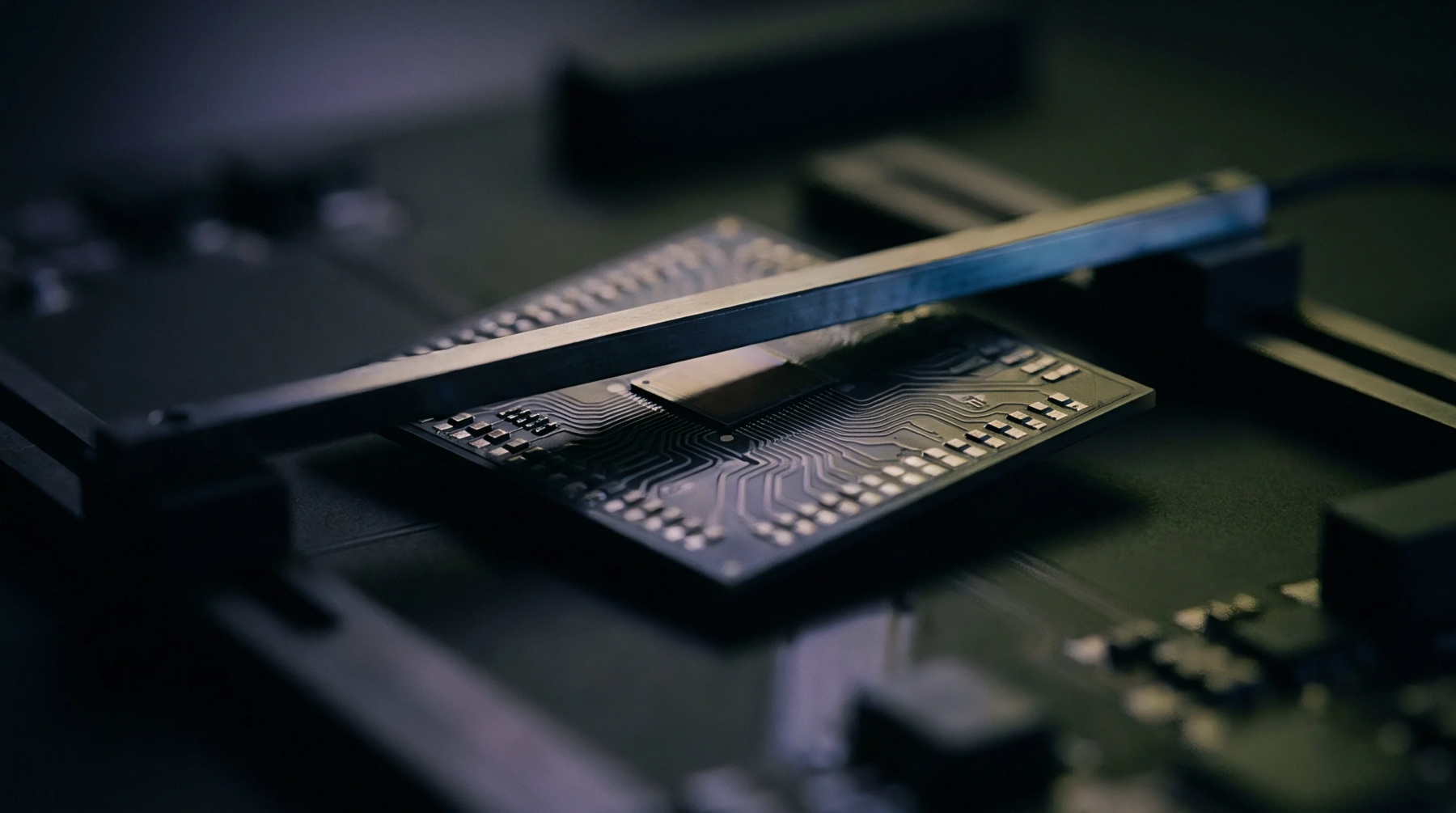
Metrology Instrument
Non contact measurement device utilizing a focused beam of light captures the distance to a target surface through triangulation or time of flight. In electronics manufacturing, a laser displacement sensor determines the thickness of solder paste or the height of seated components. High speed data acquisition allows for rapid scanning of entire circuit boards during the production cycle.
Sensing Mechanism
Triangulation method used by the laser displacement sensor involves projecting a spot onto the board and detecting the reflected light on a linear sensor. As the surface height changes, the position of the reflected spot on the detector shifts proportionally. Calculating the shift provides a precise vertical coordinate for every point in the scan.
Modern units use blue lasers to improve performance on shiny or translucent materials like solder mask.
Resolution Constraint
Surface characteristics of the PCB influence the accuracy of the returned signal. A laser displacement sensor may experience speckle noise or multiple reflections when hitting highly reflective solder joints. To combat this, advanced systems employ signal processing to filter out ghost images.
The measurement range is typically narrow to maintain sub micron resolution across the inspection area. Regular calibration against a known step height standard ensures the repeatability of the sensor readings.