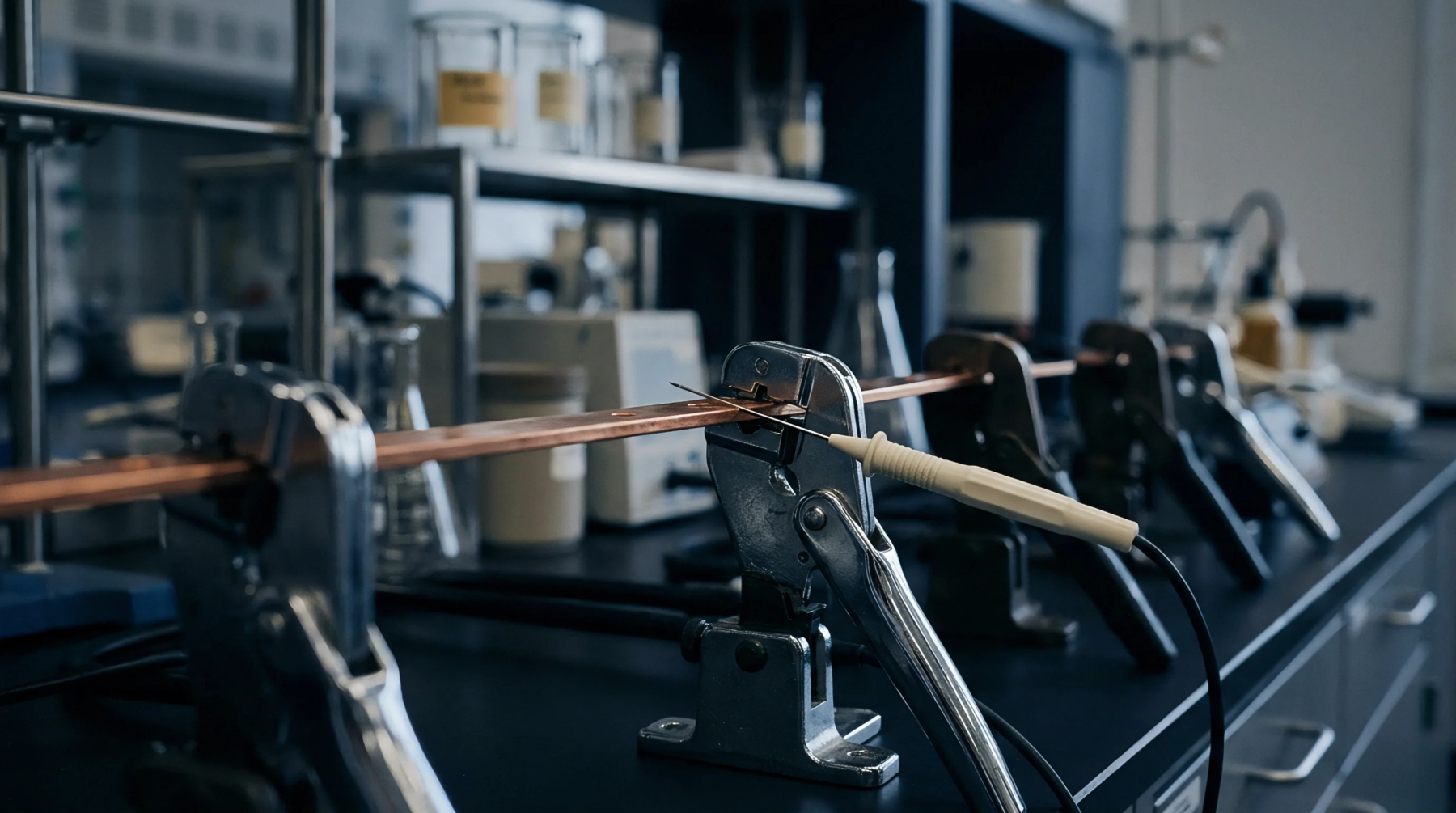
Measurement Instrument
Precision electronic tools verify the storage capacity of capacitors and dielectric layers at operational levels below one megahertz. Operating a low frequency capacitance bridge allows a technician to derive the dielectric constant of a substrate by measuring how much charge it holds. This instrument determines the bulk material properties of prepreg and core materials after they exit the press.
It remains limited to diagnostic and batch inspection tasks rather than high-speed functional signaling.
Accuracy Benchmarks
Balancing the circuit against known standards provides a highly stable reading that resists noise from nearby power lines. A low frequency capacitance bridge uses a comparative method to zero out errors from the test leads and environment. This high degree of sensitivity reveals shifts in resin-to-glass ratios that other tools might overlook.
Even small variations in layer thickness show up as measurable changes. Correct nulling provides focus. Precise nulls matter.
Operational Boundaries
Signal levels within the bridge are kept low to prevent the dielectric from reaching saturation or breaking down during the test. When a low frequency capacitance bridge is engaged, it typically captures data at specific intervals like one kilohertz to match industry standard datasheets. Values obtained here help engineers set base expectations for DC performance.
Reliable results guide designers. Errors drop away.