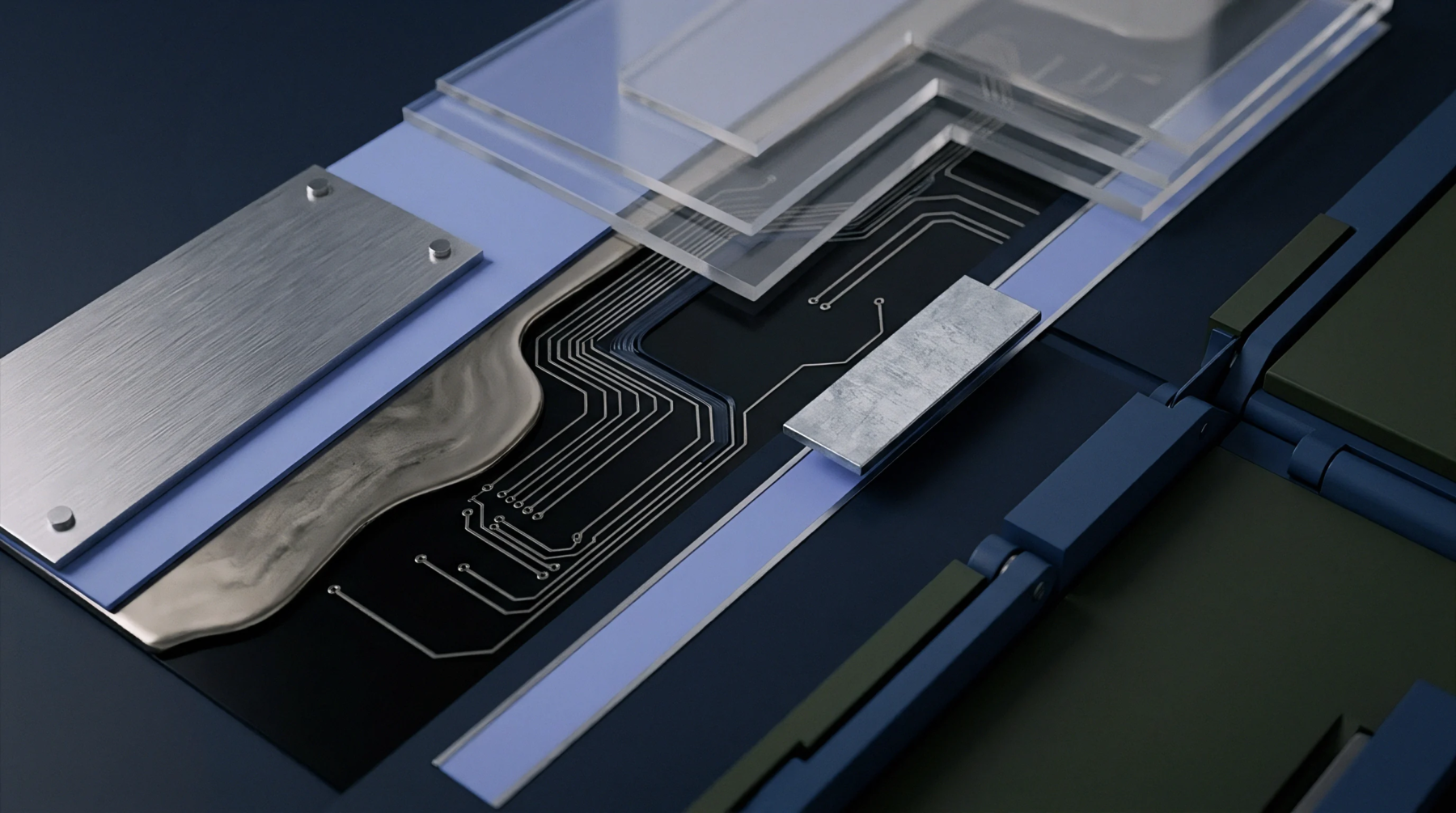
Fracture Mechanics
Metallic interconnects and substrate interfaces suffer from internal separation when thermal expansion coefficients mismatch during cyclic cooling or heating cycles. Micro crack propagation describes the incremental advancement of these discontinuities through solid material over repeated stress intervals. Forces applied at the crystalline boundary drive separation until the energy release rate exceeds the fracture toughness of the material matrix.
Ductile metals often deform plastically at the crack tip before total separation occurs.
Damage Accumulation
Thermal shock cycles trigger localized fatigue that forces the initiation of sub-surface defects within printed circuit board barrels or solder joints. Micro crack propagation continues as the stress concentration factor increases with every subsequent thermal excursion. Initial fissures start at points of maximum strain, such as the interface between the copper wall and the glass fiber reinforcement.
Growth rates vary according to the geometry of the void and the elasticity of the surrounding polymer matrix. Larger fractures eventually reach critical length where resistance to mechanical load drops below operational limits. Electrical impedance fluctuates as the conductive path narrows or fails entirely.
Detection Methods
Acoustic emission testing identifies high frequency elastic waves generated by the sudden release of energy during internal material rupture. Precise monitoring allows the observer to map the origin and direction of individual failure events within a complex structure. Ultrasonic inspection provides cross sectional imagery of hidden discontinuities without damaging the host assembly.
Comparison against baseline attenuation profiles reveals the progress of degradation over the operational life of the device. High resolution imaging remains the definitive method for validating the internal structural integrity of finished electronics.