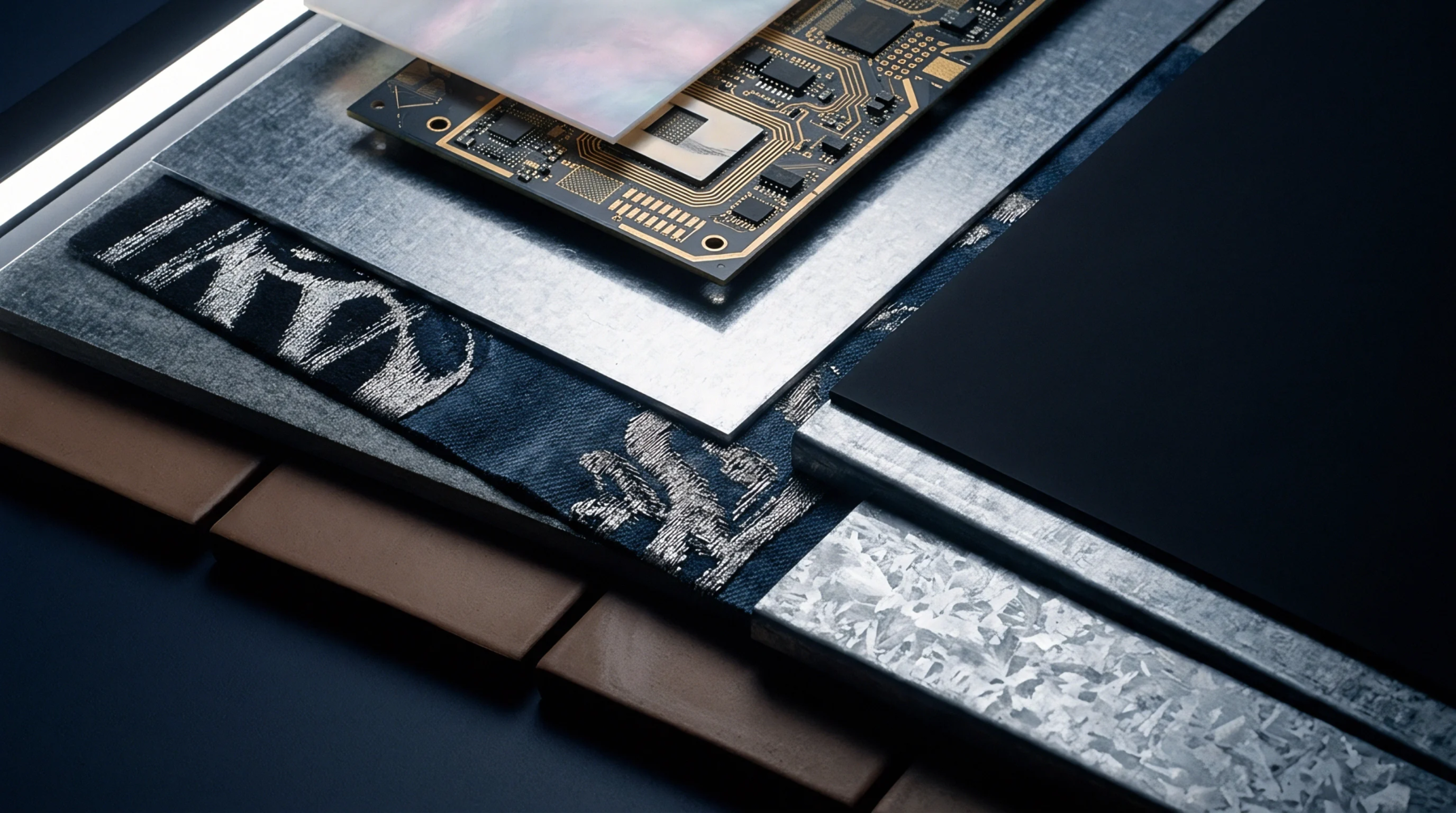
Thermal Profiling
Thermal distribution control across separate heating zones defines multi-zone platen heating in industrial lamination presses used for printed circuit board fabrication. This segmented thermal architecture prevents resin starvation during multilayer stackup consolidation by maintaining independent temperature setpoints across discrete surface areas. Differential expansion forces during high pressure lamination create internal stresses when heat application lacks spatial granularity, making localized temperature regulation necessary for dimensional stability.
Board manufacturers deploy this capability to offset edge heat loss on large presses and ensure uniform polymerization rates through thick dielectric materials.
Warpage Prevention
Planar accuracy relies entirely on this localized heating control to counteract the thermal gradients that cause printed circuit boards to cup or twist during cooling cycles. Uneven cross-linking density across the core dielectric creates asymmetrical shrinkage vectors when presses apply uniform heat without regard for mass distribution differences in the circuit layout. Operators configure individual thermal zones to compensate for copper density imbalances across the working area, neutralizing internal stress before resin gelation completes.
Automated optical inspection equipment measures post-press bow and twist values to verify that thermal adjustments successfully restrict plate deformation within acceptable tolerances.
Cure Kinetics
Resin flow and cross-linking reactions depend upon precise thermal energy transfer from the heated platens into the multilayer assembly during pressing. Exothermic polymerization releases chemical energy that accelerates temperature escalation inside the core material, requiring controllers to lower zone outputs dynamically to prevent thermal degradation of the epoxy matrix. Thermocouples embedded directly beneath the working surface feed real-time temperature data back to proportional-integral-derivative controllers that modulate power delivery for each independent heating zone.
Precise thermal management ensures complete resin cure across every layer of the printed circuit board assembly without inducing thermal shock or void formation within the dielectric layers.