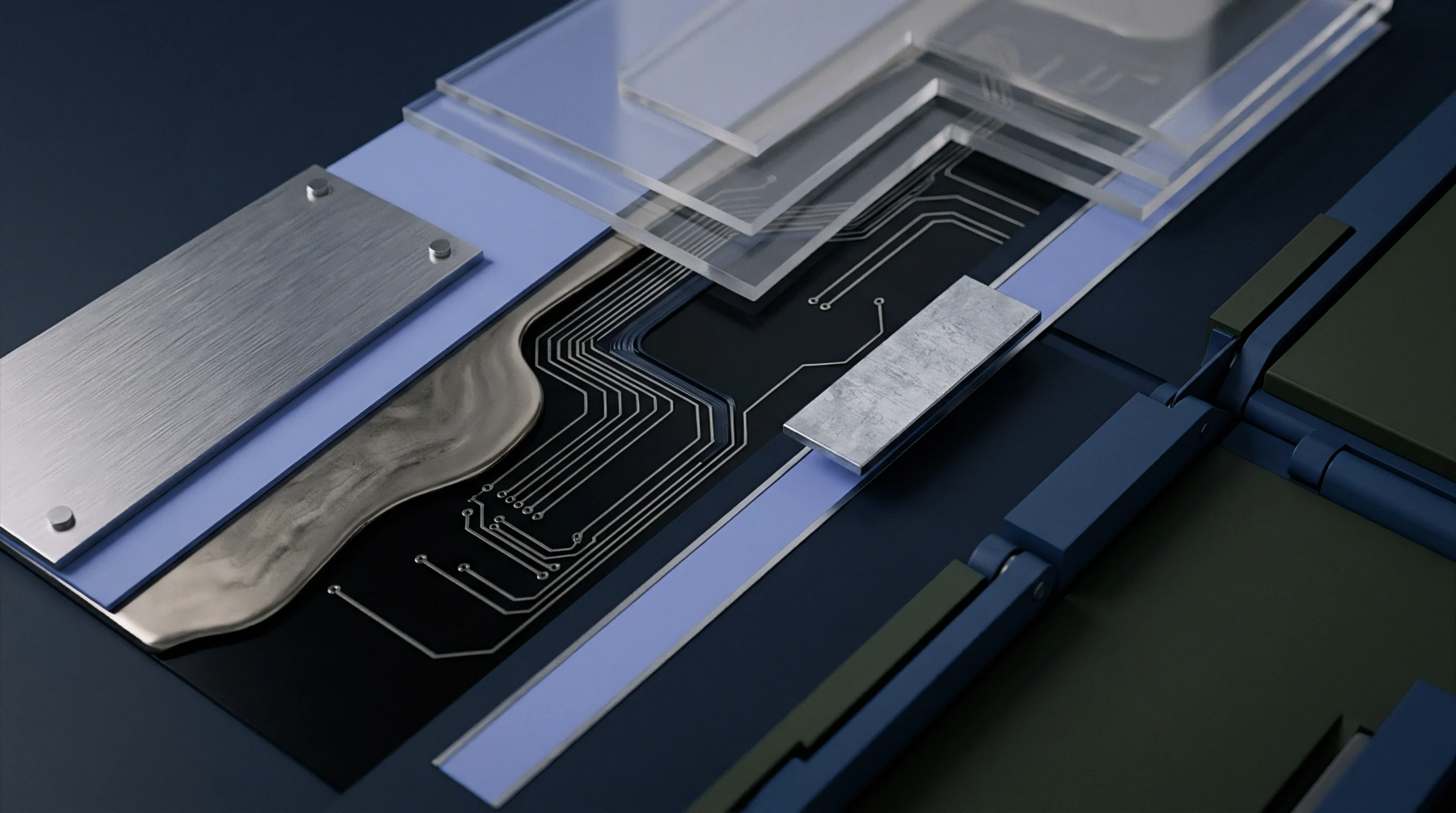
Thermal Pressing
Heavy industrial manufacturing relies on the platen vacuum press to consolidate multi-layer printed circuit boards by applying simultaneous heat and vertical pressure under negative atmosphere. Air pockets trapped between prepreg layers during layup cause delamination during subsequent thermal stress, so evacuation removes volatiles before resin cross-linking locks the structure. Hydraulic rams drive parallel steel plates upward against a fixed crown, closing the chamber while mechanical pumps draw down internal pressure below five kilopascal absolute.
Curing Dynamics
Programmable logic controllers regulate the temperature ramps of embedded cartridge heaters to match the gel time of epoxy resin systems without inducing thermal shock. Resin viscosity drops initially as temperature rises toward the glass transition point, allowing fluid flow to fill interstitial voids left by woven glass reinforcement fibers. Elevated pressure maintains intimate contact across the copper foil interfaces while the polymer network transforms from a liquid prepolymer into a rigid thermoset solid.
Cycle Verification
Strain gauge arrays mounted within the press platens monitor parallelism tolerances across the working surface to prevent localized thickness variations in the pressed laminate. Post-cure inspection uses ultrasonic scanning to detect internal acoustic impedance discontinuities that reveal residual void formation or resin starvation zones. Dimensional stability checks confirm that finished panels meet thickness callouts specified in procurement documentation before mechanical routing separates individual circuit cards from the production panel.