Resin Consolidation
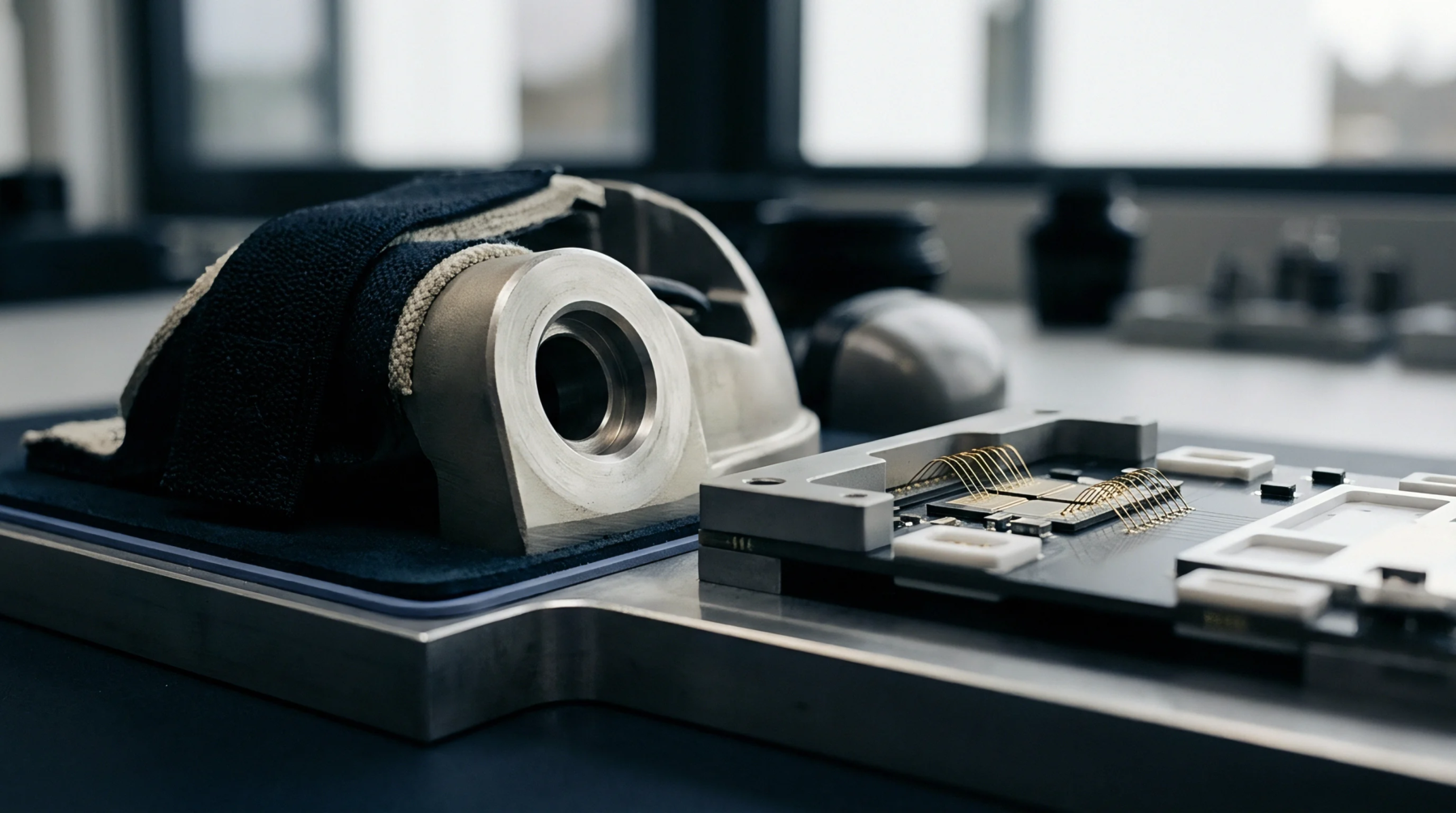
Multilayer circuit board production requires applying synchronized heat and pressure to bond B-stage sheets with internal copper layers during the press cycle. Prepreg lamination compression forces excess epoxy resin to flow evenly into microscopic voids while maintaining precise dielectric spacing between conductive planes. Hydraulic presses control this consolidation by ramping tonnage gradually to prevent fiber wash or core shifting inside high layer count assemblies.
Thickness Control
Finished board thickness depends entirely on resin squeeze out and the initial glass fabric architecture within the supplied material. Mechanical stops inside the hot press limit total platens travel, ensuring the final laminate meets rigid IPC spacing tolerances before outer layer imaging begins. Excessive pressure forces too much polymer out of the matrix, resulting in resin starved regions that reduce dielectric breakdown voltage.
Insufficient tonnage leaves trapped volatile gases inside the core, generating blisters during subsequent infrared reflow thermal shock testing.
Defect Prevention
Ultrasonic scanning equipment inspects the consolidated panels afterward to locate internal delamination or localized void formation caused by uneven thermal distribution. Operators adjust cooling rates inside the press to prevent thermal shock from warping copper planes during the transition back to room temperature. Precise hydraulic feedback loops monitor viscosity changes continuously, ensuring uniform mechanical strength across the entire surface area of the multilayer subassembly.