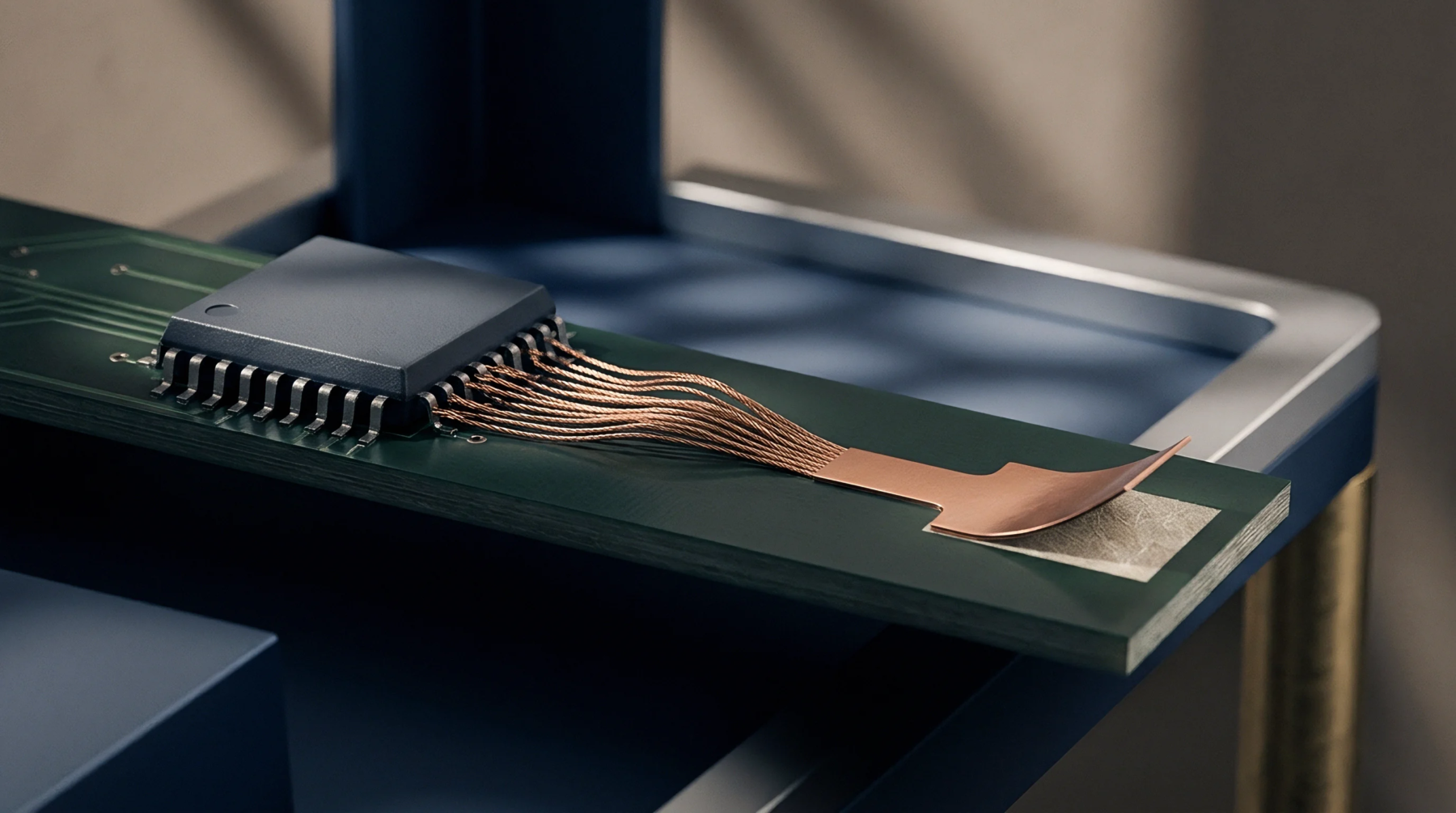
Nondestructive Technique
Acoustic waves travel through a material and reflect off internal boundaries to reveal the structural integrity of an assembly without damaging the components. This pulse-echo ultrasonic characterization identifies voids in solder balls or delamination between board layers by measuring the time and intensity of the returning signal. The technique relies on the difference in acoustic impedance between the solid material and an air gap.
High frequency transducers provide the resolution needed for micro electronics.
Measurement Action
Probes emit a short burst of ultrasound that penetrates the surface of the package. In pulse-echo ultrasonic characterization, the same transducer acts as a receiver to catch the reflected energy. An oscilloscope displays the peaks which represent the depth of each internal interface.
If a crack exists, a new peak appears earlier than expected.
Defect Isolation
Imaging of the internal features allows technicians to see the shape and size of hidden flaws. Using pulse-echo ultrasonic characterization is effective for checking the bond quality of flip chip bumps or the adhesion of a heat sink. It provides a way to verify the internal health of a board after environmental stress testing.
The data helps engineers understand if a failure was caused by a manufacturing error or a design flaw. It remains a standard tool in failure analysis laboratories.