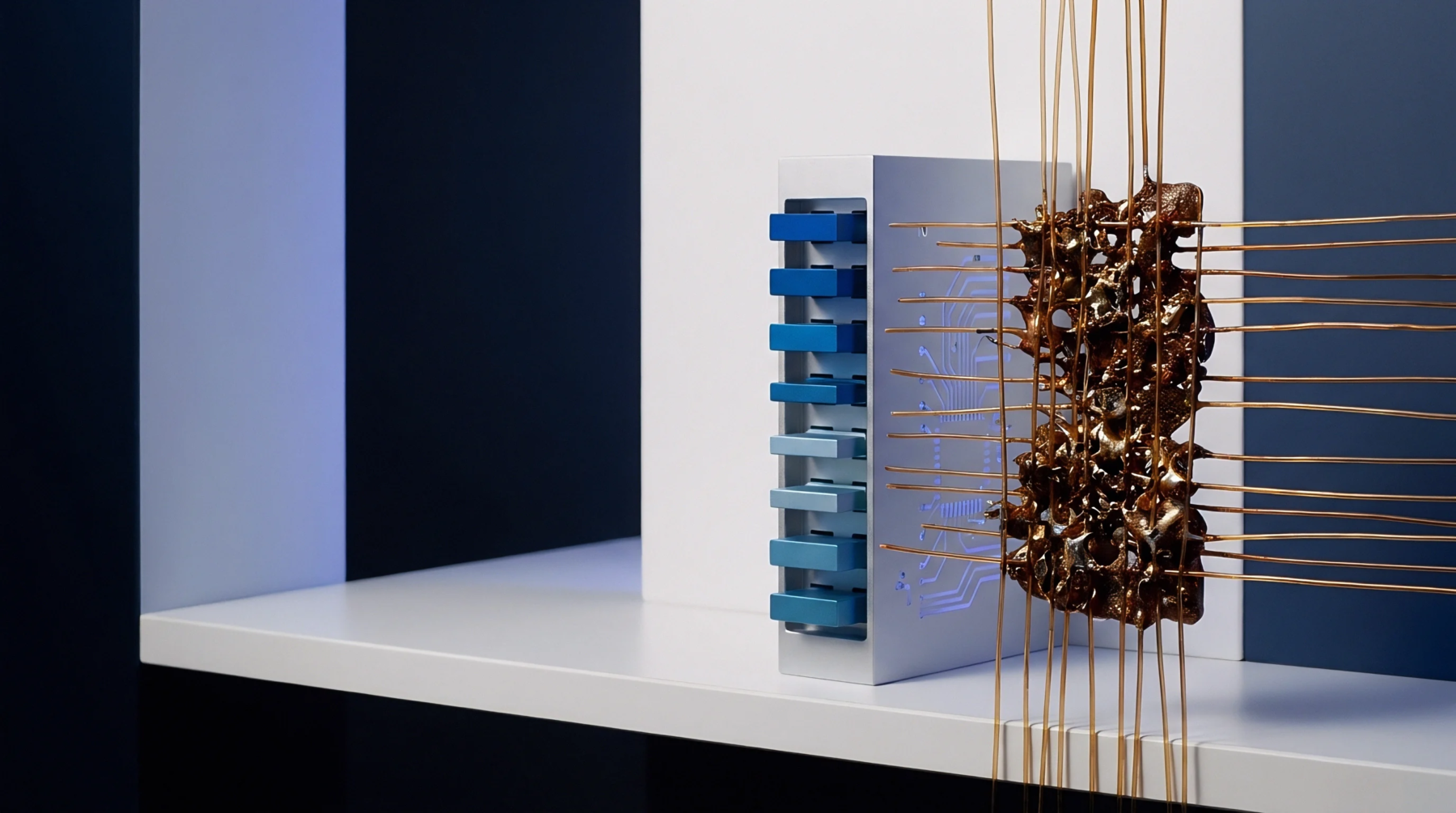
Polymer Network
An infusible molecular framework formed by chemically reacted epoxide or bismaleimide monomers holds reinforcement fibres together inside advanced printed circuit board laminates. This resin matrix transfers mechanical loads between individual glass or aramid filaments while protecting inner copper layers from moisture ingress and thermal degradation during reflow soldering operations. Complete conversion of liquid prepolymers into a fully cross-linked solid occurs during the high pressure lamination cycle inside multi daylight hydraulic presses.
Process engineers monitor cure advancement through differential scanning calorimetry to verify that the glass transition temperature meets strict thermal performance thresholds before board fabrication begins. Insufficient cross-linking leaves residual unreacted monomers that plasticize under assembly heat and lead to premature delamination during wave soldering.
Cure Kinetics
Chemical transformation from liquid state to rigid solid follows an Arrhenius rate dependency where temperature and activation energy dictate the velocity of network formation. Thermosetting formulations undergo gelation at a specific conversion percentage where viscosity rises exponentially and molecular weight approaches infinity. Post gelation reactions proceed through diffusion controlled pathways that require elevated bake cycles to achieve maximum conversion density.
Deviations in stoichiometry alter the final cross-link density and shift thermal endurance parameters downward during subsequent component attachment steps.
Interfacial Adhesion
Molecular bonding between the cured polymer network and treated copper foil or glass reinforcement relies on silane coupling agents that establish covalent linkages across dissimilar phases. Surface preparation protocols on inner layer foils create controlled oxide topographies that maximize mechanical anchoring sites for the incoming viscous compound. Shear stress generated during thermal cycling concentrates at boundary layers where moisture accumulation degrades silane bonds and initiates void formation.
Destructive cross-sectioning and subsequent acid bath exposure verify bond integrity by revealing whether separation occurs adhesively at the interface or cohesively within the bulk polymer.