Boundary Control
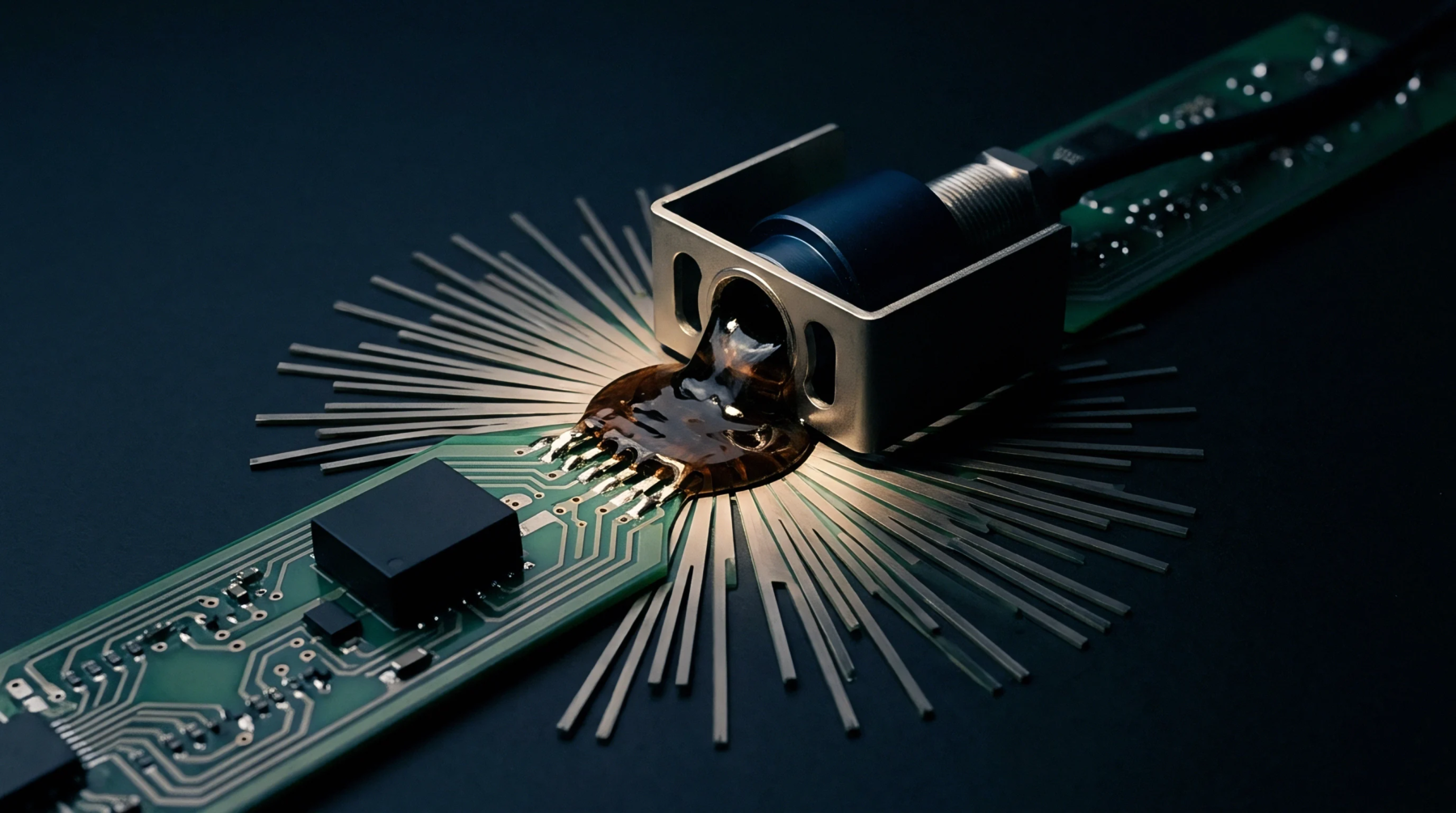
Rheological test geometries are designed to measure the flow behavior of complex fluids without introducing errors from boundary anomalies. The serrated parallel plate is a specialized testing fixture used in rotational rheometers to characterize highly filled materials such as solder paste. This geometry features a textured surface with micro-grooves that mechanically grip the material, preventing the fluid from sliding along the solid boundary during shear measurements.
It operates as the standard tool for obtaining accurate yield stress and viscosity data for structured suspensions.
Rheological Test
Solder paste behaves as a non-Newtonian fluid that can easily lose contact with smooth metal plates during testing. Utilizing a serrated parallel plate eliminates slippage at the measurement interface, ensuring that the applied deformation is fully transmitted through the sample thickness. Accurate shear measurements require that the groove depth is selected to accommodate the largest solder spheres in the suspension.
Paste Characterization
Measurements are conducted by placing the paste sample between the stationary and rotating members of the rheometer. When using a serrated parallel plate, the gap setting must be adjusted to account for the groove height to avoid crushing the solder particles. Yield stress determinations made with this geometry provide the baseline data needed to predict how the paste will behave under a stencil squeeze life.
Process engineers use these results to optimize printer parameters for fine-pitch printing runs.