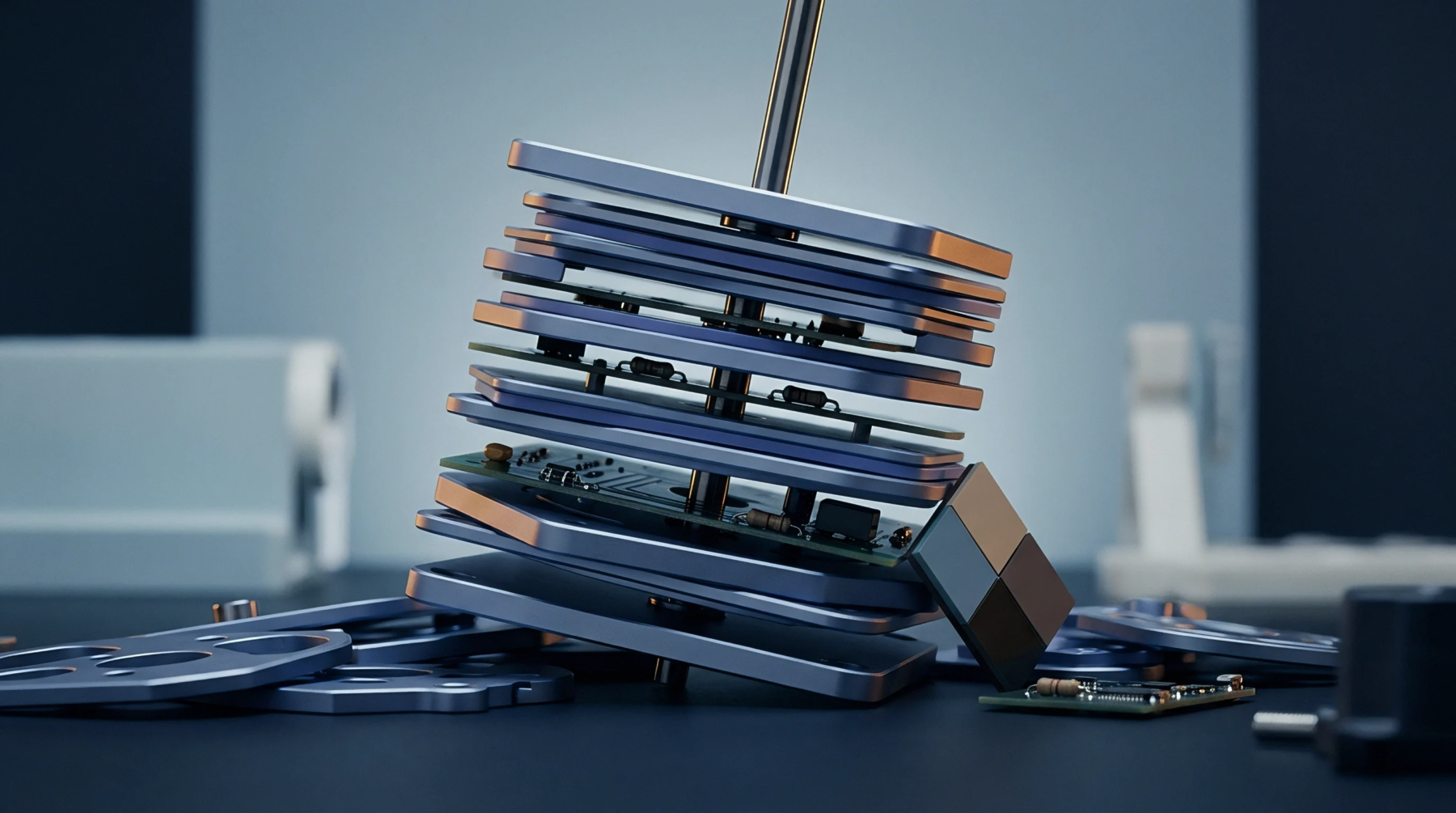
Dimensional Differential
Material deformation occurs when varying coefficients of thermal expansion between laminated layers cause mechanical stress during high temperature processing. This stage thermal expansion describes the volumetric change within a circuit board assembly as heat rises toward the glass transition point of the resin. Copper circuits and dielectric substrates possess distinct rates of movement, which creates internal tension during soldering cycles.
Such forces frequently exceed the structural limits of copper-to-dielectric adhesion.
Process Dynamics
Heat induction inside a reflow oven forces the laminate to expand at a rate determined by its composition and resin content. Epoxy resins occupy a larger volume as temperature increases, while metallic conductors remain rigid by comparison. The disparity creates shear stress across the interface of these dissimilar substances.
Micro-via structures often undergo physical distortion or cracking if the expansion rate remains uncontrolled during the rapid heating phase. Engineers monitor these vertical movements to prevent the separation of plated through holes from the surrounding conductive pads.
Failure Criteria
Internal voids or delamination emerge when the thermal stress overcomes the structural integrity of the substrate bond. Automated optical inspection equipment detects the surface signatures of this internal displacement through laser profiling or high resolution image comparison. X-ray imaging reveals potential barrel cracks inside small diameter holes that result from the uneven stretching of layers.
Excessive z-axis movement during lead-free soldering cycles requires stricter control of the heating profile to match the expansion characteristics of the laminate. High-density designs suffer more acutely from these internal shifts because the density of copper planes prevents uniform expansion across the board area. Reliability standards identify this phenomenon as a fundamental limit for the thermal cycling performance of modern electronic hardware.