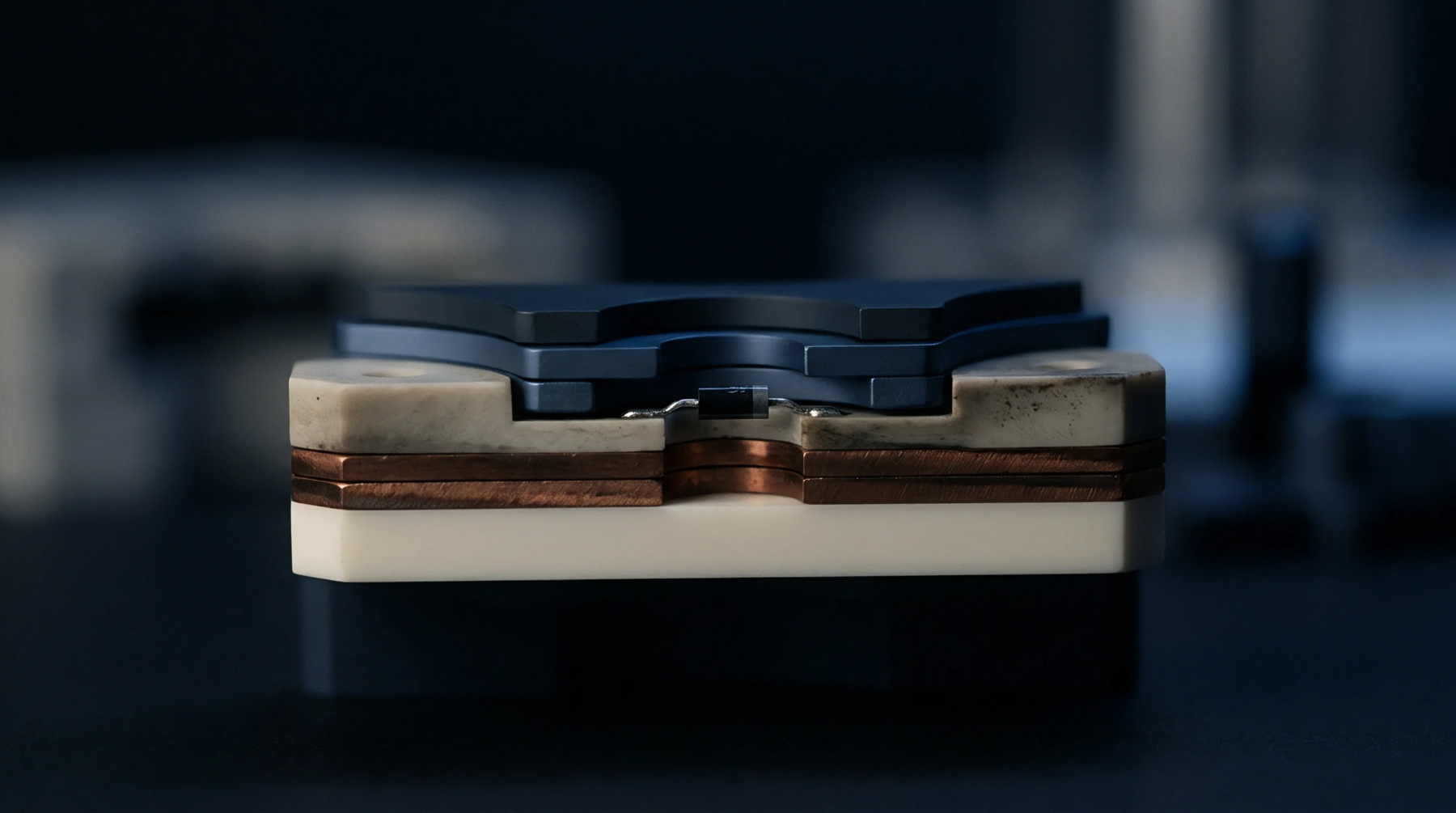
Material Boundary
Contact resistance between the base dielectric and the applied metal layers defines the mechanical and electrical integrity of the board. The substrate interface represents the specific atomic or molecular junction where conductive copper traces anchor into the organic core or laminate resin. This zone determines how effectively thermal expansion forces transmit from the board core into the circuit copper during soldering cycles.
Poor adhesion within this region leads to delamination or barrel cracking when the assembly experiences repeated heat cycling. Reliable adhesion relies on consistent surface roughness and chemical treatment applied to the laminate before the electrolytic plating process.
Contact Mechanics
Current density variations often emerge if the bond strength lacks uniformity across the entire panel surface. A stable substrate interface prevents voids from forming beneath the copper during the lamination of multilayer structures. Engineers quantify the effectiveness of this junction using peel strength tests that measure the force required to detach the copper from the insulating resin.
Variations in the surface topography, such as those introduced by micro-etching agents, alter the surface energy of the laminate to improve or hinder metal attachment. High peel strength values signal that the chemical treatment successfully generated sufficient anchorage points for the deposited metal.
Failure Potential
Delamination occurs when the forces acting on the trace exceed the chemical or mechanical bond strength at the junction point. Inspection procedures such as cross-sectioning and thermal shock testing detect degradation at the substrate interface before finished goods reach the field. Moisture absorption in the resin can weaken this bond over time, leading to impedance shifts or intermittent open circuits during operation.
Thermal stress cycles place the highest demand on this connection, as copper and laminate expand at different rates. Rigid control of the lamination process ensures that the contact zone maintains structural stability under environmental strain.