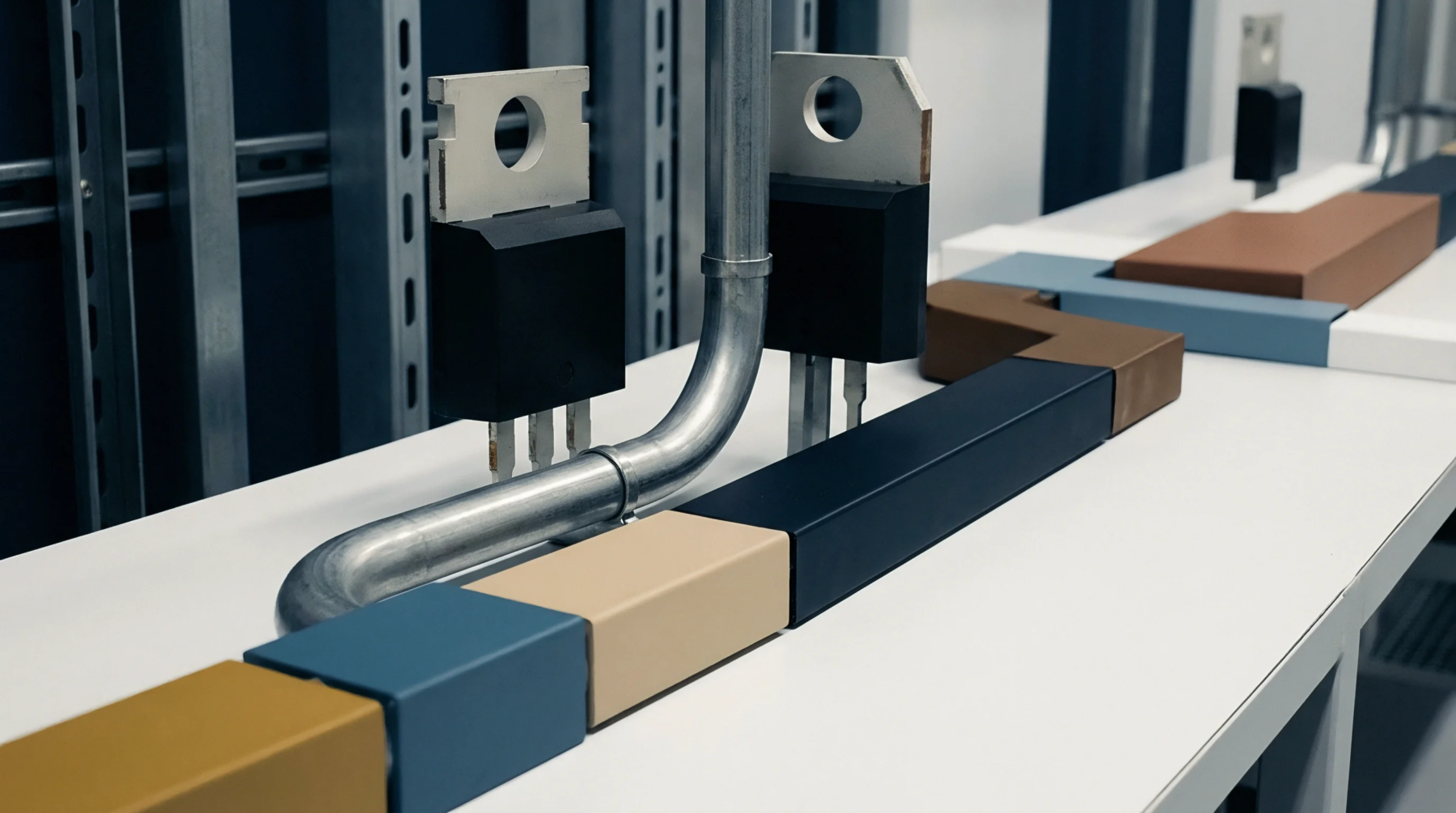
Conductor Weight
Printed circuit board conductor classifications identify heavy-gauge copper foils exceeding four ounces per square foot, corresponding to structural layer thicknesses above one hundred forty micrometers. Ultra heavy copper supplies high current carrying capacity and rapid thermal dissipation within power distribution boards, automotive electronics and industrial motor controllers. Boards built with these extreme foil thicknesses allow power circuits and digital control logic to reside on a single substrate, eliminating external wiring harnesses and busbars.
IPC-6012 standards define fabrication requirements and plating tolerances for extreme copper constructions up to twenty ounces per square foot. The classification stops at heavy busbar structural assemblies that are mechanically fastened rather than laminated within printed circuit board substrates.
Fabrication Challenge
Subtractive etching of extra thick foil layers requires specialized chemical processing and extended dwell times inside spray etch chambers. Deep vertical etching causes pronounced sidewall undercut, requiring CAM designers to apply substantial trace width compensation artwork adjustments. Multiple dielectric prepreg plies with high resin content are required during lamination to fully fill deep trenches between adjacent thick copper tracks without leaving voids.
In addition, multi-pass solder mask printing or specialized liquid photoimageable formulations are applied to ensure full encapsulation over high vertical trace steps. Failure to achieve complete dielectric encapsulation leaves air pockets that cause electrical breakdown under high voltage testing.
Thermal Capacity
High current traces generate significant ohmic heating during operation in power conversion electronics. Thicker copper cross-sections reduce trace resistance and conduct heat away from surface mount power semiconductors directly into embedded heat sinks.