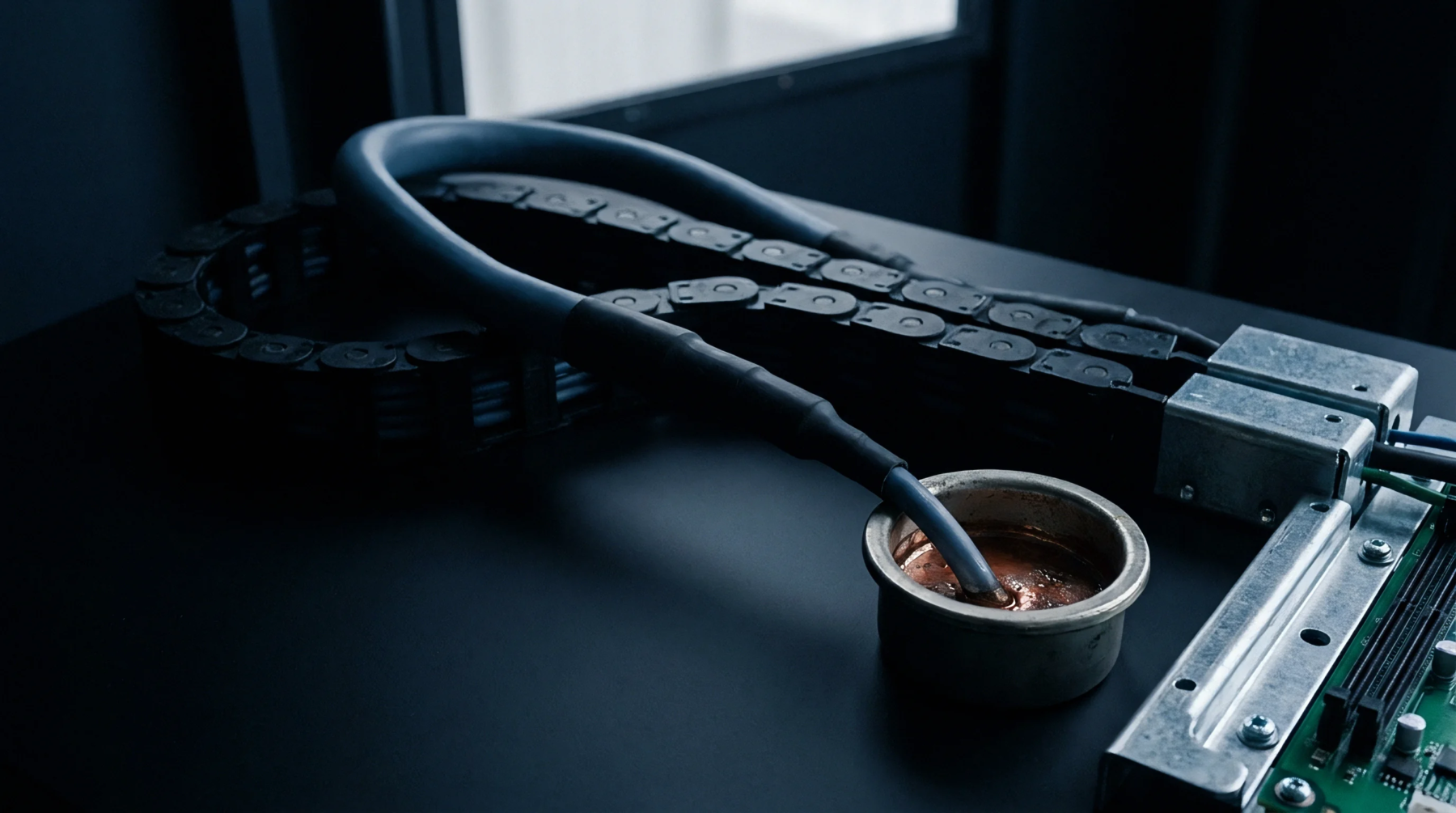
Acoustic Signal Emitter
High-resolution acoustic imaging of microelectronic packages requires focused ultrasonic energy operating at frequencies well above standard non-destructive testing ranges. Electro-acoustic conversion devices convert high-frequency electrical pulses into mechanical sound waves that penetrate dense packaging materials. An ultra high frequency transducer generates ultrasonic pulses at operating frequencies from 100 megahertz to over 300 megahertz to inspect sub-micron internal structures.
Devices operating in this frequency spectrum deliver tight spatial resolution needed to resolve microvia failures and sub-micron delaminations inside high-density circuit boards.
Piezoelectric Focus Mechanism
Zinc oxide or lithium niobate piezoelectric thin films sputtered onto sapphire acoustic lenses form the core emitting element of high-frequency acoustic probes. Applying high-frequency radio-frequency pulses excites the piezoelectric crystal, producing short acoustic pulses that travel through the sapphire lens into water coupling media. Acoustic lenses focus the sound beam down to focal spot sizes smaller than ten micrometers, providing fine lateral resolution at specific focal depths.
Attenuation increases rapidly with acoustic frequency, requiring short focal lengths and low-loss water coupling to maintain signal-to-noise ratio during subsurface inspection of die-attach layers and flip-chip micro-bumps.
Resolution Bandwidth Boundary
Transducer selection balances operating frequency against signal penetration depth inside thick multilayer circuit boards. High-frequency probes above 200 megahertz serve shallow depth inspections where spatial resolution is paramount.