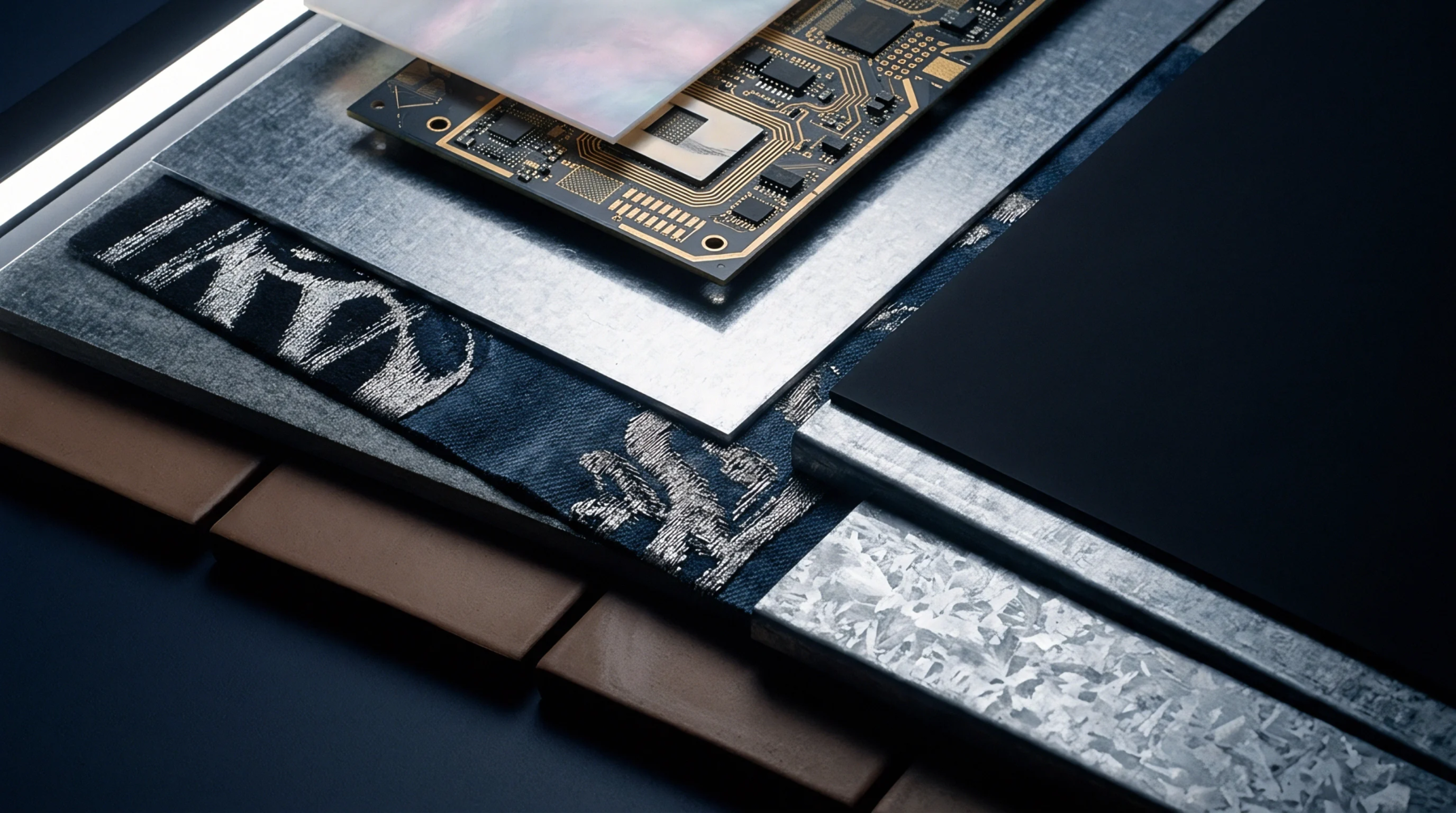
Branch Discontinuity
Unused branching trace segments connected to active signal routes generate open-ended transmission line stubs that degrade high speed signal quality. Board layout reviews and signal integrity simulations identify unterminated trace stubs during post-routing verification and TDR analysis. This layout condition excludes properly terminated stub traces fitted with matching parallel resistors.
Resonance Distortion
Circuit designers sometimes leave stub branches on signal nets to accommodate optional component footprints, test points or legacy connector pinouts. When high speed signals travel past the main routing junction, energy enters the unterminated trace stubs and travels to the open end before reflecting back into the primary signal path. The reflected pulse arrives back at the main trace with a delay proportional to stub length, inducing severe waveform distortion, overshoot and inter-symbol interference.
At frequencies where stub length equals one-quarter of the signal wavelength, the branch behaves as a resonant short circuit, trapping energy and severely attenuating specific frequencies. Removing unused layout branches or implementing zero-ohm jumper options minimizes open stub length across high speed nets. Time-domain reflectometry pinpoints the exact physical location of unterminated layout branches during prototype debug.
Topological Boundary
Open trace branches act as resonant cavities that degrade signal eye openings. Layout guidelines mandate removing unused branches on multi-gigabit signal paths. Prototype TDR inspection verifies that signal traces remain free from open stub branches.