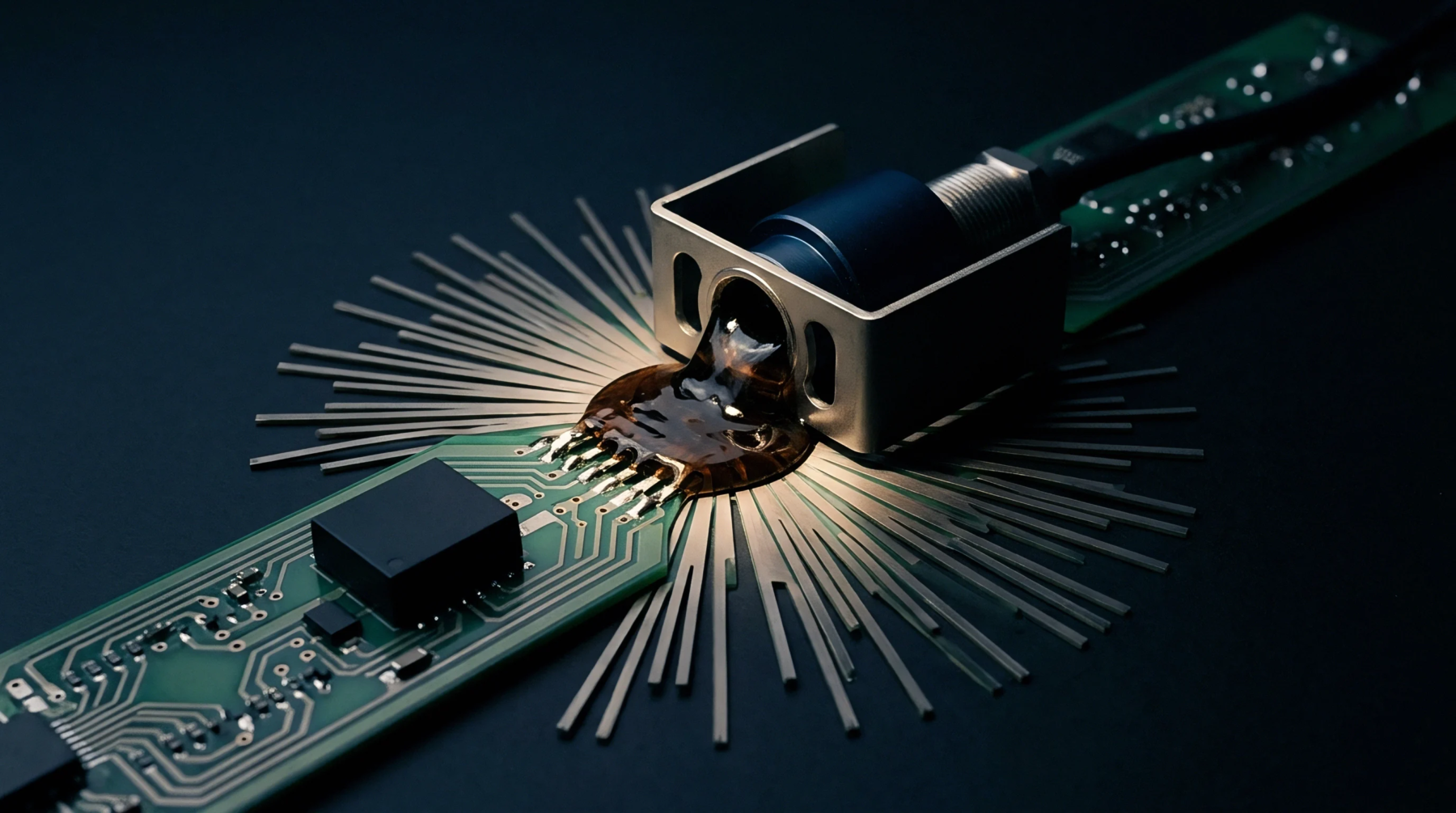
Negative Pressure Limit
Pressure-differential trip points established within placement tool pneumatic systems determine whether an electronic component is present, lost, or improperly sealed on a transfer nozzle. In automated surface-mount assembly equipment, the vacuum drop threshold dictates the minimum negative pressure required to validate component pickup before moving the placement head. The sensor threshold establishes an automated operational boundary between successful package pickup and vacuum starvation caused by poor seating or component drop-off.
If measured negative pressure fails to reach this programmed limit, machine interlocks flag a pick failure, trigger a purge blow, and command a re-pick from the feeder tape.
Pneumatic Dynamics
Operational sensing relies on solid-state piezo-resistive pressure transducers integrated directly into the vacuum flow path of the pick-and-place spindle. When the nozzle tip descends and contacts a component body, the flat package face seals the orifice, stopping atmospheric air intake. Evacuation of the internal passage increases negative gauge pressure toward total system vacuum, causing the transducer voltage output to cross the pre-set threshold value.
Small electronic packages, such as 01005 passives, exhibit low air displacement and tiny sealing surfaces, generating subtle pressure changes that require high-precision analogue sensors with fast response times. Larger components with uneven upper mold marks or porous ceramic surfaces permit slight continuous leakage, requiring a relaxed vacuum drop threshold to prevent nuisance machine aborts. High-speed carriage movement generates lateral inertial forces that can break the vacuum seal, causing pressure to rise back above the drop threshold during transfer.
When sensor circuits detect pressure loss in transit, the machine halts board placement, diverting the empty spindle to prevent the nozzle from driving into wet solder paste on the circuit board without a component.
Calibration Criteria
Threshold calibration matches pneumatic settings directly to component mass, nozzle aperture diameter, and tape pocket clearance tolerances. Setting the threshold too close to atmospheric pressure increases false-positive pickups, where the machine carries air without a part, resulting in missing components on completed assemblies. Setting the limit too close to ultimate pump vacuum causes intermittent pick errors whenever minor component surface roughness slows initial pressure decay.
Validation runs verify sensor trip consistency against calibrated vacuum leak orifices prior to executing continuous assembly operations.