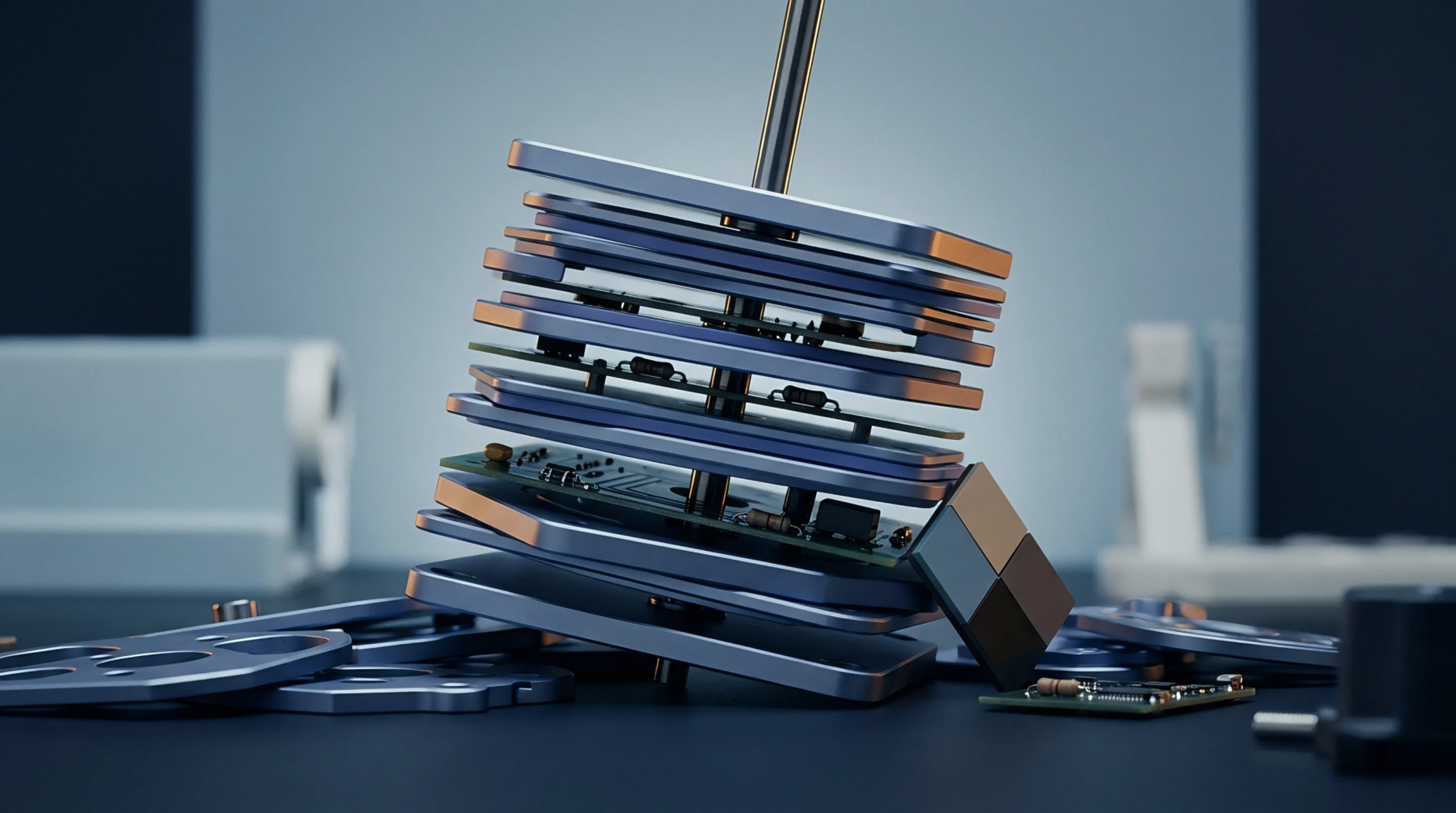
Vertical Positioning
Closed-loop actuation along the vertical coordinate axis regulates the tool height, contact force, penetration depth, and clearance distances of automated production equipment relative to a substrate plane. Governed by linear encoders and precision servo motors, z-axis control manages the down-force and vertical trajectory of pick-and-place nozzles, dispensing needles, wire bonding capillaries, and milling spindles. The operational scope governs normal-axis mechanical displacement across printed circuit fabrication, component placement, automated dispensing, and in-circuit electrical testing.
Its jurisdiction terminates at vertical axis motion, relying on coordinated planar drives to govern horizontal spatial coordinates.
Machine Operation
Surface mount placement heads utilize high-speed vertical drives to land fragile passive chips and fine-pitch integrated circuits onto wet solder paste. During the downward approach, linear motors decelerate from transit speeds to controlled touch-down velocities within fractions of a millimeter from the board surface. Contact sensing routines detect component impact, switching the drive from velocity control to programmed force control to prevent solder paste squeezing.
Excessive vertical displacement forces paste out from beneath component terminations, causing bridging shorts across adjacent pads during reflow. Insufficient travel leaves component leads floating above the solder paste deposit, resulting in open circuits or misaligned chips. Automated fluid dispensers rely on vertical height tracking through optical laser triangulation to maintain a constant needle-to-pad standoff across warped circuit panels.
Mechanical routing machines in board fabrication adjust spindle depth dynamically to score V-grooves or rout board contours without gouging backing fixtures.
Mechanical Compliance
Placement heads integrate spring-loaded nozzle holders or voice coil actuators to provide passive compliance during contact. Force feedback loops monitor landing loads in real time, detecting warped substrates or misplaced components within millisecond reaction windows. Control accuracy degrades when mechanical backlash or thermal expansion in the ball screw introduces unmeasured vertical errors.