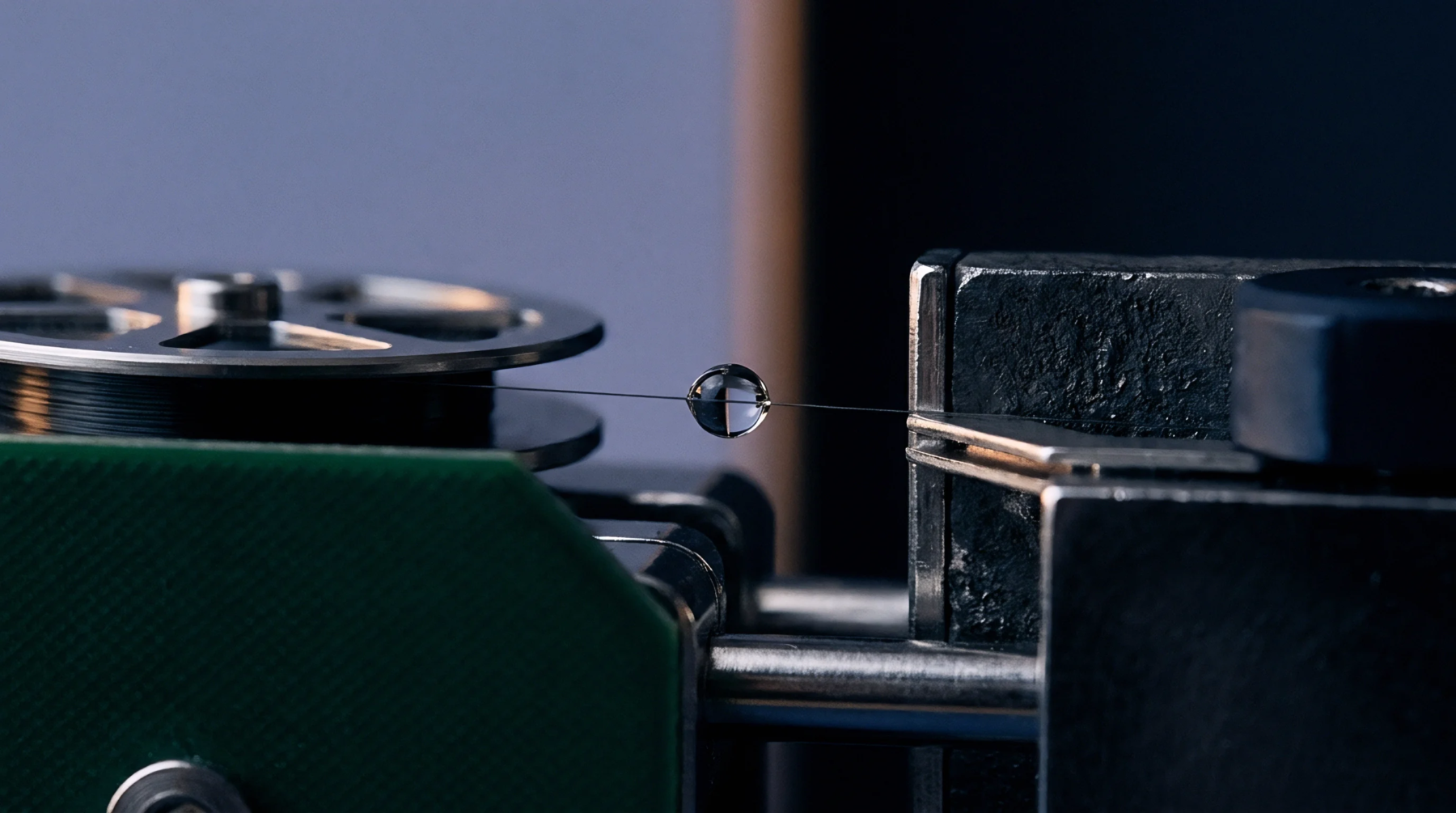
Transmission Physics
Physical laws governing the logarithmic reduction of radiation intensity through a uniform medium define the relationship between path length and energy loss. The mathematical framework of beer-lambert attenuation allows an automated X-ray system to determine the internal structure of a circuit board by measuring how much energy reaches the sensor after passing through the substrate. This relationship assumes a monochromatic source and a homogenous material.
Variation in the density of the component or the thickness of the alloy changes the resulting intensity. Every additional millimetre of material reduces the photon count by a factor determined by the specific absorption properties of that substance.
Density Calculation
Energy reduction depends on the mass of the object within the inspection chamber. Modern computed tomography tools use beer-lambert attenuation to reconstruct three dimensional images of hidden solder connections. These images reveal voids or inclusions.
Operational Boundary
Radiographic systems encounter physical limits when the density of the object prevents sufficient photons from reaching the detector. If the substrate is too thick or contains heavy metal shielding, beer-lambert attenuation results in a signal to noise ratio that is too low for reliable defect detection. High voltage sources are required to overcome these specific density barriers.