Mechanical Tension
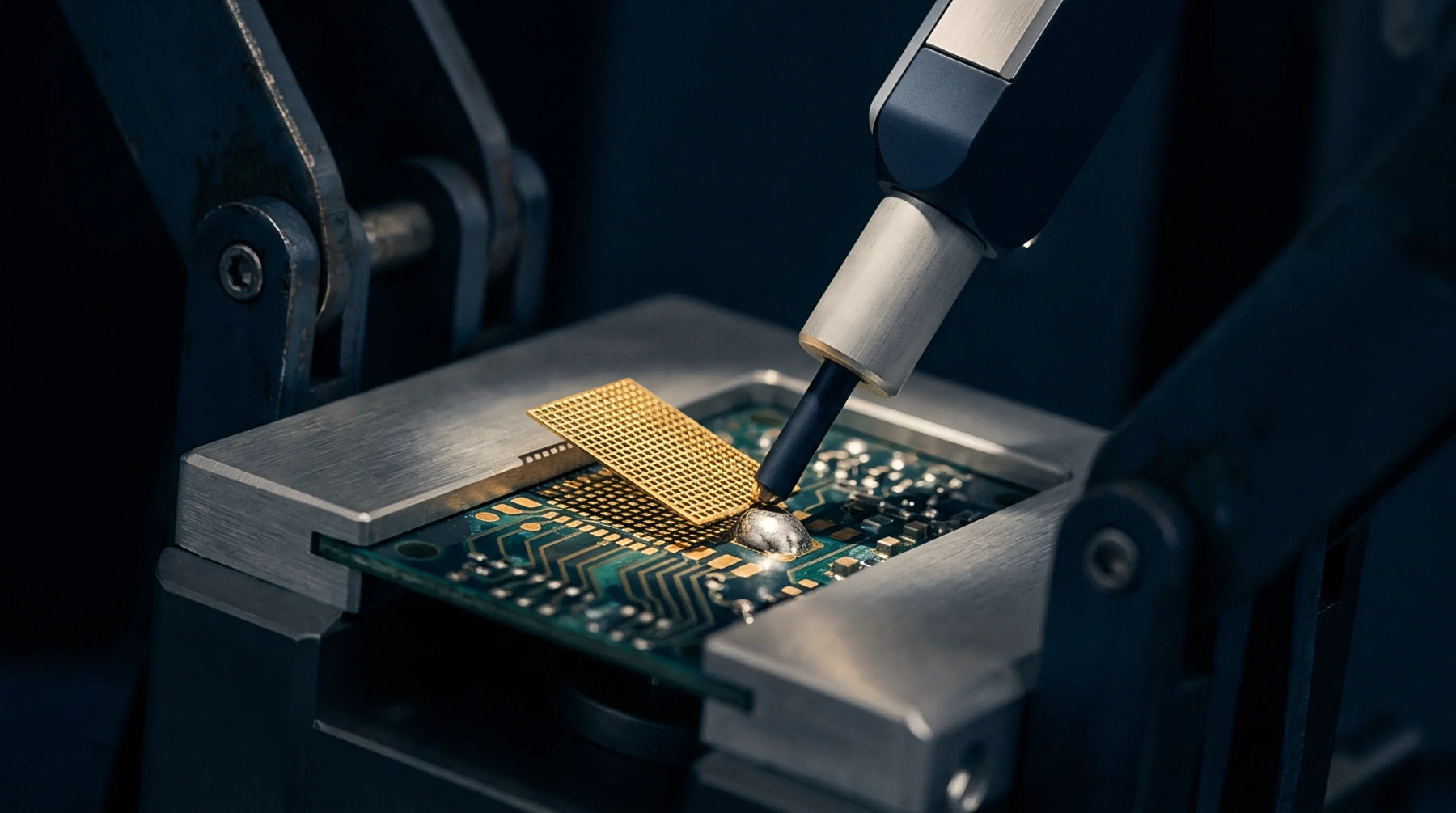
Mechanical tension is the internal force distribution generated within the interconnecting spheres of an array package under external loading. In electronic assembly, bga solder joint stress arises from mismatched thermal expansion rates between the silicon component and the underlying circuit board. This localized load concentrates at the corner balls where the distance from the neutral point of the package is greatest.
Deformation Risk
Repeated temperature fluctuations induce cyclic plastic deformation in the lead-free alloy spheres during normal operation. When thermal excursions occur, bga solder joint stress drives microstructural damage and crack propagation through the brittle intermetallic compound layers. The accumulation of these micro-cracks during thermal cycling creates high-resistance paths that eventually become complete electrical open circuits.
Board design choices such as using non-solder-mask-defined pads can help distribute these localized forces across a wider volume of the interconnect. Stiffening bars and careful placement of adjacent heat-generating components further reduce the rate of damage accumulation without requiring changes to the solder alloy itself.
Stress Assessment
Testing procedures use strain gauge measurement during in-circuit testing to ensure that the board does not experience excessive bending. An assembly process that exceeds thirty microstrain is highly likely to induce permanent damage. This limit prevents premature failure of the ball grid array during depaneling and functional testing.