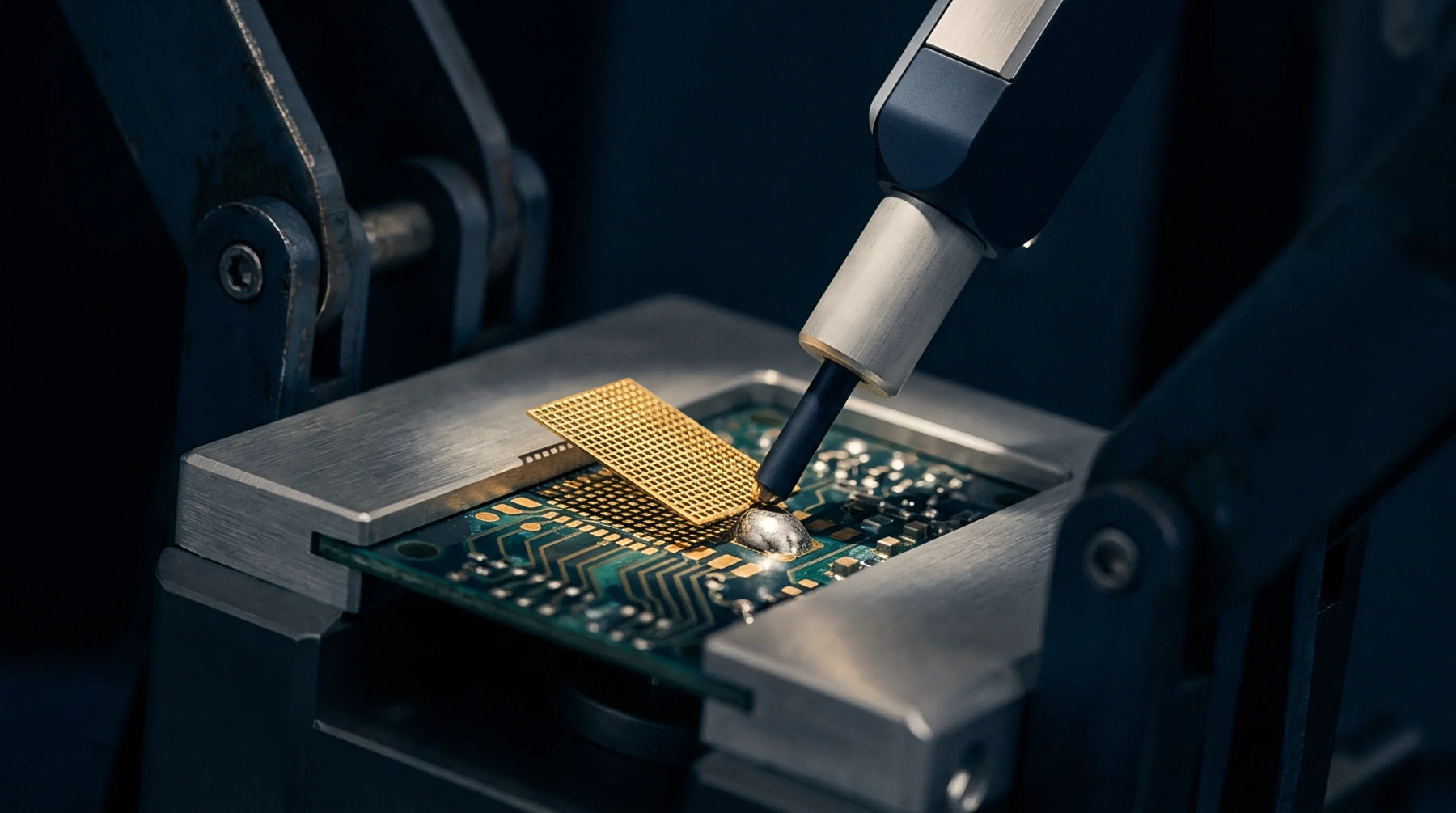
Pressure Barrier
Elastomeric seal is a flexible boundary element used to create and maintain a hermetic barrier between a test fixture and a circuit board under negative pressure. In circuit test fixtures, the vacuum seal gasket prevents air leaks when the chamber is evacuated to pull the board down onto the spring-loaded test probes. This sealing action ensures that uniform downward pressure is applied across the entire surface of the board.
Sealing Performance
Creating a reliable vacuum is necessary to compress the high-force spring probes required for dense test point layouts on complex circuit boards. If a vacuum seal gasket is damaged or worn, the system cannot reach the required pressure level, which results in incomplete probe contact and false test failures. Elastomeric materials such as neoprene or silicone are molded or extruded to fit the perimeter of the test fixture cavity.
These materials must resist deterioration from flux residues and isopropyl alcohol cleaning solvents used during regular fixture maintenance. Proper design of the gasket cross-section ensures that it decompresses fully when the vacuum is released, allowing the operator to load and unload boards without resistance.
Integrity Verification
Fixture diagnostics monitor the vacuum pull-down time and leak rate to verify that the seal operates within acceptable performance limits. A slow vacuum pull-down indicates that the elastomer is cracking or requires replacement. Maintaining a clean sealing surface is necessary to prevent premature wear and ensure consistent probe contact.