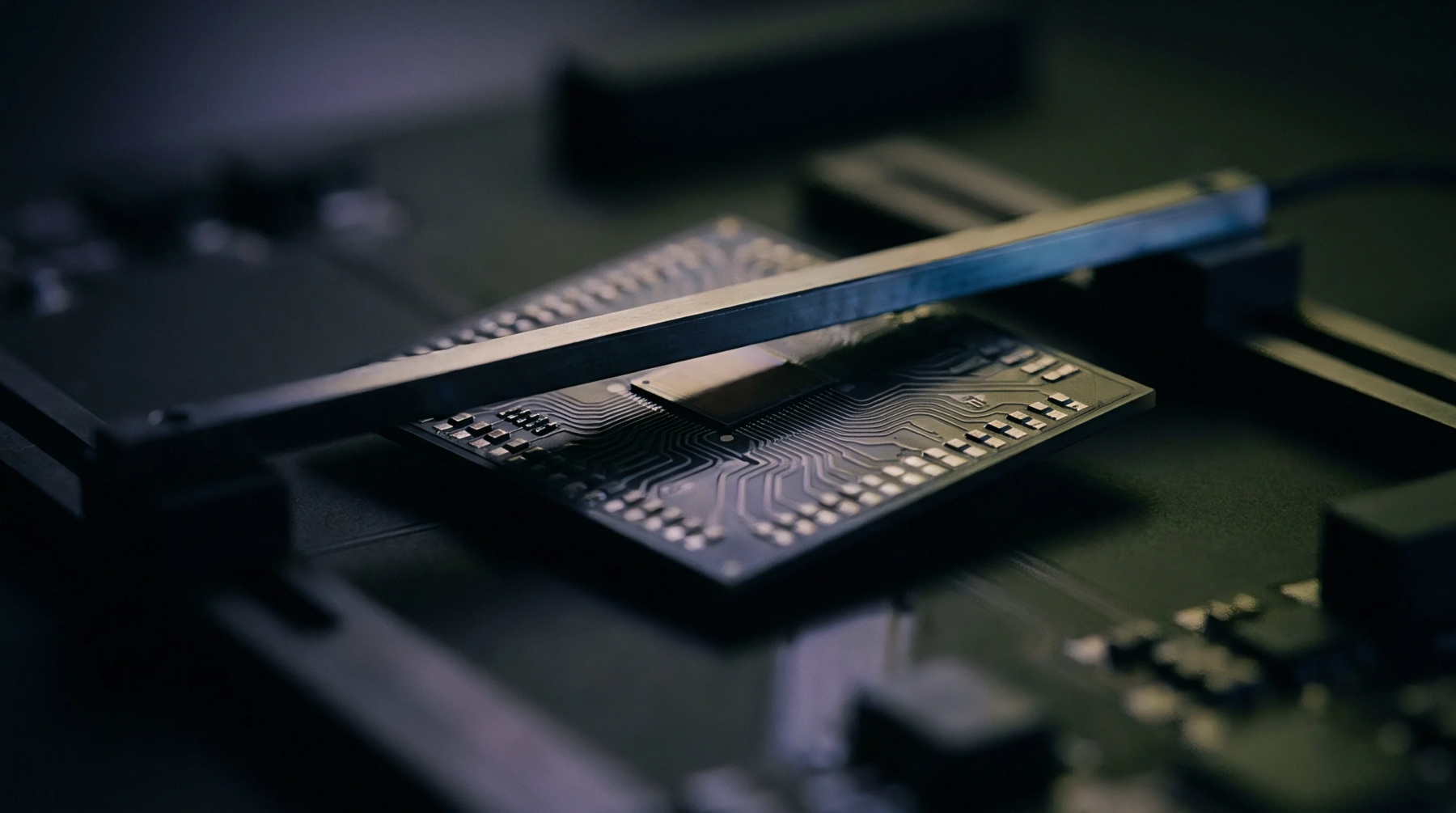
Mechanical Deformation
Physical warping of a substrate caused by excessive or uneven pressure from conveyor rails or internal fixtures occurs during automated assembly steps. While board clamping distortion often remains temporary, the resulting curvature interferes with accurate paste deposition and component placement. Secure retention is necessary for stability but creates stress when support pins and side clamps are not aligned.
Planarity Influence
Localized height variations emerge when the substrate bows under the force of the machine grippers. Resulting board clamping distortion changes the focal plane for optical inspection systems and shifts the expected z height of the pads. If the board is forced into a concave or convex shape, the screen printer cannot maintain a sealed gasket against the stencil.
Solder paste leakage or incomplete filling often follows these mechanical shifts.
Assembly Accuracy
Impact on long term reliability remains a concern when internal copper layers undergo strain during the clamping cycle. Measuring board clamping distortion involves comparing the free state profile of the PCB with the clamped profile inside the machine. Proper adjustment of the edge pressure and the addition of center supports mitigate the risk of permanent set or delamination.
Excessive clamp force reduces the process window for high density interconnect designs. Consistent support placement prevents the substrate from oscillating during high speed nozzle movements. The resulting stability allows for higher placement speeds without sacrificing positional accuracy.