Fluid Extension
Measurement of transient resistance to deformation in liquid filaments relies on capillary breakup extensional rheometry. This analytical instrument applies a controlled axial force to a cylindrical column of material until the filament pinches off due to surface tension. Sensors track the mid-filament diameter over time to calculate the stress-strain relationship.
Higher viscosity or elasticity resists the thinning process and extends the operational window before separation occurs. Material characterization depends on capturing the decay rate during this thinning event.
Structural Performance
Polymers and viscous adhesives often exhibit non-Newtonian behavior that manifests under high strain rates during manufacturing cycles. Dispensing heads in surface mount technology operations require precise control over these dynamics to prevent tailing or stringing during fluid deposition. Analysis of the thinning filament provides quantitative data on molecular entanglement and chain relaxation.
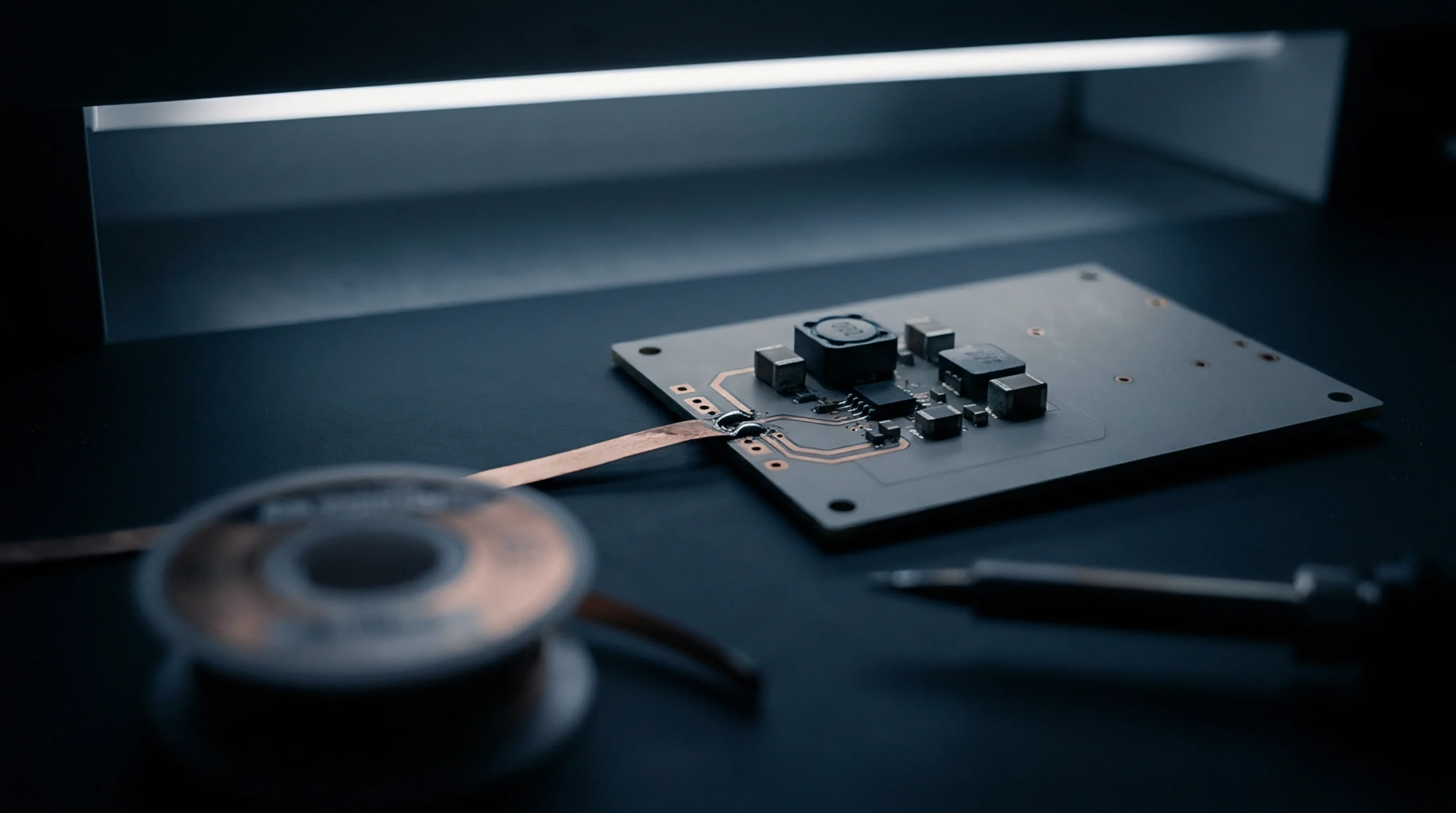
Engineers utilize these rheological properties to adjust substrate gap distances and nozzle pressures for optimal print quality. Failure to account for extensional viscosity results in bridge formation between adjacent copper pads or irregular solder paste deposit volumes.
Data Interpretation
Mathematical modeling of the filament diameter decay isolates the effects of gravity and surface tension from true material resistance. Operators normalize the raw diameter data against initial conditions to derive the relaxation time constant. A purely viscous response produces a linear decay, whereas elastic components introduce significant deviations from this trajectory.
Software algorithms derive the extensional viscosity from these measured deviations to predict behavior in high-speed coating applications. Precise control of the breakup event defines the reliability of the entire fluid deposition process.