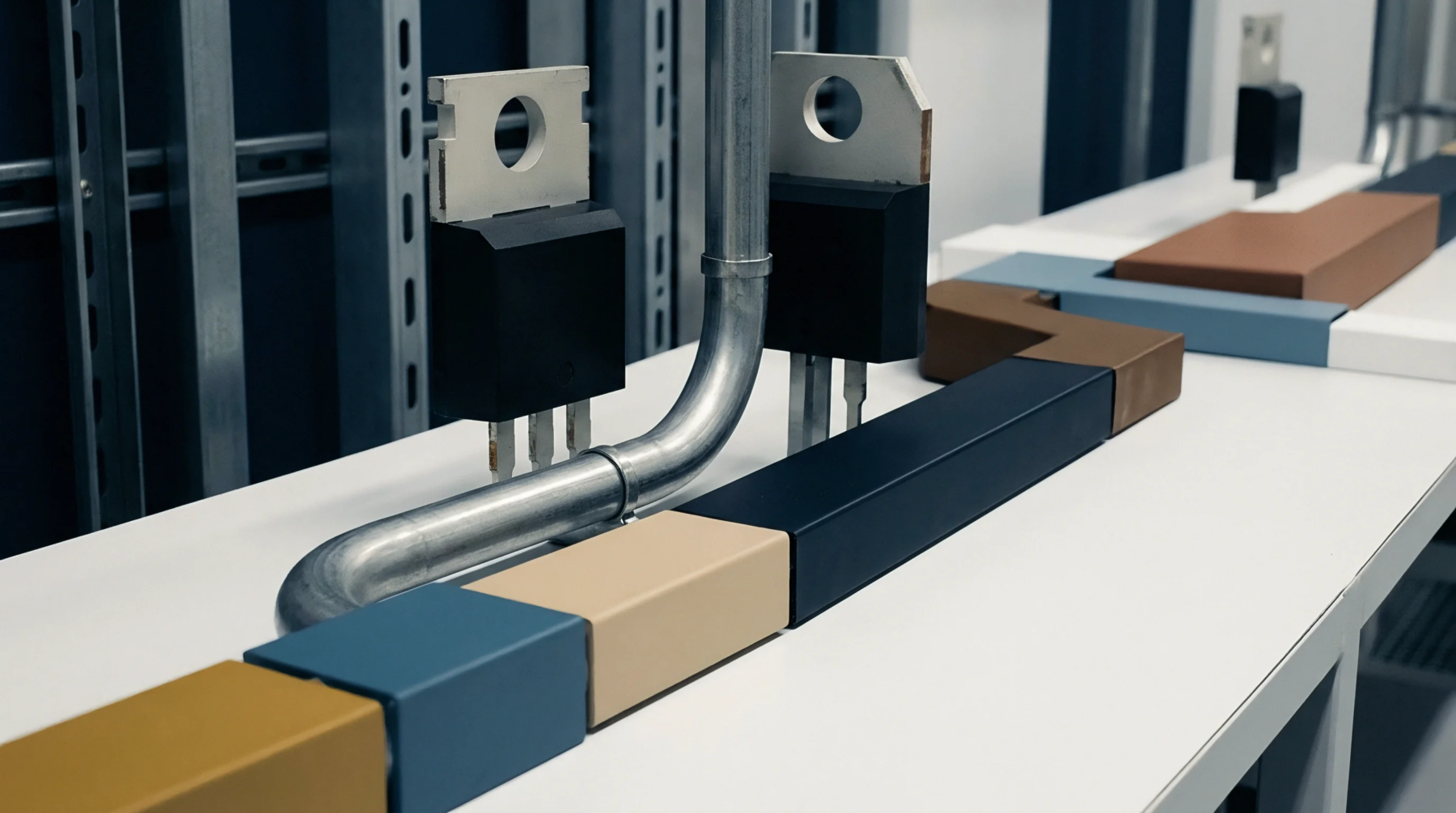
Terminal Coaxiality
Spatial deviation of gull-wing or ball grid array terminations relative to a nominal coplanar seating plane creates structural vulnerability during automated surface mount assembly. Coplanarity distortion occurs when component leads deviate beyond acceptable vertical tolerances prior to reflow soldering, preventing proper contact with printed circuit board pads. Automated optical inspection systems measure this offset before paste deposition occurs to prevent subsequent solder bridging or open circuits.
Lead frames stamped from copper alloys frequently exhibit this variance due to residual thermal stresses imparted during initial metal forming operations. Component packaging handling protocols must maintain strict vertical alignment limits to avoid exacerbating initial package warp before placement heads acquire the parts.
Solder Joint
Insufficient paste volume beneath elevated package corners leads directly to fractured electrical connections during thermal cycling tests. SMT assembly lines reject warped components when vertical displacement exceeds specific fractions of stencil thickness parameters. Convective reflow profiles cannot compensate for excessive standoff gaps because molten solder surface tension fails to bridge wider mechanical separations.
Paste inspection algorithms calculate exact volume requirements based on measured lead deviations to guarantee sufficient fillet formation during thermal processing.
Mechanical Verification
Optical laser profiling gauges scan entire component underside geometries at incoming receiving docks to quantify micro-inch variations across fragile lead arrays. Manufacturing facilities establish rigid sorting thresholds where any measured offset beyond established limits halts immediate placement operations. Downstream reliability depends entirely upon maintaining strict dimensional conformity throughout component storage and feeder loading sequences.