Adhesion Metric
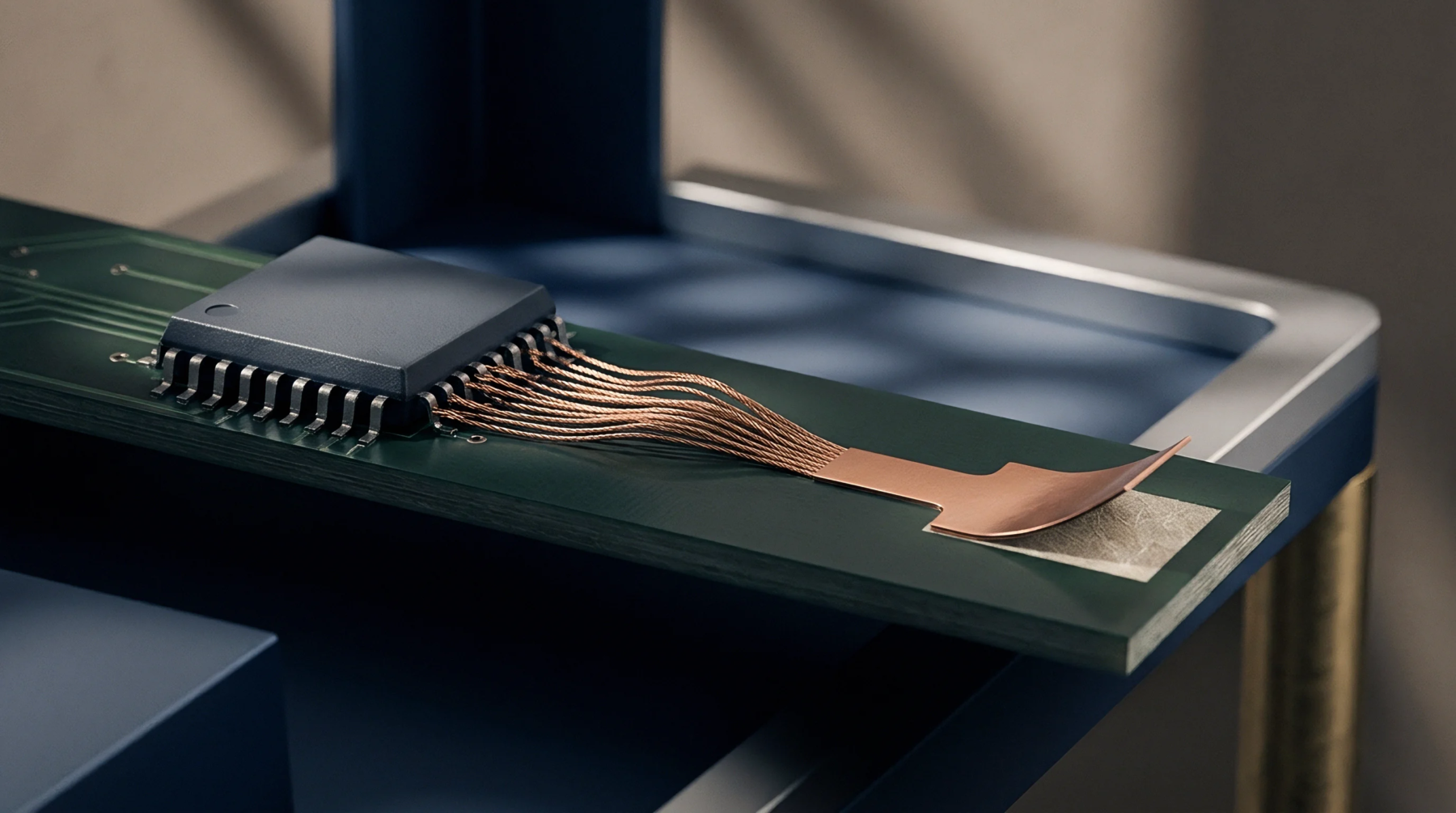
Mechanical bond strength quantified per unit conductor width defines the linear force required to separate clad metallic foil from an underlying dielectric substrate under controlled perpendicular tension. Standard test method IPC-TM-650 2.4.8 governs this assessment across printed board laminates, measuring the peel load per unit width along a ninety degree angle of pull at a constant separation rate. This copper peel strength measurement reflects the chemical bonding and mechanical interlocking achieved between treated foil nodules and the polymer resin matrix during primary thermal lamination.
The metric applies to clad laminate sheets, inner core layers and outer trace traces after pattern plating, but ceases to govern interface adhesion once solder mask coatings or conformal barriers encapsulate the conductor edges.
Testing Procedure
Standardized evaluations require patterned trace specimens subjected to calibrated pull testers equipped with load cells and movable carriage platens. Test strips etched to defined trace widths undergo mechanical peeling under three distinct thermal conditions comprising as-received ambient testing, post-thermal stress floating on molten solder at two hundred eighty-eight degrees Celsius, and testing at elevated operating temperature within environmental chambers. Mechanical failure profiles differentiate between adhesive separation along the metal-to-resin plane and cohesive rupture deep within the dielectric substrate glass fabric.
High glass transition temperature polyimide laminates typically demonstrate lower peel thresholds than standard FR-4 epoxy systems due to differences in polymer chain flexibility and curing crosslink density. Surface treatments such as reverse-treated foil or very low profile electrodeposited copper lower profile roughness to minimize high frequency signal loss, trading profile depth for reduced mechanical grip.
Manufacturing Consequence
Laminate processing boundaries restrict subsequent thermal excursions to prevent conductor delamination during assembly. Bare board fabrications subjecting materials to multiple lead-free reflow passes, selective wave soldering and localized hand rework depend upon residual adhesion to prevent pad lifting on fine pitch surface mount lands. Poor bond integrity generates pad detachment when thermal expansion stresses pull plated through-hole barrels outward along the z-axis.
Chemical immersion processes during electroless nickel immersion gold plating attack foil interfaces through hyper-corrosion if unreacted resin or weak bonding sites exist along trace boundaries. Minimum values specified under IPC-4101 standards mandate values between zero point seven and one point four Newtons per millimeter depending on foil profile classification and substrate resin chemistry. The copper peel strength governs the mechanical survivability of fine conductors under repetitive thermal expansion cycles.