Dimensional Adjustment
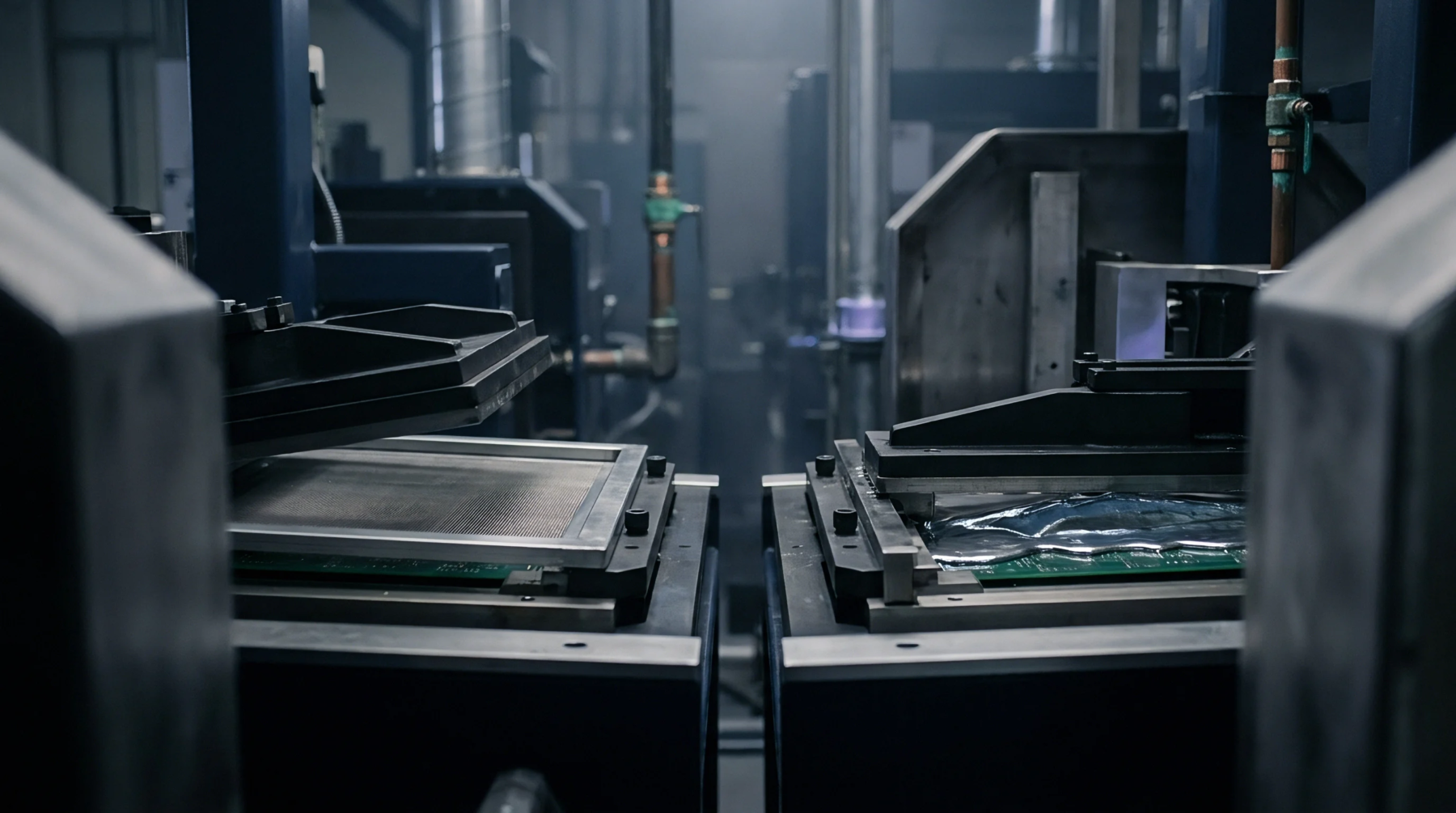
Manufacturing offsets applied to inner layer photolithography artwork account for predictable material movement during high-pressure thermal lamination. In multi-layer circuit board fabrication, core compensation adjusts the photolithographic artwork dimensions prior to copper exposure. Fabricators scale the artwork outward or inward to counteract the predictable shrinkage that occurs when epoxy resin flows and cures.
Tooling Calculation
Scaling factors for core compensation derive from empirical laminate data gathered over multiple production lots of specific material thicknesses. A fabricator measures the post-lamination dimensions of test coupons across both the machine direction and the cross direction of the fiberglass weave. These measurements yield percentage factors that are entered into computer-aided manufacturing systems to modify the production phototools.
If the scaling factor is inaccurate, drilled holes will fail to register with internal pads, leading to breakout defects that compromise the electrical integrity of the vias.
Material Movement
Substrate thickness and copper distribution across the inner layers dictate the magnitude of the required adjustment. Thinner cores exhibit greater dimensional instability and require larger scaling percentages than thicker, more rigid laminates. The pattern density of the copper also influences the behavior, as dense copper regions resist movement while open resin areas flow freely.