Quality Verification
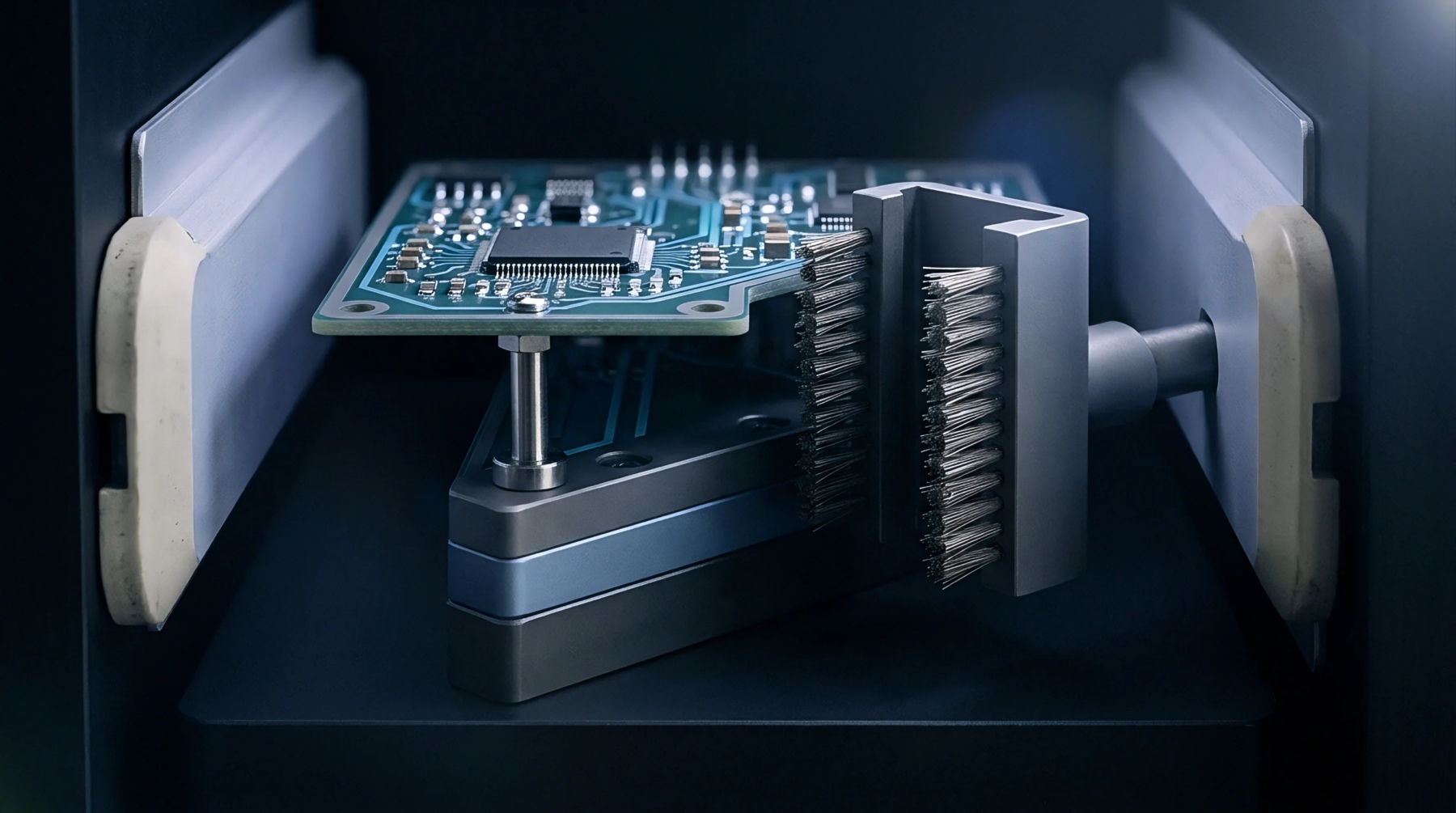
Quality verification protocols for printed circuit board fabrication often utilize sacrificial test specimens fabricated on the run-off borders of production panels. In circuit board manufacturing, coupon screening is the process of evaluating these dedicated test coupons rather than the actual production board to verify internal features such as plating thickness and via alignment. Since these specimens share the exact material stack and processing history as the active boards, their structural integrity represents the overall batch.
Destructive Test
Microsectioning of these test specimens reveals sub-surface defects that remain invisible to surface inspection methods. Technicians mount the coupon in epoxy, grind it down to the target plane, and polish it for examination under a microscope. This evaluation reveals barrel cracks, inner-layer separation, or plating voids within the copper vias.
It remains the baseline method for identifying laminate voids or thermal-stress cracks before boards move to assembly lines. By analyzing the grain structure and intermetallic compounds within the microsection, engineers can also evaluate the quality of the thermal processes used during fabrication. This detailed physical analysis ensures that hidden weaknesses are documented and addressed before any final board delivery.
Rejection Threshold
Board lots fail coupon screening if any coupon exhibits plating thickness below standard limits or traces of copper cracking. This strict control prevents defective structures from entering assembly stages. When a coupon fails, the manufacturer holds the entire panel for investigation.