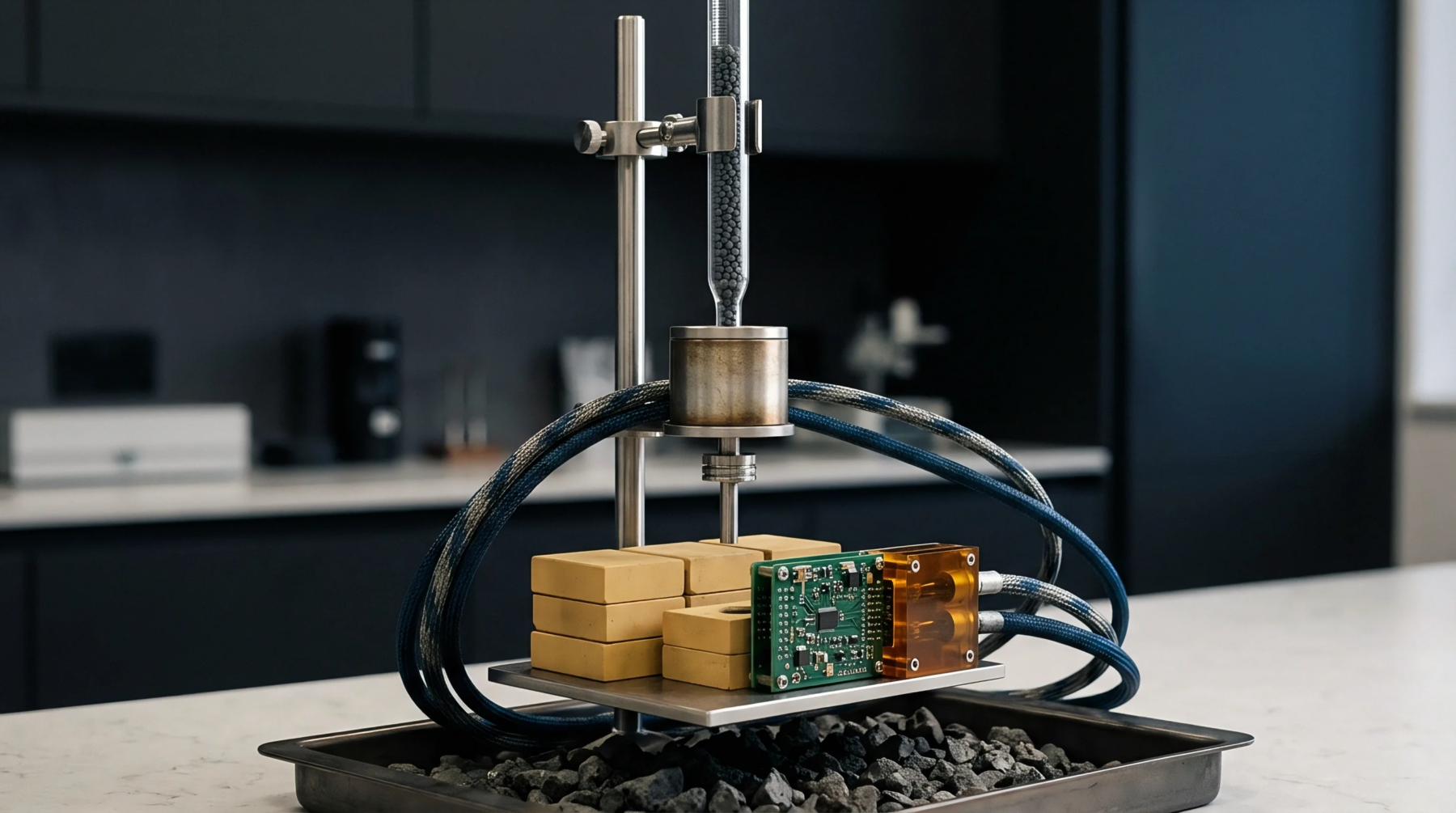
Thermal Reduction
Polymer isolation relies on extreme chilling to embrittle elastomeric residues remaining on circuit boards after routing operations. Sub-zero thermal reduction hardens unwanted flash and burrs so that impact forces shatter the contamination cleanly from fragile glass epoxy substrates. Liquid nitrogen application achieves the necessary thermal baseline before mechanical agitation breaks the targeted debris free without damaging adjacent surface mounted components.
Mechanical hammer mills process the conditioned panels by striking the rigidized unwanted material until fracture occurs along distinct material interface boundaries. Defect control focuses on eliminating microscopic rubber particles that otherwise bridge fine pitch pads and cause short circuits during subsequent electrical test phases.
Shatter Mechanics
Brittle fracture mechanics govern how frozen elastomers respond to high velocity impacts inside the processing chamber. Glass transition temperature suppression forces normally resilient polymers into a brittle domain where elastic deformation is entirely eliminated. Impact hammers deliver kinetic energy that propagates cracks instantly through the hardened contaminant mass rather than absorbing the blow into the substrate.
Strain rates exceed standard material fatigue limits because the temperature differential maximizes internal thermal stresses across dissimilar material bonds.
Contamination Extraction
Air classification cyclones separate the shattered elastomeric fragments from heavier populated printed circuit assemblies based on terminal terminal settling velocities. Residual particulate removal requires high pressure pneumatic blow off steps to clear trapped debris from under ball grid array packages prior to final optical inspection. Final acceptance testing verifies zero polymer retention on gold contact fingers and solder joints using automated optical microscopy systems calibrated to detect sub-millimeter foreign objects.