Thermal Gradient
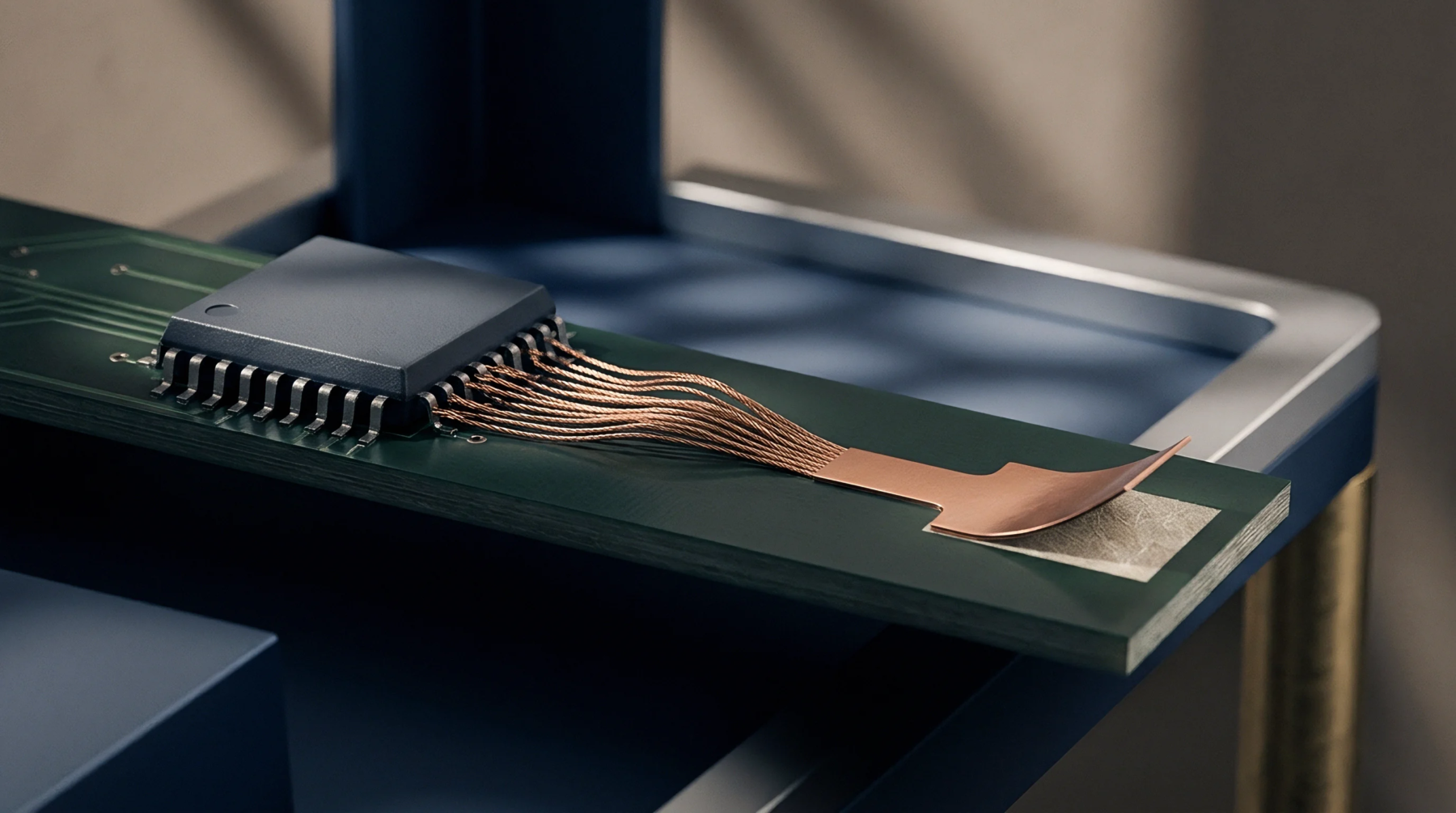
Surface temperature differential dictates the mechanical survival of a circuit card assembly during reflow soldering. Delta t measures the maximum temperature variance between distinct points on a printed circuit board while the vehicle passes through a convection oven. Excessive variance creates mechanical stress across fragile components.
Component cracking occurs when localized heat absorption outpaces thermal transfer through copper planes. Process engineers establish a ceiling for this variance to protect ceramic capacitors and ball grid array joints from thermal shock.
Reflow Profile
Convection ovens deliver thermal energy through multiple distinct heating zones to manage this metric across the assembly. Preheating stages elevate the entire board gradually before the assembly enters the peak reflow zone. Conveyor speed and zone temperature setpoints dictate the rate of thermal absorption.
Heavy copper layers absorb heat slower than FR4 substrate material, creating inherent temperature gradients across the board topology. Thermocouples attached to vulnerable component bodies record actual surface temperatures during profile verification runs. Excessive gradient values force adjustments to zone dwell times or belt velocities.
Warp Deflection
Differential expansion coefficients between copper planes and glass epoxy cores generate mechanical bow during high temperature excursions. Delta t drives this physical displacement by expanding materials at unequal rates. Substrate bending shears solder joints beneath large packages if the deflection exceeds elastic deformation limits.
Board retainers and support pins inside the reflow tunnel restrict excessive sagging during the fluid solder phase. Controlled cooling rates subsequently freeze the solder joint microstructure before residual stresses induce microscopic fractures.