Endurance Metric
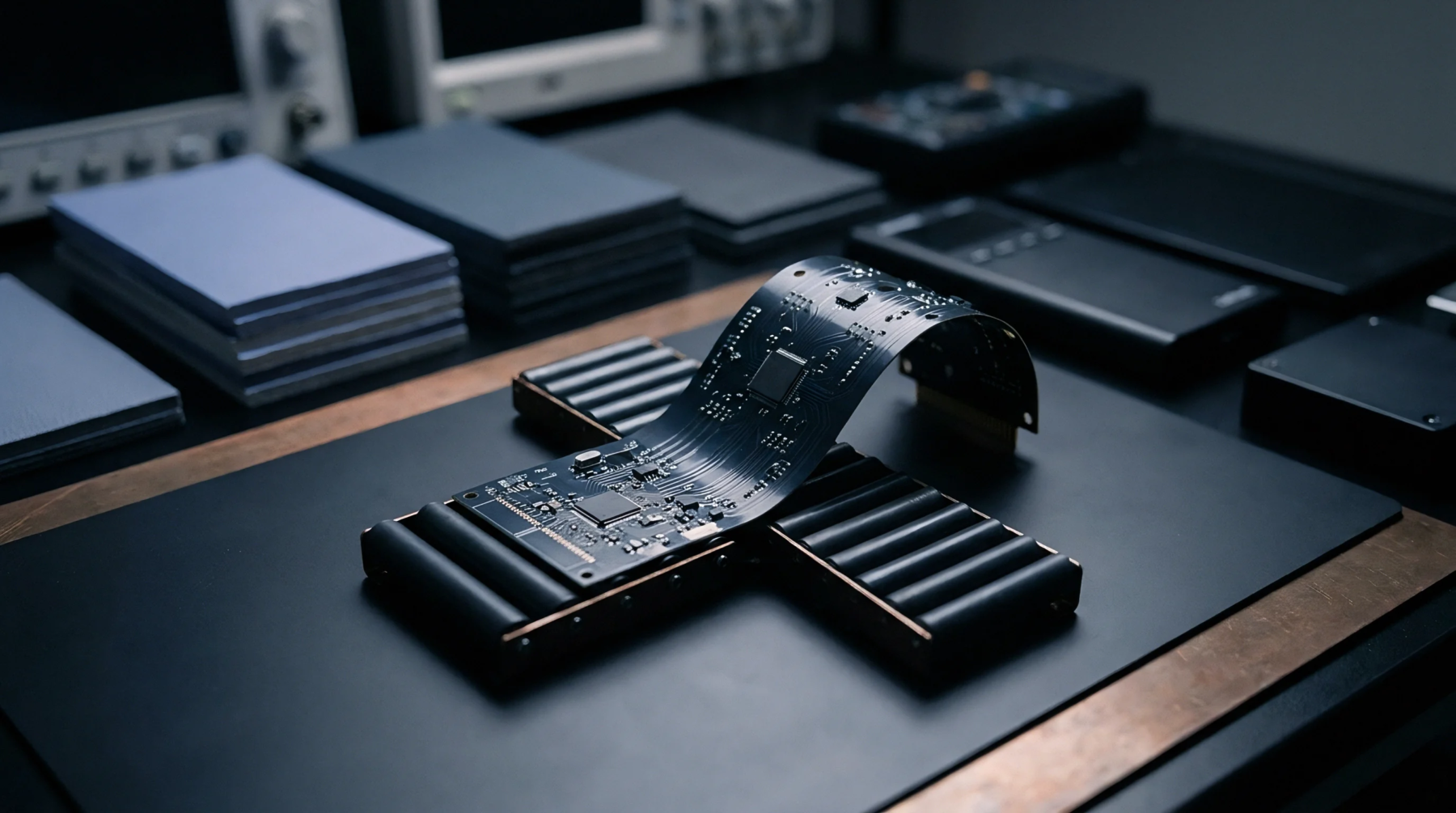
Mechanical durability ratings quantify the resistance of flexible conductors to repeated bending cycles. A dynamic flexure fatigue life measures the number of cycles a circuit withstands before copper cracking or resistance increases beyond acceptable limits. It is a fundamental requirement for hinge applications and rotating assemblies.
Failure Mechanism
Material degradation occurs through the initiation and propagation of micro cracks in the metal foil. The dynamic flexure fatigue life depends on the grain structure of the copper, the thickness of the dielectric, the radius of the bend and the ductility of the adhesive. Rolled annealed copper typically offers a higher rating than electrodeposited copper due to its elongated grain boundaries.
Testing Parameter
Standardized procedures involve clamping a test strip in a specialized fixture that moves the sample through a defined arc. During the assessment of dynamic flexure fatigue life, a constant monitoring system tracks the electrical continuity of the traces. The test terminates when a specific percentage increase in resistance is detected, often set at ten percent of the initial value.
Environmental factors like humidity or temperature are controlled to ensure the results are repeatable across different batches. Engineers use these data points to validate the stackup design against the expected service life of the device. A design that fails early often requires a thinner substrate or a shift of the copper traces toward the center of the laminate stack.
Design validation requires this data.