Thermal Deformation
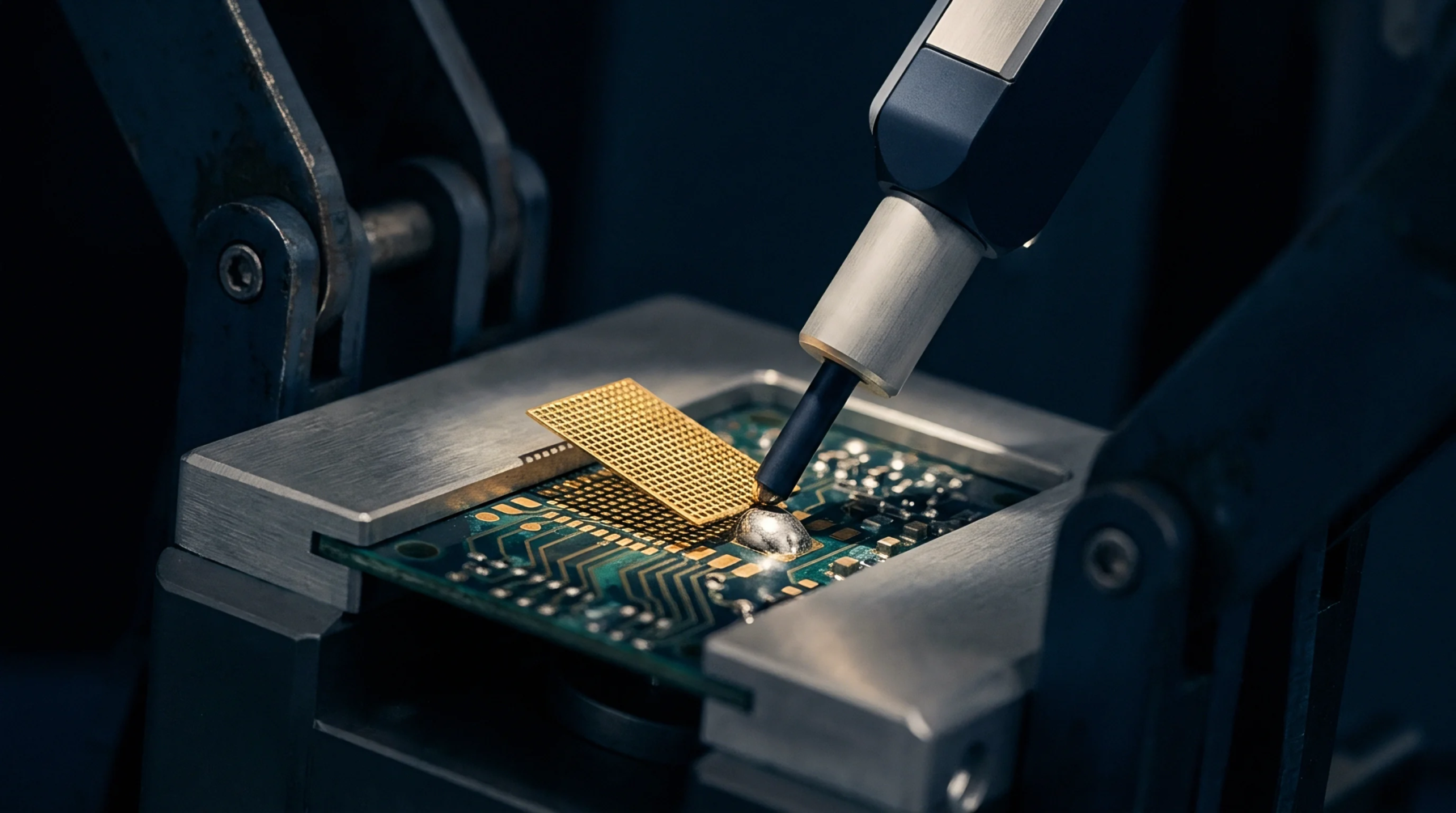
Geometric instability occurs when integrated circuit substrates experience non-planar displacement during high-temperature exposure. Dynamic package warpage characterizes the time-dependent physical shifts observed in components as they move through temperature profiles typical of reflow ovens. This phenomenon creates distinct mechanical stresses that deviate from the static shape measured at room temperature.
Engineers monitor the vertical Z-axis displacement across component corners and centers to ensure the flat state required for reliable solder joint formation.
Process Interaction
Solder paste print volumes and subsequent component placement force physical contact that ignores the transient shape of the package. Dynamic package warpage influences the formation of head-in-pillow defects because the component surface shifts away from the molten solder during the cooling stage of a reflow cycle. Manufacturers calculate the displacement magnitude by correlating temporal temperature gradients with material coefficients of thermal expansion for the mold compound and silicon die.
High-speed shadow moire systems provide the optical data needed to map these movements as the assembly transitions from ambient heat to peak liquidus temperatures.
Assembly Reliability
Excessive bending during the cooling phase breaks the connection between the ball grid array and the corresponding pad finish. Tight tolerances in modern microelectronics necessitate a precise understanding of the curvature behavior to predict assembly yields. Precise temperature profiling limits the rate of change in these dimensions and maintains the mechanical integrity of the final product.