Thermal Boundary
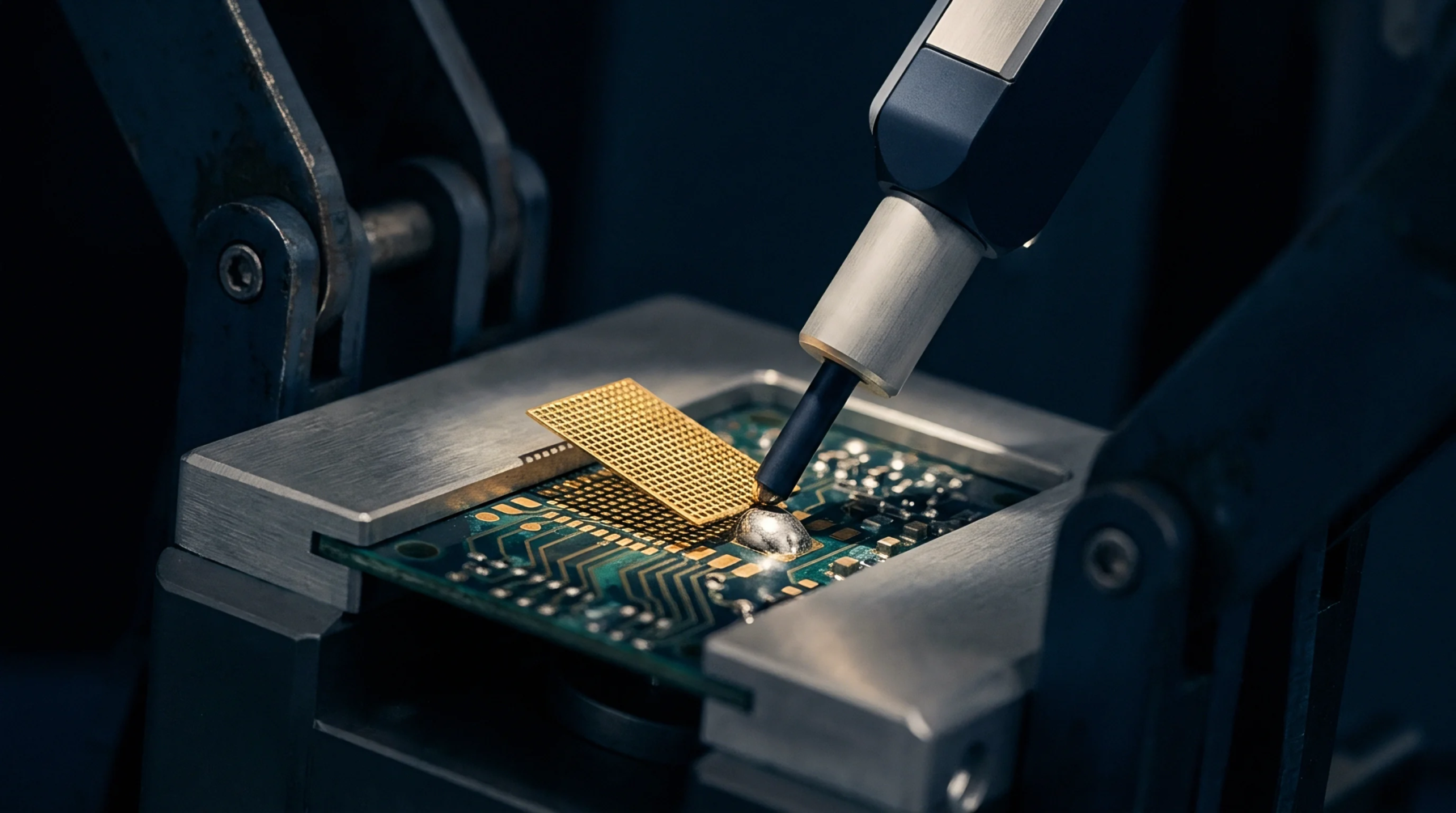
Solder alloys exhibit a specific temperature limit above which the metal is completely molten and contains no solid phase. This temperature is called the liquidus of the specific alloy composition being used in the assembly process. Below this threshold, the material enters a paste-like state where solid and liquid phases coexist.
Process Integration
Reflow soldering profiles must raise the board temperature above the melting point of the solder to ensure reliable joint formation. In a standard assembly line, the peak temperature is held at least twenty to thirty degrees Celsius above the liquidus to account for variations in component mass. If the profile fails to exceed this limit across the entire board, cold solder joints and incomplete wetting occur, compromising the mechanical integrity of the electronic assembly.
This safety margin allows larger components with high thermal mass to reach the required temperature without overheating smaller, more sensitive parts nearby. Thermocouples are usually attached to test boards to map the temperature distribution and verify this thermal headroom.
Composition Profile
Altering the ratio of elements in a solder alloy directly shifts the temperature at which it becomes fully liquid. For instance, adding silver or antimony to a tin-lead mix changes the liquidus and dictates the thermal limits of the reflow furnace. Accurate knowledge of this thermal behavior prevents thermal damage to sensitive components while ensuring full metal liquification.