Thermal Shift
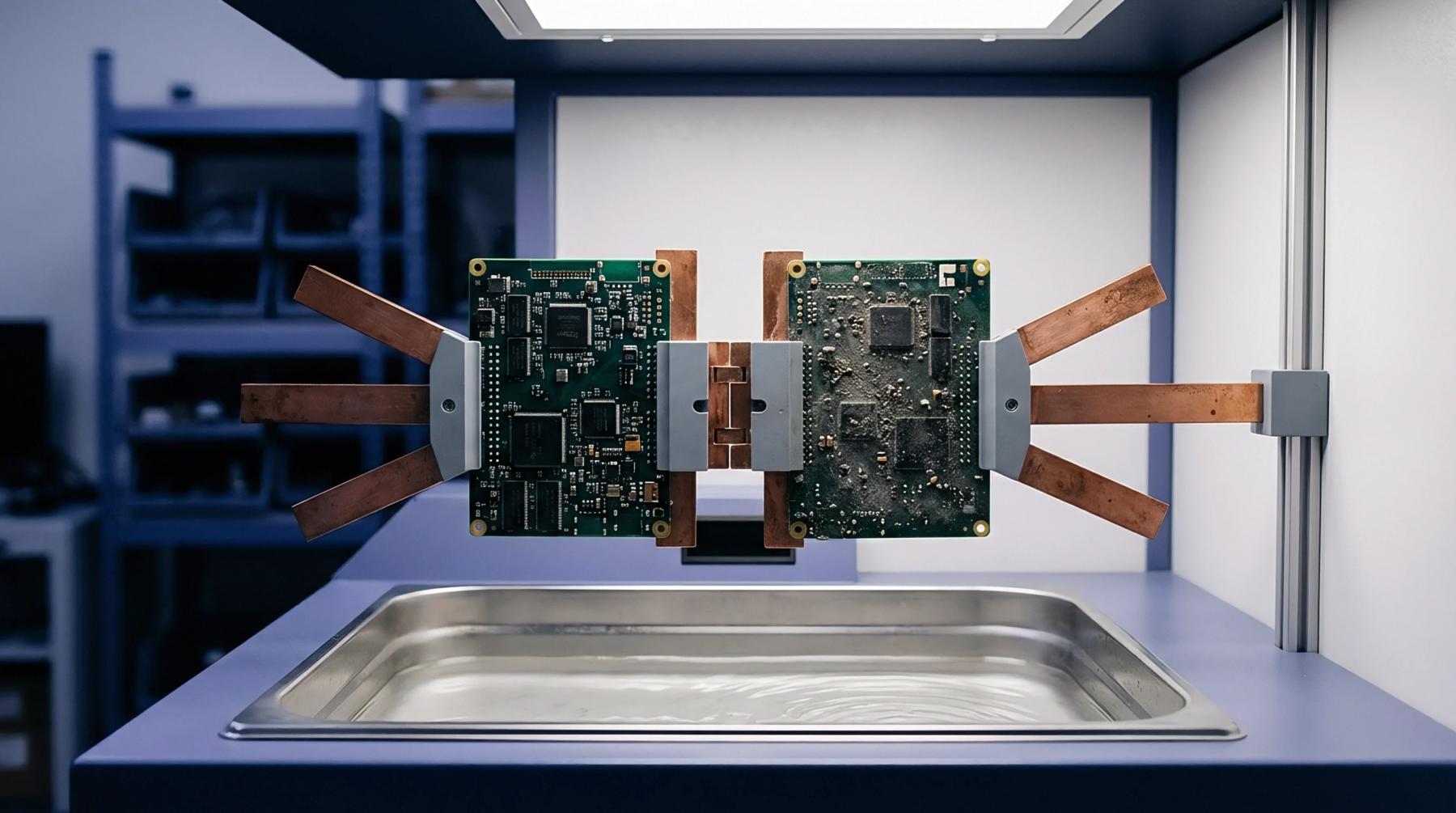
Multilayer printed circuit board assemblies encounter rapid temperature gradients during wave soldering and vapor phase reflow cycles, and dynamic thermal stress quantifies the resulting mechanical strain accumulated across internal copper planes and dielectric laminates. Differential expansion rates between woven glass fiber substrates and plated copper barrels generate shear forces along barrel walls during these thermal transients. Automated optical inspection stations cannot detect subsurface microfractures caused by these rapid heating transitions, requiring destructive cross sectioning or electrical resistance monitoring to verify joint integrity.
Elevated glass transition temperatures in modern epoxy resins mitigate localized deformation, yet repeated thermal shock still accelerates fatigue accumulation within high aspect ratio vias. Board fabricators must control preheat ramp rates during surface mount technology processing to prevent catastrophic delamination between prepreg layers.
Transient Gradient
Transient temperature imbalances propagate through thick copper planes at different speeds than through surrounding FR4 material, producing localized out of plane warping during reflow cycles. This internal distortion places tensile loads on barrel corners where barrel walls meet external land pads, initiating barrel cracking before final functional testing occurs. Process engineers establish strict thermal profiling limits during reflow soldering to cap heating rates below specific thresholds defined in reliability specifications.
Thermocouple attachments on heavy copper ground planes capture actual board temperatures during trial runs, verifying that the assembly avoids excessive thermal shock. Mechanical stress relief patterns on internal plane connections reduce localized rigidity, allowing copper structures to flex safely during high temperature excursions without fracturing internal interconnects.
Fatigue Boundary
Cyclic thermal exposure eventually exhausts the ductility of electroplated copper within plated through holes, leading to intermittent electrical failures in the field. Accelerated thermal cycling chambers simulate years of operational stress by cycling assemblies between extreme temperatures at specified dwell times. Destructive physical analysis on cycled coupons reveals grain boundary sliding and fatigue striations within the copper barrels, confirming cumulative structural damage.
Material selection criteria prioritize elongation properties over sheer tensile strength because higher ductility accommodates greater thermal expansion mismatch without initiating cracks. Component mounting strategies that decouple large ceramic packages from flexible substrates reduce localized bending moments during rapid thermal shifts, extending the operating lifespan of the entire circuit board assembly.