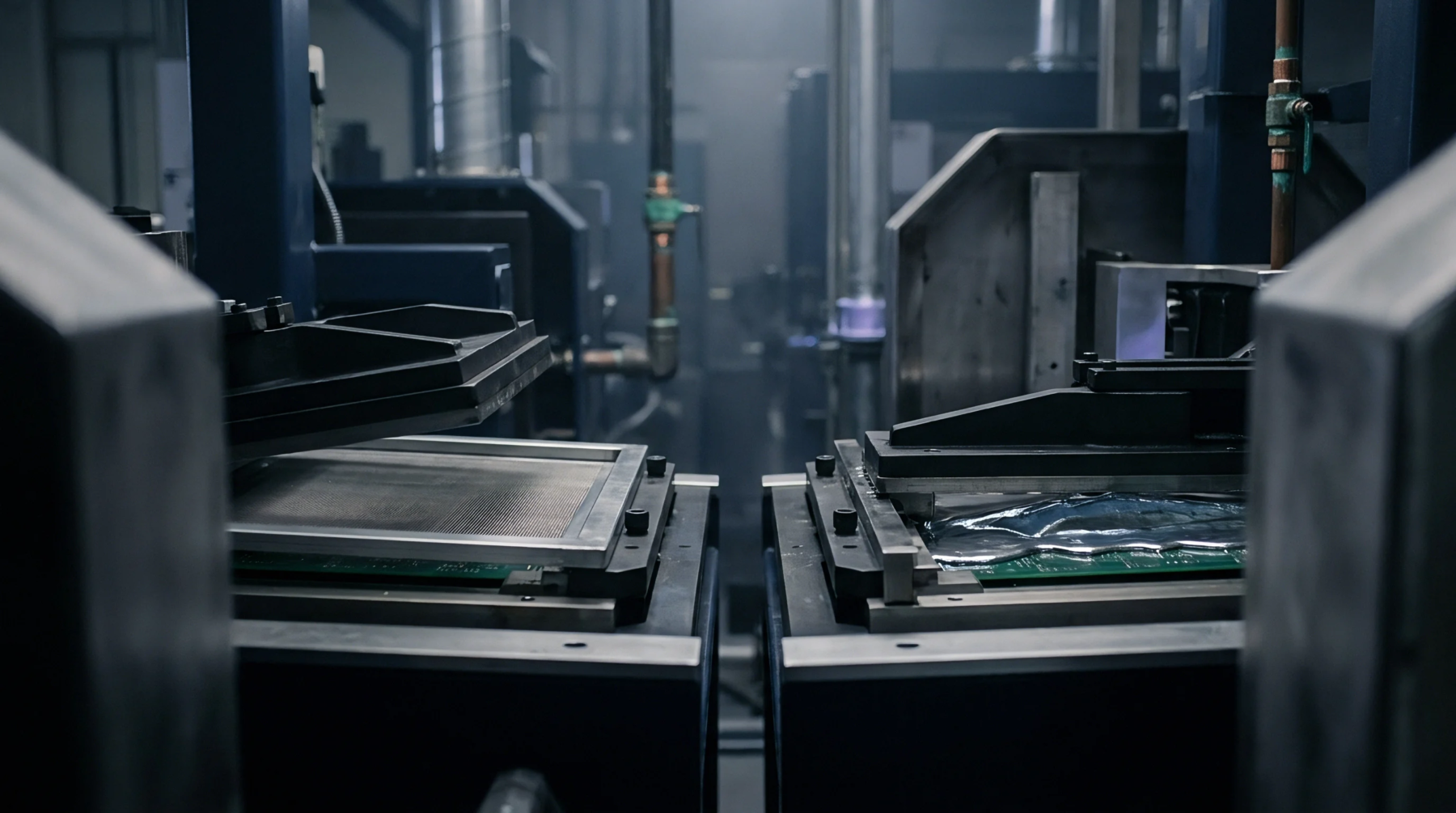
Polymer Thermodynamics
Chemical reaction rates during the solidification of thermosetting resins determine the final mechanical and electrical properties of a printed circuit board laminate. Understanding epoxy cross-linking kinetics allows manufacturers to predict how temperature and time influence the molecular bond density. The process ends when the resin reaches a glass transition state where molecular mobility becomes restricted.
Curing Process
Thermal energy initiates the reaction between resin monomers and hardening agents to form a three dimensional network. As epoxy cross-linking kinetics progress, the viscosity of the material increases until it reaches the gel point. Differential scanning calorimetry measures the heat flow associated with these exothermic reactions to provide data on the degree of cure.
If the ramp rate of the oven is too fast, internal stresses develop as the polymer chains lock into place prematurely. Curing is a time dependent transformation. Conversely, a slow ramp might lead to resin starvation in certain areas of the stackup.
Material Stability
Final performance characteristics like moisture resistance and thermal expansion coefficients depend on achieving a complete chemical reaction. Incomplete epoxy cross-linking kinetics leave unreacted groups that lower the glass transition temperature and increase the risk of delamination during lead free soldering. Post curing cycles ensure the resin matrix achieves its maximum potential for structural integrity.