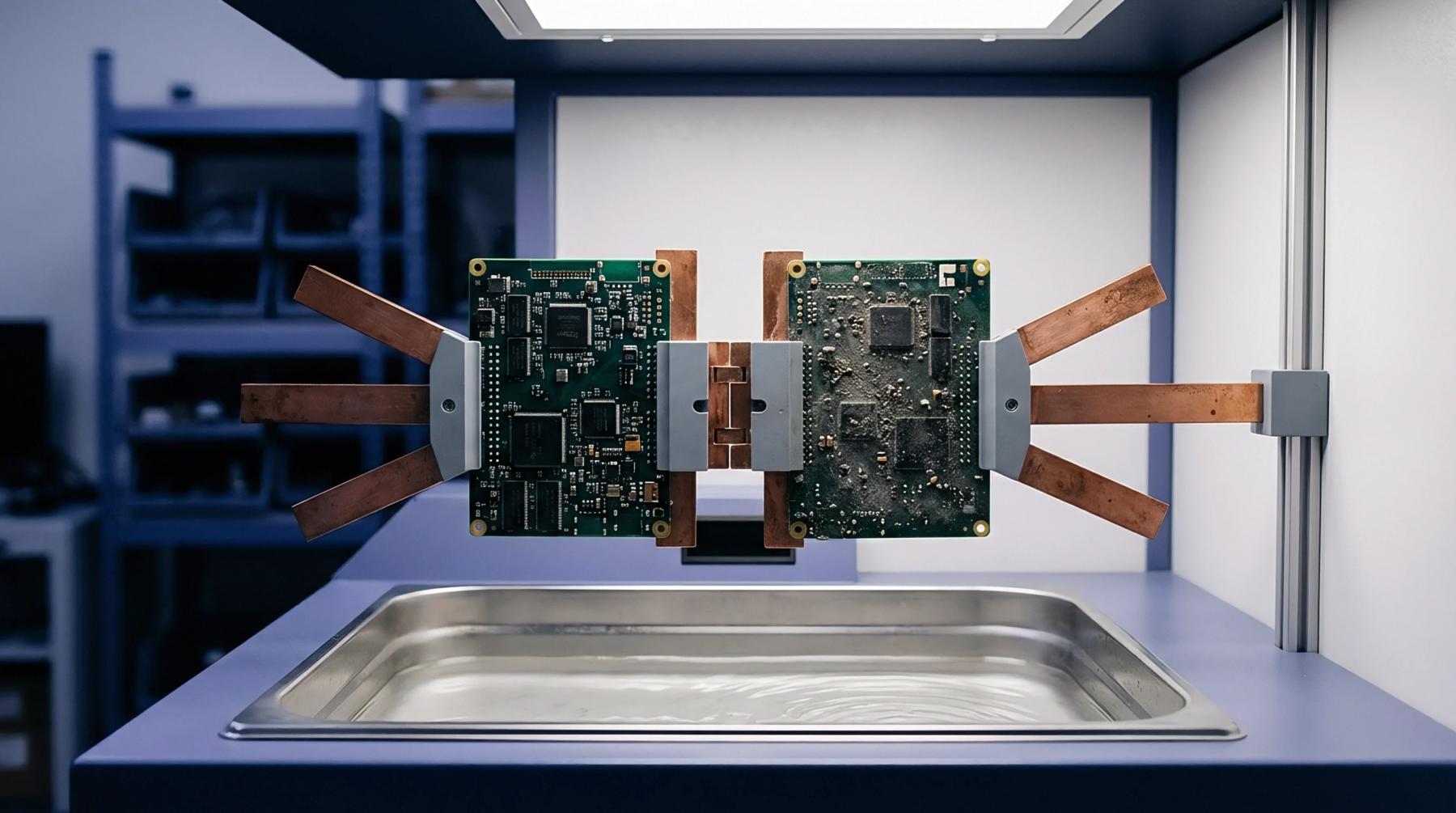
Process Optimization
Reliability testing schedules often undergo refinement to balance production throughput with defect detection on mature electronic assemblies. Implementations of ESS screening reduction occur when historical test data proves that the manufacturing process is stable and the defect rate has dropped below a specified threshold. This action lowers the duration or intensity of thermal cycling and random vibration tests for production lots.
It helps manufacturers minimize the unnecessary thermal and mechanical fatigue that can degrade surviving assemblies, ensuring that valuable testing resources are not wasted on mature, stable processes.
Statistical Rationale
Statistical analysis of past failures provides the justification for modifying the screening program. When hundreds of consecutive boards pass thermal shock and vibration without a single failure, the mathematical probability of a latent defect remaining undetected is extremely low. This high yield rate allows engineers to safely transition from 100 percent screening to sample-based testing.
Screening Modification
Modification of the test cycle must follow a strict change control procedure. A typical procedure requires that if a single major defect is found during sample screening, the line immediately reverts to full-scale testing until the cause is resolved. This protective boundary prevents escapes from reaching the final assembly or field deployment.
By maintaining this safety net, the assembly house can lower cycle times without risking the shipment of unreliable electronics.