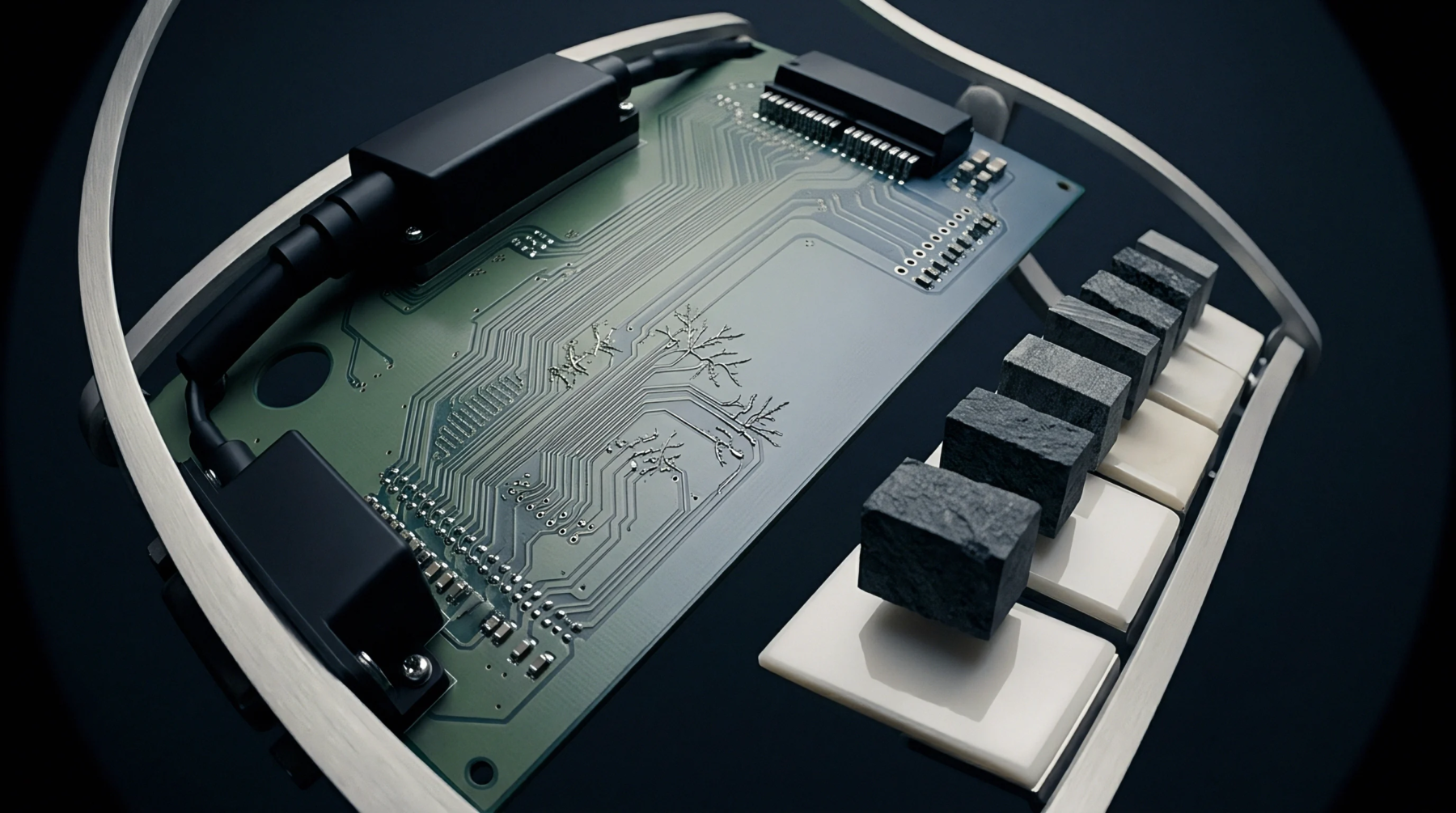
Signal Integrity
Digital communication channels rely on the distinct separation of voltage levels to represent logical states, and eye diagram collapse occurs when noise or timing jitter closes the internal opening of the waveform display. This phenomenon represents a total loss of the transition margins required for reliable data recovery at the receiver. High frequency components within a trace, specifically impedance mismatches or dielectric loss, contribute to the shrinking of the opening.
When the signal transitions no longer reach the necessary voltage thresholds within the required time windows, the eye diagram closes entirely and renders the data stream undecipherable.
Waveform Degradation
Parasitic elements in the interconnect path frequently induce this failure mode. Capacitance at via structures or inductive spikes from board layer transitions alter the edge rates of the transmitted pulses. The resulting intersymbol interference causes subsequent bits to smear into previous ones, which prevents the detection of discrete high or low states.
Corrective actions require the implementation of impedance matching at source and load points to dampen internal reflections.
Systemic Consequence
Complete loss of visibility into the bit sequence prohibits hardware validation and functional testing during production. Any failure to maintain sufficient eye height or eye width forces a design iteration of the transmission lines to reduce signal attenuation. Reliable connectivity depends upon the margin preserved between the physical channel response and the noise floor of the receiving silicon.