Movement Geometry
Robotic bridge systems utilize gantry kinematics to map translational coordinates across a flat surface through the synchronized activation of linear motors or belt drives positioned along orthogonal axes. This calculation determines the precise position of a tool head or pick-and-place nozzle by translating command signals from a controller into physical displacement across the X, Y, and Z planes. Errors within these mathematical matrices result in positional deviation, where the path of the beam fails to align with the programmed grid of a printed circuit board.
Operational Calibration
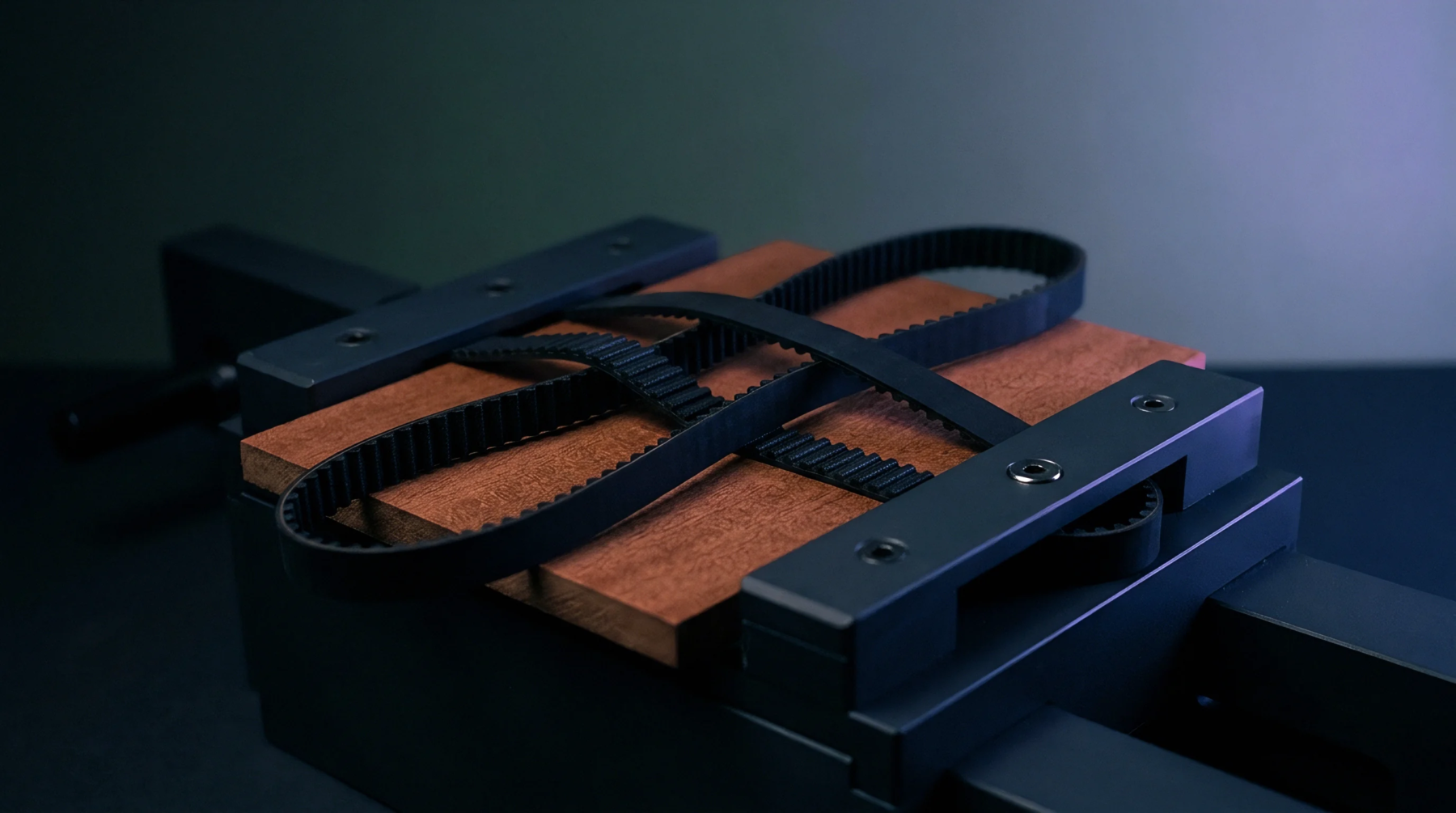
Precise coordination governs how gantry kinematics maintain accuracy when high speed acceleration creates inertia that threatens to skew the bridge assembly. Sensors detect minor variances in torque or motor synchronization, feeding data back into the processor to adjust the timing of current pulses to each driver. If a drive belt stretches or a rail accumulates surface contamination, the control system calculates an offset to compensate for the drift.
Manufacturers verify these alignments using laser interferometry or grid plates during the validation of a production line. A stable reference point allows the software to calculate the exact vector for each motion cycle. Deviations exceeding the tolerance bands force an automatic halt to the assembly flow to prevent defective component placement or substrate damage.
Mechanical rigidity determines the physical limit of this accuracy, as even perfect mathematics cannot overcome excessive vibration or frame flex occurring during rapid starts and stops.
Inspection Control
Vision systems monitor the output of these motion profiles by measuring the placement repeatability of components against reference marks on the surface of the laminate. Failures in gantry kinematics appear as consistent shifts in component orientation or skewed footprints that cross the boundary of the conductive pads. Technicians analyze the pattern of these shifts to isolate whether the root cause resides in the software command, the mechanical transmission, or the structural stiffness of the frame.
Standardized testing confirms that the hardware achieves the required sub-millimeter resolution for dense packaging arrays. Accurate motion control functions as the boundary for all high-speed assembly.