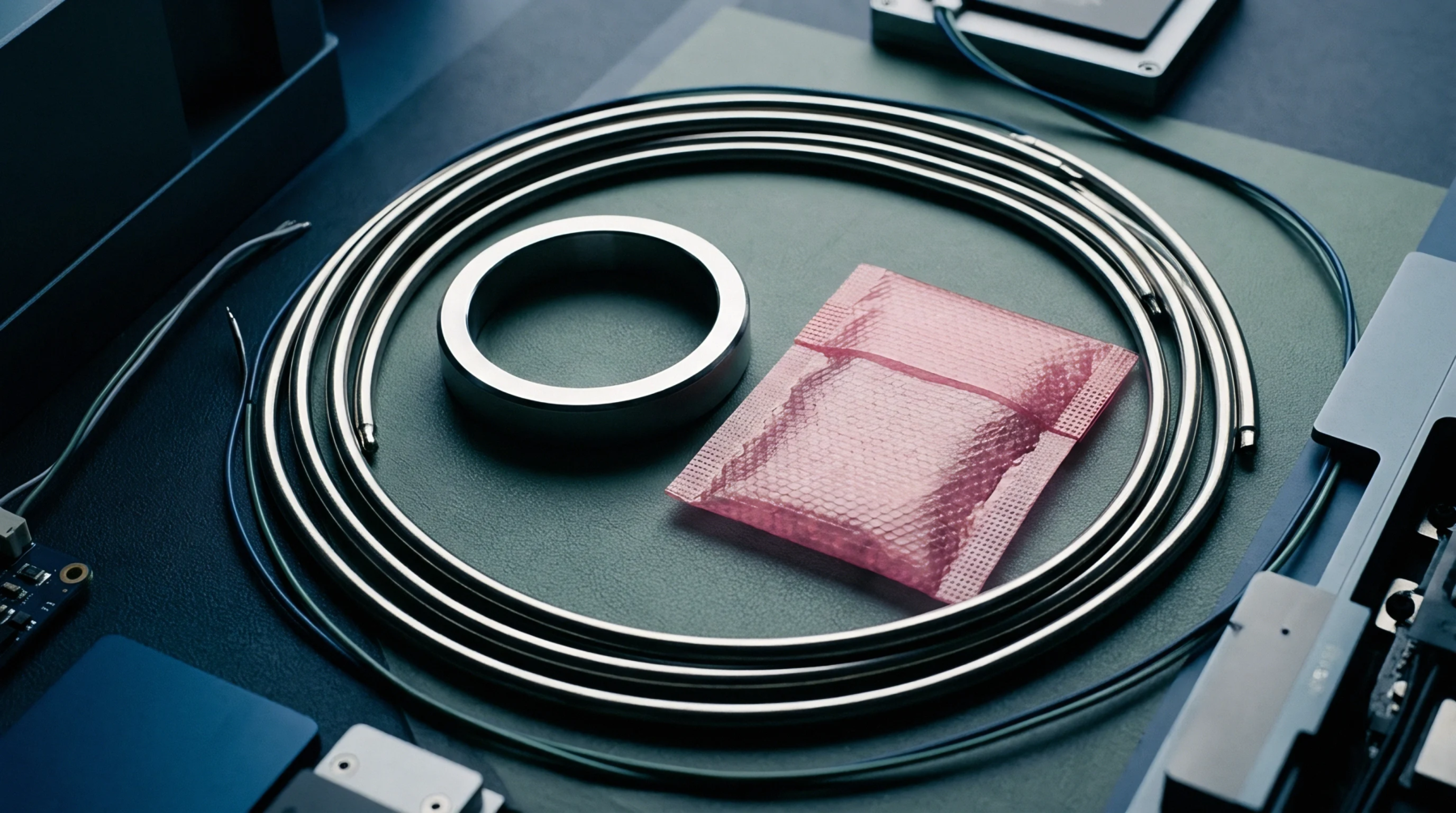
Composite Laminate
Blended polymer formulations combine different resin types to optimize both the electrical and mechanical properties of a printed circuit board. Utilizing heterogeneous resin systems allows fabricators to create high-performance laminates that feature both the low loss of hydrocarbon resins and the mechanical toughness of epoxy. These composites are designed to withstand high assembly temperatures while maintaining high-frequency signal integrity.
Material Behavior
Structural integrity during multi-layer lamination relies on the chemical compatibility of the mixed resins to prevent phase separation. If the polymers do not cure together uniformly, microscopic voids can form at the resin-glass interface, which can lead to moisture absorption and conductive anodic filament growth. High-speed digital designs benefit from these systems because they achieve a very low dissipation factor without the excessive brittleness that often characterizes pure high-frequency laminates.
This blend also improves the drilling performance, as the modified epoxy matrix acts as a damping agent to reduce drill wear and hole wall tear-out.
Processing Difficulty
Thermal profiling during lamination must accommodate the distinct curing rates and temperatures of each resin component in the blend. If the cure cycle is too short, one of the resin phases might remain under-cured, reducing the overall glass transition temperature of the cured laminate.