Finish Degradation
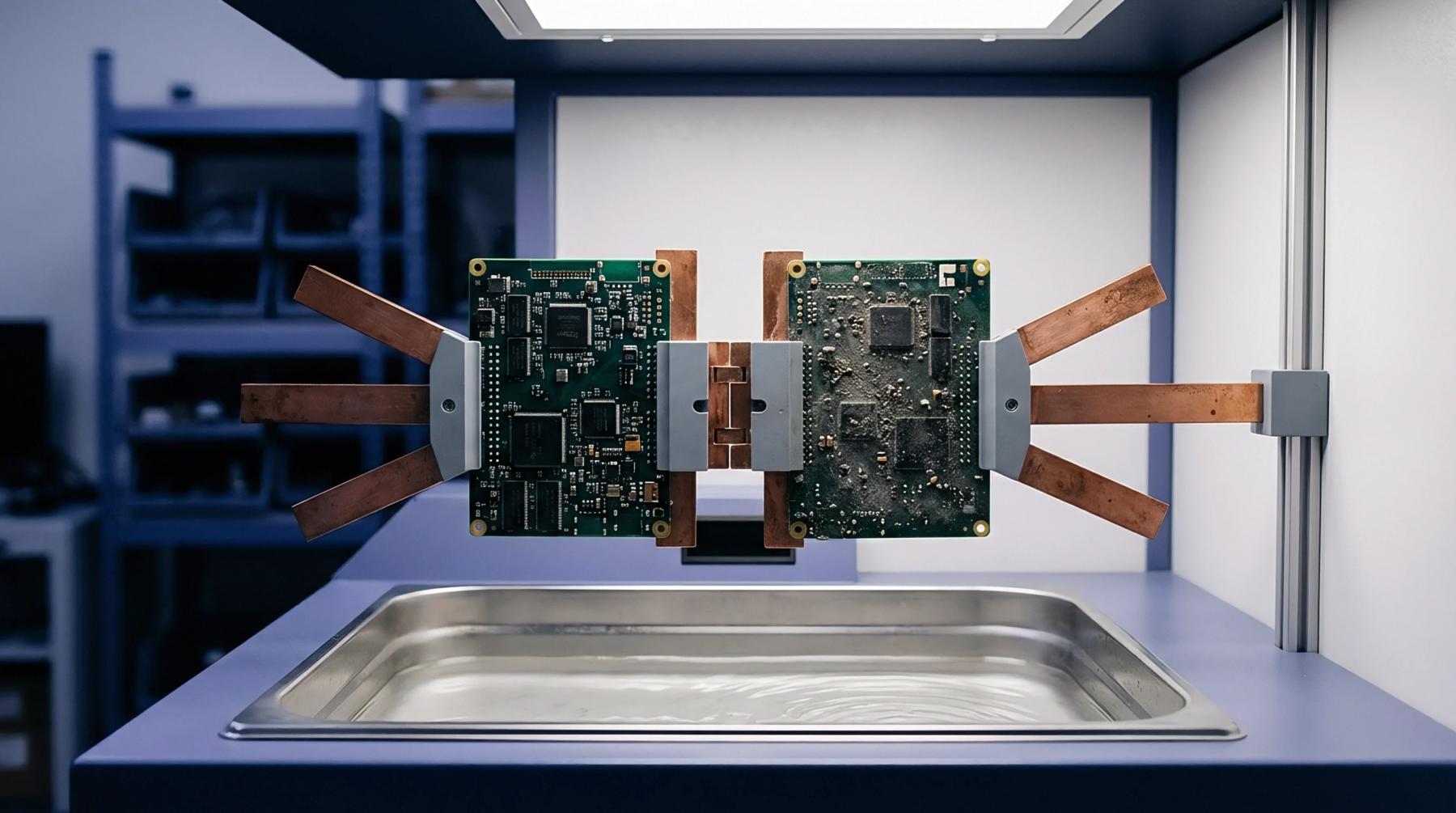
Board finishes utilizing thin precious metal deposits remain susceptible to environmental gassing and atmospheric sulfur reactions. Under typical manufacturing conditions, immersion silver vulnerability leads to the formation of silver sulfide films that degrade solderability and electrical performance. This protective metal layer is extremely thin, typically between five and fifteen microinches, leaving it prone to pore exposure.
The underlying copper can then oxidize or react through the discontinuous silver layer.
Chemical Pathway
Gaseous sulfur compounds, primarily hydrogen sulfide, penetrate the silver lattice to initiate the chemical reaction. This process does not require high humidity to occur, as dry sulfurous atmospheres can drive the formation of the black tarnish. The resulting silver sulfide is a non conductive compound that cannot be reduced by typical flux formulations during assembly.
Solder joints formed on these tarnished pads exhibit high voiding rates and low mechanical strength. This degradation progresses rapidly when the boards are stored in proximity to materials that outgas sulfur, such as cardboard or vulcanized rubber.
Storage Condition
Special protective packaging utilizing vapor corrosion inhibitor paper or sulfur-free plastic bags protects the finished boards during transport. Storage areas must be kept under controlled temperature and humidity limits to prevent accelerated tarnishing.