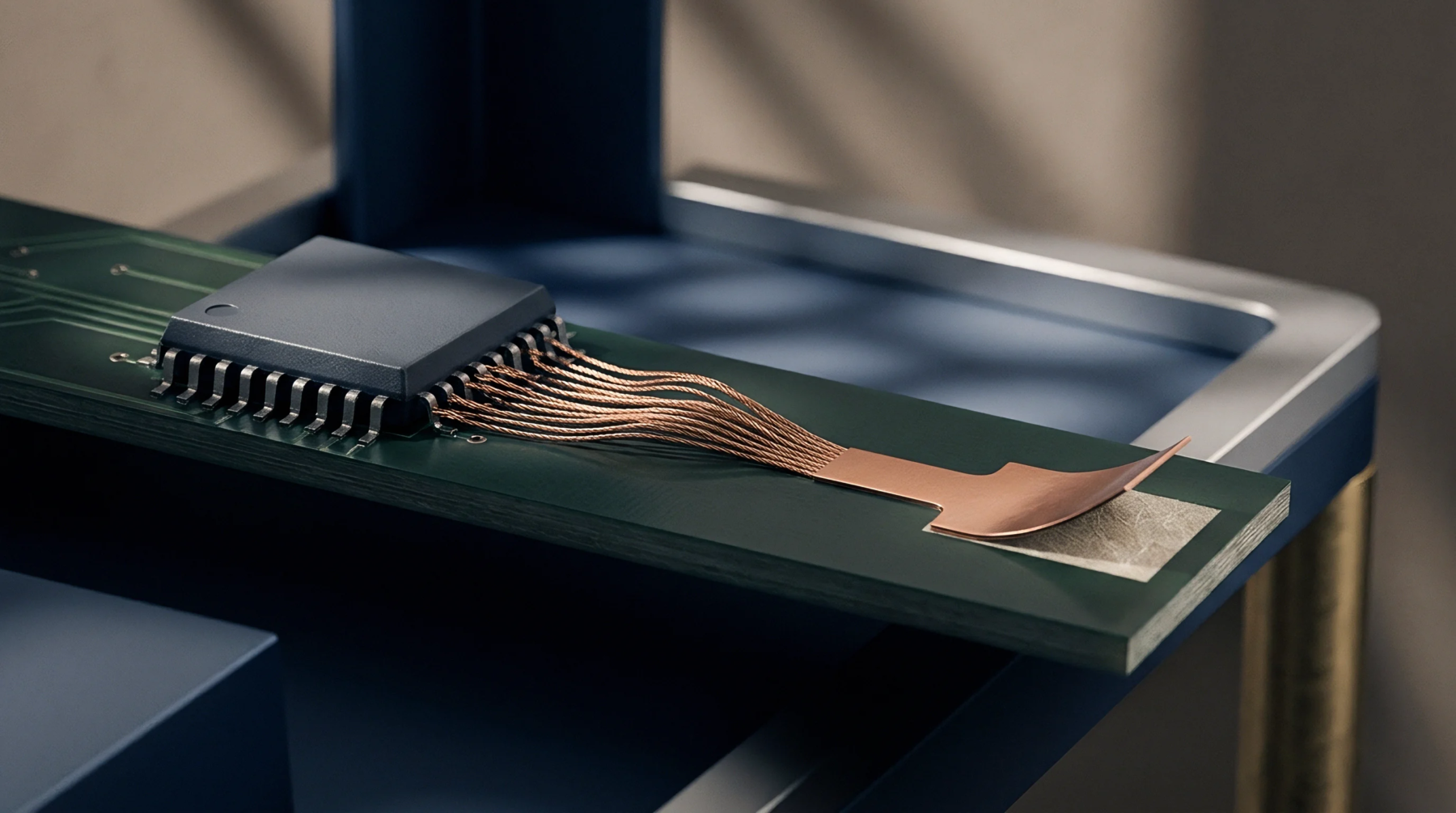
Hybrid Multilayer PCB Material Selection Fundamentals
Hybrid multilayer selection pairs low-loss RF laminates with epoxy bases by matching cure windows, controlling z-axis expansion, and optimizing panel yields.
Unprocessed metallic cladding bonded to inner dielectric core laminates forms the foundational conductive baseline from which internal printed circuit board layers are chemically subtractively etched. Industrial laminators produce this material under IPC-4562 specifications, supplying standard weights ranging from one-third ounce to three or more ounces per square foot bonded to FR-4, polyimide or high frequency core dielectrics. The thickness and metallographic profile of inner base copper establishes the starting cross section for internal power distribution planes and high speed signal interconnects.
This specification defines starting core material as delivered by the base material supplier, ceasing to define the trace after subsequent chemical microetching, oxide alternative bonding treatments or multi-layer registration processing alters the final conductive profile.
Chemical subtractive processing transforms the continuous foil into defined internal circuit traces through photolithographic masking and acid etching. The starting nominal thickness directly controls the minimum achievable line width and space design rules across the fabrication panel. Thicker copper weights require longer dwell times inside cupric chloride or ferric chloride spray etch chambers, which drives lateral undercutting beneath the polymerized photoresist mask.
This lateral dissolution forms a trapezoidal trace cross section characterized by etch factor ratios that distort high speed transmission line impedance. Thinner starting foils, such as nine micrometer or twelve micrometer ultra-thin profiles, minimize chemical undercut, enabling fine pitch line definitions below seventy-five micrometers. Foil grain structure influences the dissolution rate, where fine-grained electrodeposited foil etches with straighter sidewalls than rolled annealed alternatives.
Differential surface roughness along the reverse-treated foil face governs high frequency skin effect losses along internal stripline channels.
Internal current carrying capacity and multi-layer thermal dissipation depend upon preserved conductor cross sections. Power distribution networks specify two-ounce or three-ounce foil foundations to conduct elevated DC amperage without exceeding designed thermal limits defined under IPC-2152 standards. Thick copper inner layers absorb substantial heat during circuit operation, acting as internal heat spreaders within dense multi-layer packages.
Etch processing tolerances must guarantee that final internal trace geometries retain sufficient cross-sectional area after chemical cleaning and surface oxidation treatments remove surface copper. Plane layer clearances must account for base foil thickness to ensure fluid dielectric prepreg resin fills clearance voids without generating dry weave voids or trapped air bubbles during multi-layer press cycles. The inner base copper governs starting geometric tolerances for every internal conductor within the completed multi-layer stackup.
Hybrid multilayer selection pairs low-loss RF laminates with epoxy bases by matching cure windows, controlling z-axis expansion, and optimizing panel yields.
Expertise is a utility, not a secret. sentiention™ publishes its working knowledge as open reference: intelligence layer covering the materials it sources, the markets it enters, and the reference that serves both.