Interfacial Integrity
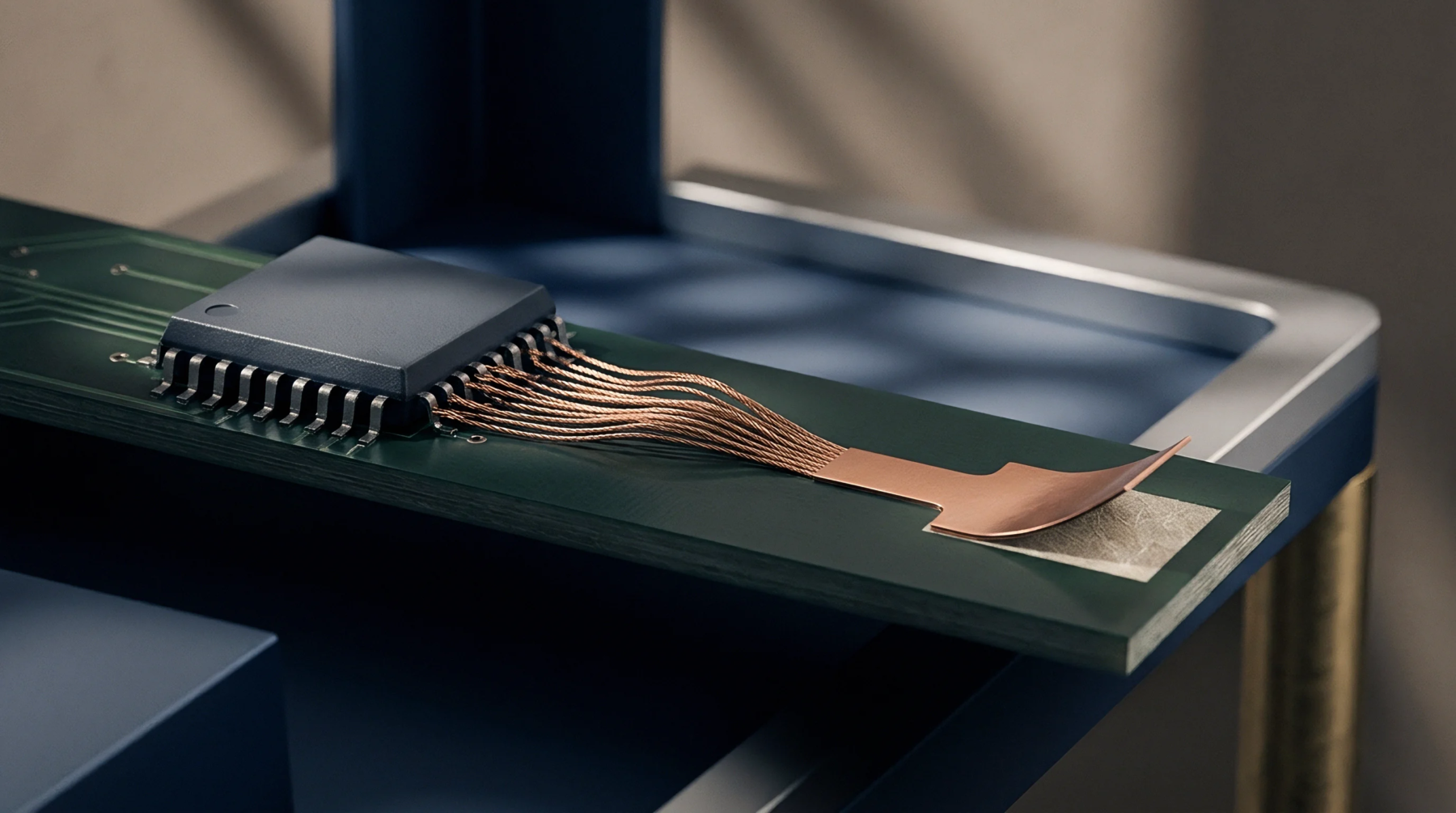
Thermal stress during the reflow process occasionally causes an inner layer separation, which represents a complete loss of physical contact between the copper foil and the surrounding dielectric resin. This void formation occurs when differential expansion rates between metallic conductors and organic laminates exceed the bond strength of the materials involved. High density boards experience these mechanical failures most frequently at the barrel wall or at the interface of heavy internal copper planes.
Failure to maintain adhesion compromises the electrical conductivity and mechanical stability of the multilayer structure throughout its operational life cycle.
Thermal Resistance
Materials subjected to rapid temperature cycling undergo physical degradation if their coefficient of thermal expansion mismatch is too great to remain controlled. Standard test methods like thermomechanical analysis quantify the temperature point where the expansion of the resin exceeds the yield point of the copper interface, providing a limit for process engineering. Engineers select high glass transition temperature materials to reduce these excursions because the resin softens less at standard soldering temperatures.
Reducing the moisture content of the laminate before assembly further prevents steam pressure from driving the resin away from the copper surface during the heating phase.
Analytical Inspection
Cross sectioning provides the primary method for validating the health of internal connections after the application of thermal stress. Laboratory technicians prepare the coupons by cutting through the plated through holes to expose the interface and then polish the surface to a mirror finish. Microscopic analysis confirms the presence of cracks or gaps along the resin to copper interface that would otherwise remain hidden inside the finished board.
Visual evaluation under high magnification detects even minute voids that represent potential points of catastrophic failure under prolonged field vibration or thermal load.