Contamination Limit
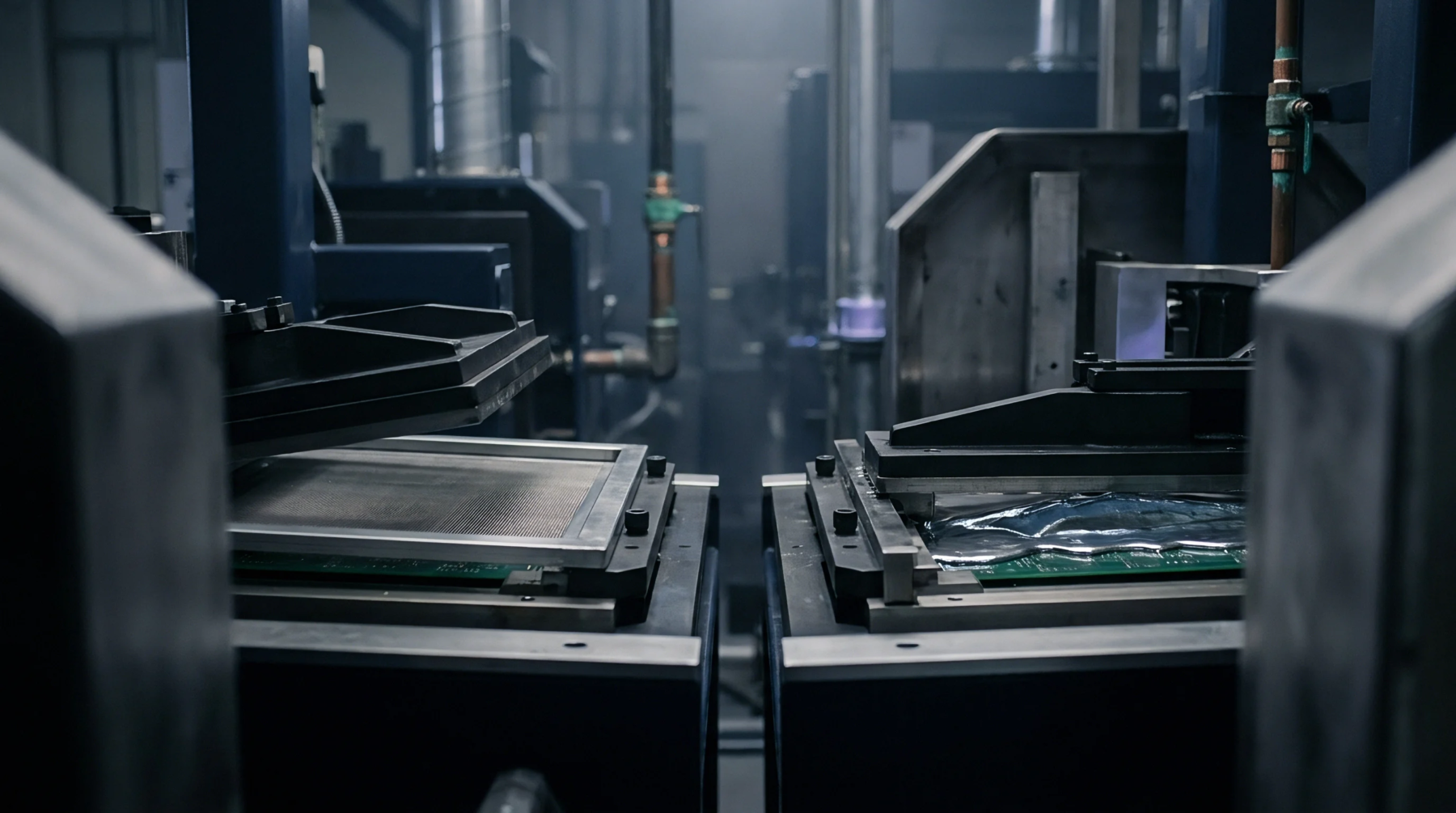
Ionic cleanliness testing measures the concentration of residual conductive salts on the surface of a printed circuit board after the soldering process. This analytical method detects electrolytes that dissolve in a solvent mixture to create a conductive path between features. An extraction cell houses the circuit assembly while a deionized water and isopropyl alcohol blend circulates over the surfaces to mobilize surface ions.
Conductivity sensors monitor the resulting change in the fluid path to quantify the total ion count in terms of sodium chloride equivalent. High levels of these salts facilitate electrochemical migration and short circuits under operational bias.
Extraction Method
Solvent wash techniques rely on a combination of agitation and chemical saturation to remove residue from hard to reach areas under surface mount components. A heated tank configuration accelerates the dissolution of flux activator remnants that remain trapped beneath low profile packages. The fluid resistivity drops as the extraction process proceeds and reaches a steady state once all soluble particles dissolve into the solution.
Technicians calibrate the equipment by injecting a known volume of solution containing a set amount of salt to verify recovery efficiency. Proper testing cycles ensure that chemical residues trapped within porous solder mask layers or under BGA sites report to the total conductivity measurement.
Performance Expectation
Industry specifications define the acceptable threshold for cleanliness based on the density of microgram equivalents per square centimeter of surface area. Component density and board complexity influence the target value since narrow conductor spacing reduces the margin for error during field exposure. Excessive salt concentrations indicate a malfunction in the cleaning line or an incorrect profile during the reflow stage.
Reliable assembly production requires consistent periodic audits of batch outputs to monitor flux removal performance. A failing result triggers a review of wash cycle parameters or water purity levels. Effective moisture management and chemical stability require these cleanliness controls as a nonnegotiable safeguard against long term leakage current.