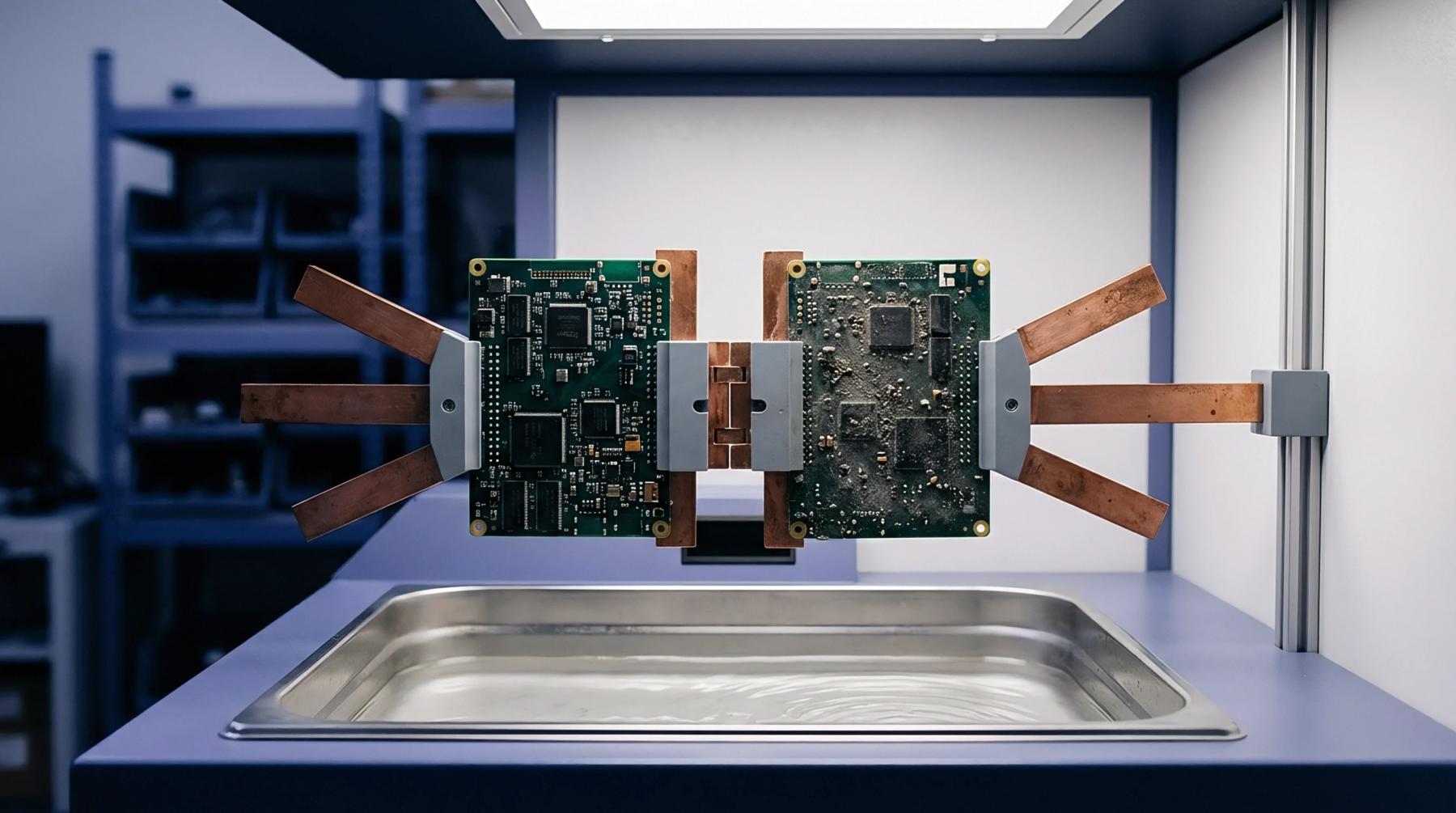
Chemical Threshold
Conductive residue measurement represents the quantitative ceiling for mobile ion species present on a printed circuit board surface. Ionic contamination limits provide a maximum allowance for these electrolytes to prevent electrochemical migration and leakage currents after assembly. Industry standards define these values based on total surface area to ensure long term hardware reliability in varied environmental conditions.
Performance Metric
Ionic contamination limits identify how much solvent extractable material remains after the wash process. Residual flux activators and process chemicals react with atmospheric moisture to form pathways for metal dendrite growth. These ionic species dissociate into anions and cations that facilitate current flow between isolated circuit traces.
Excessive amounts beyond the defined threshold increase the probability of electrical failure during operation.
Testing Boundary
Verification for ionic contamination limits relies on the resistive measurement of an isopropanol and water solution used to bathe the finished board. This methodology assumes all surface ions dissolve into the test medium for detection by a conductivity probe. Temperature fluctuations during the extraction cycle alter the solubility of contaminants and influence the final reading.
Controlled testing parameters maintain the consistency of results across different production batches. Proper validation of these parameters maintains signal integrity by ensuring that hazardous residues remain below the concentration where electrochemical corrosion begins.